Navigating Student Loan Scams 2026: Protect Your Financial Future
Navigating Student Loan Scams in 2026: Identifying Red Flags and Protecting Your Information from Deceptive Debt Relief Companies
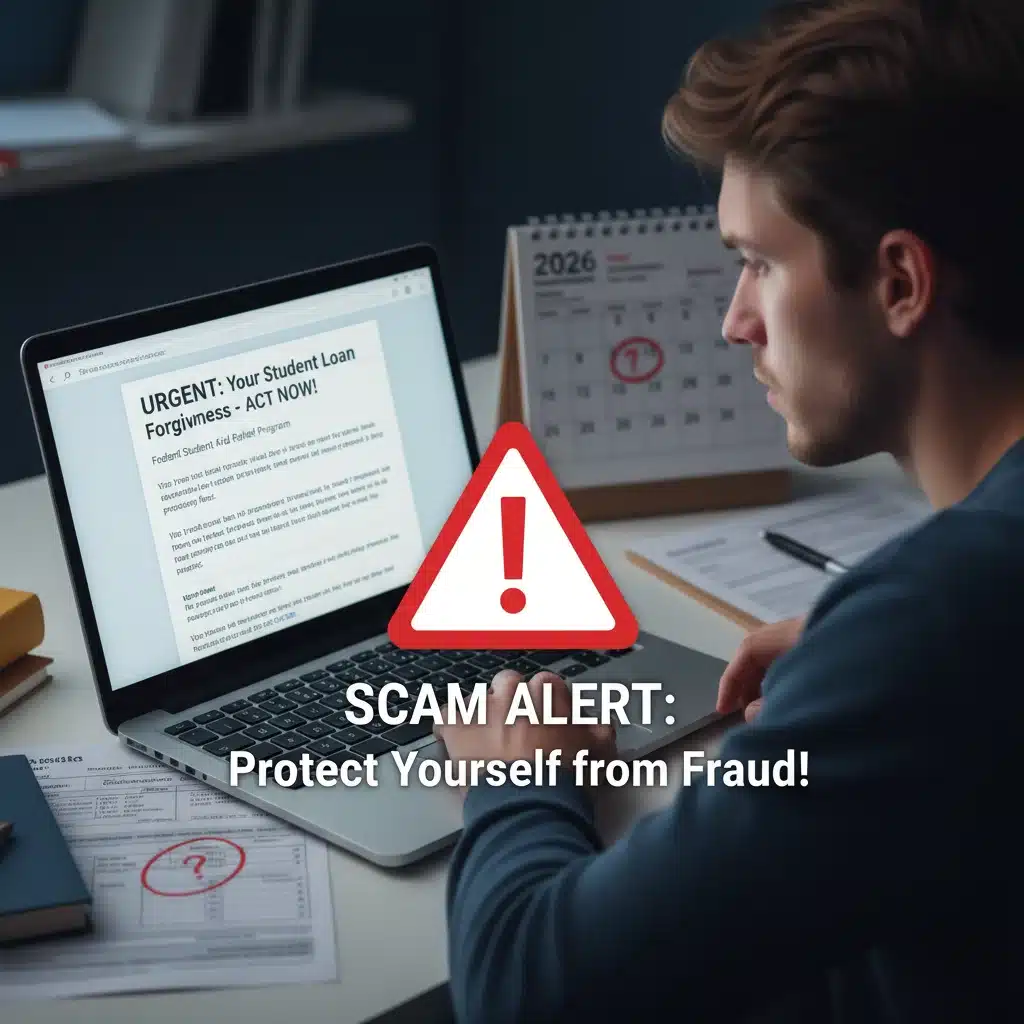
The landscape of student loans is constantly shifting, and with it, the tactics employed by fraudulent entities seeking to exploit borrowers. In 2026, as economic conditions evolve and new federal programs emerge, the threat of Student Loan Scams remains a significant concern. Millions of Americans carry student loan debt, making them prime targets for unscrupulous companies promising quick fixes and unrealistic relief. Understanding how these scams operate, recognizing their red flags, and knowing how to protect your personal and financial information are crucial steps in safeguarding your financial well-being. This comprehensive guide aims to equip you with the knowledge and tools necessary to navigate the complex world of student loans safely and avoid falling victim to deceptive debt relief schemes.
The allure of immediate relief from student loan burdens can be incredibly strong, especially for those struggling to make payments or feeling overwhelmed by their debt. Scammers prey on these vulnerabilities, often mimicking legitimate government agencies or well-known financial institutions to gain trust. They promise everything from complete loan forgiveness to drastically reduced payments, often demanding upfront fees for services that are either free or simply don’t exist. As we delve into 2026, these tactics are becoming increasingly sophisticated, utilizing advanced technology and personalized approaches to ensnare unsuspecting borrowers. Therefore, staying informed and vigilant is not just a recommendation; it’s a necessity.
The Evolving Threat of Student Loan Scams in 2026
The year 2026 brings with it new challenges and opportunities in the student loan sector. While genuine relief programs and policy changes may offer significant benefits, they also create fertile ground for scammers. These fraudsters quickly adapt their narratives to align with current events, government announcements, and economic trends. For instance, any discussions around broad student loan forgiveness or new income-driven repayment plans can be immediately co-opted by scam artists to create a sense of urgency and false hope. They often leverage these legitimate discussions to craft convincing yet fraudulent offers.
One of the primary ways Student Loan Scams evolve is through their communication channels. While phone calls and emails remain prevalent, scammers are increasingly utilizing text messages, social media direct messages, and even sophisticated AI-powered chatbots to reach potential victims. These methods allow them to cast a wider net and personalize their outreach, making their fraudulent claims seem more legitimate. They might use publicly available information about you to tailor their messages, making them appear to know your specific situation, which can be disarming.
Furthermore, the types of services offered by deceptive debt relief companies are becoming more diverse. Beyond outright loan forgiveness, they might promise to consolidate your loans at impossibly low rates, remove negative marks from your credit report, or enroll you in exclusive government programs that don’t exist. These promises are designed to sound appealing and often target specific pain points that borrowers experience, such as high interest rates or poor credit scores. It’s essential to remember that if an offer sounds too good to be true, it almost certainly is, especially when it comes to your student loans.
The digital age also means that data breaches can inadvertently aid scammers. If your personal information, including details about your student loans, becomes compromised, fraudsters can use this data to make their solicitations even more convincing. They might cite specific loan amounts, servicers, or repayment statuses, making it difficult for you to discern a legitimate communication from a fraudulent one. This underscores the importance of not only being wary of unsolicited offers but also regularly monitoring your financial accounts and credit reports for any suspicious activity.
In 2026, a key element of these evolving scams will be their ability to mimic official government communications with increasing accuracy. They use official-looking logos, government agency names, and even official-sounding jargon to create a façade of legitimacy. This makes it incredibly challenging for the average borrower to differentiate between genuine assistance and a fraudulent scheme. Therefore, understanding the authentic channels of communication from your loan servicer and the Department of Education is paramount.
Common Tactics Used by Deceptive Debt Relief Companies
Deceptive debt relief companies employ a variety of tactics to trick student loan borrowers. Recognizing these common strategies is your first line of defense against Student Loan Scams. These tactics are designed to create a sense of urgency, fear, or false hope, pushing individuals into making rash decisions without proper verification.
1. Promises of Instant Loan Forgiveness or Drastic Reductions:
This is perhaps the most common and enticing tactic. Scammers will claim they can get your loans completely forgiven or reduce your principal balance by a significant amount overnight. While legitimate forgiveness programs exist (like Public Service Loan Forgiveness or borrower defense to repayment), they typically have strict eligibility requirements and lengthy application processes. There is no such thing as instant, broad loan forgiveness outside of specific, well-publicized government initiatives. Any company promising this without thoroughly vetting your eligibility is likely a scam.
2. Demanding Upfront Fees for Free Services:
Legitimate student loan assistance, such as enrolling in income-driven repayment plans, consolidation, or applying for forgiveness programs, is always free through your loan servicer or the Department of Education. Scammers, however, will often demand an upfront fee to “process” your application or “guarantee” your enrollment in a program. This is a major red flag. Never pay for services that you can obtain for free directly from your loan servicer or the federal government.
3. Pressuring You for Personal Information:
Scammers will often ask for sensitive personal information, such as your Federal Student Aid (FSA) ID, Social Security Number, bank account details, or credit card numbers. While your loan servicer will need some of this information, they will never ask for your FSA ID password. Providing your FSA ID password gives scammers direct access to your student loan accounts, allowing them to change your contact information, redirect payments, or even apply for loans in your name. Be extremely cautious about who you share this information with.
4. Impersonating Government Agencies or Loan Servicers:
Fraudsters frequently pretend to be from the Department of Education, Federal Student Aid, or your specific loan servicer. They might use official-looking logos, letterheads, or email addresses that are cleverly designed to appear legitimate. Always verify the sender’s identity. Official communications will typically come from specific, verifiable domains (e.g., .gov for government agencies). If you receive a suspicious call or email, hang up or delete it and contact your loan servicer directly using contact information from their official website.
5. Urgency and Threat Tactics:
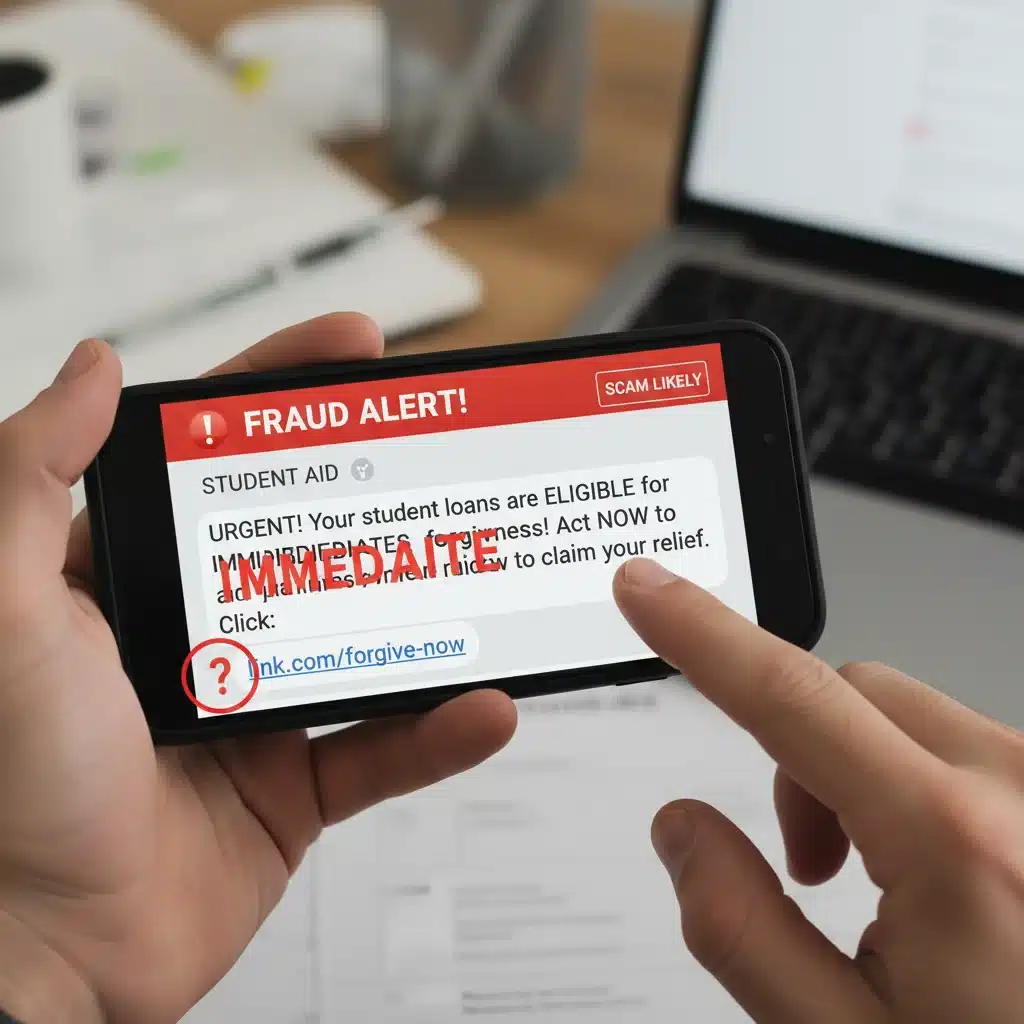
Scammers often try to create a sense of urgency, telling you that a limited-time offer is about to expire or that you face immediate legal action if you don’t act now. They might threaten wage garnishment, asset seizure, or even arrest. These high-pressure tactics are designed to bypass your critical thinking and force you into quick decisions. Legitimate institutions rarely communicate in such an aggressive or threatening manner. Always take your time to verify any claims, especially those that demand immediate action.
6. Requesting Payments to a Third Party:
A legitimate company will direct your payments to your official loan servicer. Scammers, however, will often ask you to make payments directly to them, claiming they will then forward the money to your servicer. This is a classic trick to steal your money. Your student loan payments should always go directly to your official loan servicer, and you should be able to see these payments reflected on your servicer’s official portal.
7. Misrepresenting Their Services and Fees:
Some deceptive companies might offer “services” that you could easily do yourself for free, such as filling out an income-driven repayment application. They charge exorbitant fees for these simple tasks, often without fully disclosing the costs or explaining that the same service is available for free. Always investigate what you are paying for and compare it to what is available directly from your loan servicer.
8. Guarantees of Specific Outcomes:
No legitimate company can guarantee specific outcomes for your student loans, especially not loan forgiveness or a specific reduction amount. Eligibility for these programs depends on individual circumstances and federal guidelines. Any company making such guarantees is likely engaging in fraudulent activities. Be wary of any promises that sound too good to be true.
Identifying Red Flags: What to Look Out For
Spotting a Student Loan Scams often comes down to recognizing specific red flags. These indicators can appear in various forms of communication – emails, phone calls, text messages, or even social media ads. Being able to quickly identify these warning signs can save you from significant financial harm.
- Unsolicited Communications: Be suspicious of any unsolicited calls, emails, or texts about your student loans, especially if they come from an unfamiliar sender or number. Legitimate servicers and the Department of Education typically communicate through official channels and usually in response to an inquiry or related to an upcoming payment/event you are aware of.
- Requests for Your FSA ID or Password: This is perhaps the biggest red flag. Your FSA ID is your personal identifier for federal student aid websites. Giving it to anyone grants them access to your entire student loan profile. Neither the Department of Education nor your loan servicer will ever ask for your FSA ID password.
- Upfront Fees or “Processing” Charges: As mentioned, any request for payment before services are rendered, especially for things you can do for free, is a scam.
- Guaranteed Results: No one can guarantee loan forgiveness or a specific payment reduction. These outcomes depend on your individual circumstances and federal program eligibility.
- Pressure to Act Immediately: Scammers thrive on urgency. Phrases like “act now or lose your chance,” “offer expires soon,” or “final notice” are designed to make you panic and bypass verification.
- Requests for Personal Financial Information via Unsecured Channels: Be cautious if asked to provide sensitive information (Social Security Number, bank account details) over email, text, or unsecure websites.
- Generic or Unprofessional Communications: Look for poor grammar, misspellings, generic greetings (e.g., “Dear Student Loan Borrower”), or unprofessional formatting. While not always indicative of a scam, they are strong warning signs.
- Instructions to Pay a Third Party: Your payments should always go directly to your official loan servicer. If you’re asked to send money to a company that claims it will then forward the payment, it’s a scam.
- Offers to “Stop” or “Postpone” Payments: Some scammers tell you to stop paying your loans while they “negotiate” on your behalf. This is extremely dangerous, as it can lead to default, damaged credit, and severe financial consequences. Your loan obligations remain your responsibility until officially changed by your servicer.
- Unrealistic Promises: If an offer seems too good to be true, it almost certainly is. Be skeptical of claims that promise to eliminate your debt without any effort or qualification.
Protecting Your Information and Financial Future
Protecting yourself from Student Loan Scams requires proactive measures and a healthy dose of skepticism. Here’s how to safeguard your personal information and financial future:
1. Know Your Loan Servicer:
Familiarize yourself with your official student loan servicer(s). You can find this information by logging into your account on the Federal Student Aid (FSA) website (StudentAid.gov). All legitimate communications regarding your federal student loans will come from or direct you to your servicer or the Department of Education. If you have private student loans, contact your private lender directly.
2. Never Share Your FSA ID Password:
This cannot be stressed enough. Your FSA ID is your key to your federal student aid information. Keep it confidential, just like your bank PIN. No legitimate entity will ever ask for your FSA ID password.
3. Verify Every Offer and Communication:
If you receive a suspicious call, email, or text, do not respond directly. Instead, independently verify the information. Contact your loan servicer or the Department of Education using the official contact information found on their respective websites (e.g., StudentAid.gov). Do not use contact information provided in the suspicious communication.
4. Understand Free Resources:
Most, if not all, of the services offered by deceptive debt relief companies (like loan consolidation, income-driven repayment applications, or forgiveness program applications) can be done for free directly through your loan servicer or StudentAid.gov. Educate yourself on these free options.
5. Be Wary of Upfront Fees:
If a company asks for an upfront fee to “help” you with your student loans, it’s almost certainly a scam. Legitimate financial advisors charge for advice, not for processing free government forms.
6. Monitor Your Loan Accounts and Credit Report:
Regularly check your student loan accounts for any unauthorized changes or activity. Also, monitor your credit report for any suspicious inquiries or new accounts that you didn’t open. You can get free annual credit reports from AnnualCreditReport.com.
7. Report Suspected Scams:
If you encounter a Student Loan Scams, report it. This helps authorities track down fraudsters and protect others. You can report scams to:
- The Federal Trade Commission (FTC) at ReportFraud.ftc.gov.
- The Consumer Financial Protection Bureau (CFPB) at consumerfinance.gov/complaint/.
- Your state’s Attorney General.
- The Department of Education’s Office of Inspector General.
8. Seek Legitimate Financial Advice:
If you’re struggling with your student loan debt, seek advice from reputable, non-profit credit counseling agencies or financial advisors who specialize in student loans. Ensure they are certified and transparent about their fees and services.

Understanding Legitimate Student Loan Options
To effectively combat Student Loan Scams, it’s crucial to understand the legitimate options available for managing your federal student loan debt. Knowing what is real will help you quickly identify what is fake.
1. Income-Driven Repayment (IDR) Plans:
These plans adjust your monthly payment based on your income and family size. After a certain period (usually 20 or 25 years, or 10 years for Public Service Loan Forgiveness), any remaining balance may be forgiven. Applications and enrollment are free through StudentAid.gov or your loan servicer.
2. Loan Consolidation:
Federal Direct Loan Consolidation allows you to combine multiple federal student loans into a single loan with one monthly payment. This can simplify your finances and, in some cases, lower your monthly payment by extending the repayment period. The interest rate is a weighted average of your existing loans. This process is free through StudentAid.gov.
3. Deferment and Forbearance:
These options allow you to temporarily postpone or reduce your student loan payments if you’re experiencing financial hardship. While interest may still accrue during these periods, they can provide much-needed breathing room. You apply for these directly through your loan servicer.
4. Loan Forgiveness Programs:
Beyond IDR forgiveness, specific programs like Public Service Loan Forgiveness (PSLF) and Teacher Loan Forgiveness exist. PSLF is for borrowers working full-time for qualifying non-profit or government organizations after making 120 qualifying payments. Teacher Loan Forgiveness is for eligible teachers in low-income schools. Research these programs on StudentAid.gov to understand their strict eligibility requirements.
5. Borrower Defense to Repayment:
This program offers relief to students who were defrauded by their college. If you believe your school misled you or engaged in other misconduct, you may be eligible to have your federal student loans discharged. Information and application processes are available on StudentAid.gov.
All these legitimate options are administered by the U.S. Department of Education and its authorized loan servicers. There is no need to pay a third-party company to access or apply for these benefits. Any company claiming exclusive access or a faster track to these programs is likely a scam.
The Role of Government and Regulatory Bodies
In 2026, government agencies and regulatory bodies continue to play a critical role in combating Student Loan Scams. Organizations like the Federal Trade Commission (FTC) and the Consumer Financial Protection Bureau (CFPB) are actively working to identify and prosecute fraudulent companies, issue warnings to consumers, and provide resources for reporting scams.
The Department of Education also frequently updates its website with information about scams and how to avoid them. They work to ensure that official communications are clearly distinguishable from fraudulent ones. However, the sheer volume and evolving nature of these scams mean that individual vigilance remains the most powerful defense.
It’s important for borrowers to stay updated on consumer alerts and news from these official sources. Subscribing to newsletters from the FTC or CFPB can provide timely information about new scam trends and how to protect yourself. These agencies also provide valuable resources for what to do if you suspect you have been a victim of a scam, including steps on how to recover financially and report the incident.
What to Do If You’ve Been Scammed
Even with the best precautions, some individuals may unfortunately fall victim to Student Loan Scams. If you suspect you have been scammed, taking immediate action is crucial:
- Change Your FSA ID Password Immediately: If you provided your FSA ID password to a scammer, change it right away on StudentAid.gov.
- Contact Your Loan Servicer: Inform your official student loan servicer about the situation. They can help you identify any unauthorized changes to your account and guide you on what steps to take.
- Contact Your Bank or Credit Card Company: If you made payments to the scammer, contact your bank or credit card company to report the fraudulent charges and discuss potential reversals.
- Report the Scam: File a report with the FTC (ReportFraud.ftc.gov) and the CFPB (consumerfinance.gov/complaint/). Provide as much detail as possible, including names of companies, phone numbers, email addresses, and specific claims made.
- Monitor Your Credit: Keep a close eye on your credit reports from all three major bureaus (Equifax, Experian, TransUnion) for any suspicious activity. Consider placing a fraud alert on your credit report.
- Beware of Recovery Scams: Be cautious of anyone contacting you claiming they can help you recover money lost in a previous scam for an upfront fee. These are often “recovery scams” targeting previous victims.
Conclusion: Staying Vigilant Against Student Loan Scams in 2026
In 2026, the battle against Student Loan Scams is an ongoing one. The financial well-being of millions of student loan borrowers depends on their ability to discern legitimate opportunities from deceptive schemes. By understanding the common tactics of fraudulent debt relief companies, recognizing red flags, and knowing how to protect your personal and financial information, you can significantly reduce your risk of becoming a victim. Always remember that information is your greatest defense. Rely on official sources like StudentAid.gov, your official loan servicer, the Department of Education, the FTC, and the CFPB for accurate and up-to-date information regarding your student loans. If an offer sounds too good to be true, pause, verify, and protect your financial future. Your proactive vigilance is the best safeguard against the ever-evolving threat of student loan fraud.