PSLF in 2026: Achieving Full Forgiveness After 120 Payments
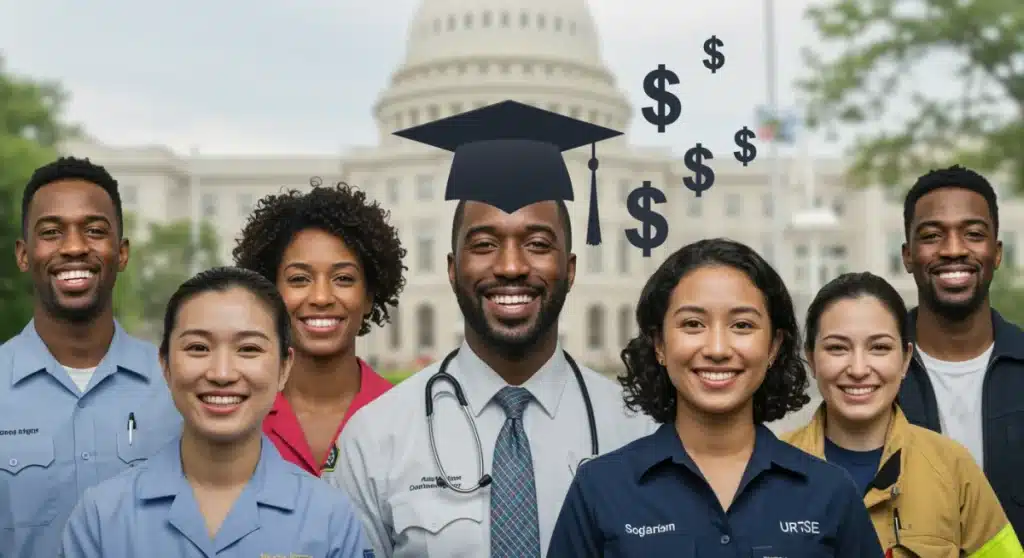
Achieving full Public Service Loan Forgiveness (PSLF) in 2026 requires a precise understanding of eligibility criteria, qualifying payments, and the updated application process, offering a clear path to debt relief for eligible public servants.
Are you a dedicated public servant looking towards a future free from student loan debt? The dream of loan forgiveness under the Public Service Loan Forgiveness (PSLF) in 2026 program is more attainable than ever, provided you have insider knowledge of the requirements and strategies. This guide delves into the specifics you need to know to navigate the path to full forgiveness after 120 qualifying payments.
Understanding PSLF in 2026: The Core Principles
The Public Service Loan Forgiveness (PSLF) program, established in 2007, continues to be a cornerstone for many public sector employees seeking relief from federal student loan debt. As we look towards 2026, the fundamental principles remain steadfast, though nuances in application and eligibility are always worth re-examining. The program’s core promise is simple: work in public service for a decade, make 120 qualifying monthly payments, and the remaining balance on your Direct Loans will be forgiven.
However, the simplicity of the promise often belies the complexity of its execution. Many borrowers have faced challenges, leading to program adjustments over the years. By 2026, these adjustments, including temporary waivers and ongoing administrative improvements, aim to streamline the process and increase the success rate for eligible individuals. It is crucial for prospective applicants to not only understand the basic requirements but also to stay informed about any new guidance or policy changes that might emerge.
Who is an eligible employer for PSLF?
Defining an eligible employer is the first critical step in your PSLF journey. Generally, this includes government organizations at any level (federal, state, local, or tribal), and not-for-profit organizations that are tax-exempt under Section 501(c)(3) of the Internal Revenue Code. Certain other non-profit organizations that provide specific public services may also qualify, even if they are not 501(c)(3) organizations.
- Government organizations (federal, state, local, tribal)
- 501(c)(3) non-profit organizations
- Other non-profit organizations providing public services (e.g., public health, education)
The key is for your employer to be recognized as eligible throughout your 10 years of qualifying employment. It’s not enough for your current employer to qualify; all employers during the 120-payment period must meet the criteria. This emphasizes the importance of regular employment certification.
In summary, while the core tenets of PSLF remain consistent, the intricate details of employer eligibility and payment tracking demand careful attention. Understanding these foundational elements is paramount for anyone aiming for loan forgiveness by 2026.
Eligibility Deep Dive: What Qualifies for PSLF in 2026?
Beyond eligible employment, the PSLF program in 2026 requires specific types of federal student loans and repayment plans. Navigating these requirements can be complex, but a clear understanding is essential to avoid pitfalls. Only Direct Loans are eligible for PSLF. If you have other types of federal student loans, such as FFEL Program loans or Perkins Loans, you must consolidate them into a Direct Consolidation Loan to make them eligible.
This consolidation must occur before you begin making qualifying payments. Payments made on non-Direct Loans, even if you are working for a qualifying employer, will not count towards your 120 payments until after consolidation. This is a common area of confusion and a frequent reason why borrowers discover they are not on track for forgiveness.
Understanding Qualifying Repayment Plans
Another crucial aspect is enrollment in an income-driven repayment (IDR) plan. While many repayment plans exist for federal student loans, only payments made under an IDR plan typically count towards PSLF. These plans calculate your monthly payment based on your income and family size, making payments more affordable for those with lower incomes relative to their debt.
- Revised Pay As You Earn (REPAYE)
- Pay As You Earn (PAYE)
- Income-Based Repayment (IBR)
- Income-Contingent Repayment (ICR)
It’s important to note that payments made under the Standard Repayment Plan also count, but only if you complete all 120 payments within the standard 10-year repayment period, which would leave no balance to forgive. Therefore, IDR plans are almost always the strategic choice for PSLF candidates.
Ensuring your loans are Direct Loans and that you are consistently enrolled in a qualifying IDR plan are non-negotiable steps for PSLF eligibility. Regularly reviewing your loan status and repayment plan with your servicer is a proactive measure that can prevent future disappointments.
The 120 Qualifying Payments: A Detailed Roadmap to Forgiveness
The heart of PSLF lies in making 120 qualifying monthly payments. This is not just any payment; each must meet specific criteria to count towards your eventual forgiveness. Understanding these criteria precisely is paramount for anyone aiming for PSLF in 2026. Each payment must be made on a Direct Loan, under a qualifying repayment plan, for the full amount due, and within 15 days of the due date. Crucially, you must be employed full-time by a qualifying employer at the time the payment is made.
Partial payments or late payments, even if eventually caught up, may not count. This strict adherence to payment terms means setting up automatic payments can be a beneficial strategy to ensure consistency and timeliness. Furthermore, periods of deferment or forbearance generally do not count towards the 120 payments, as you are not making payments during these times. However, certain exceptions have been made historically, such as during the COVID-19 payment pause, where non-payments still counted as qualifying payments for PSLF.
Tracking Your Progress: Employment Certification
Regularly certifying your employment is the most critical step in tracking your 120 payments. The PSLF Employment Certification Form (ECF) allows the Department of Education to review your employment and payment history and inform you how many qualifying payments you have made. This form should ideally be submitted annually or whenever you change employers.
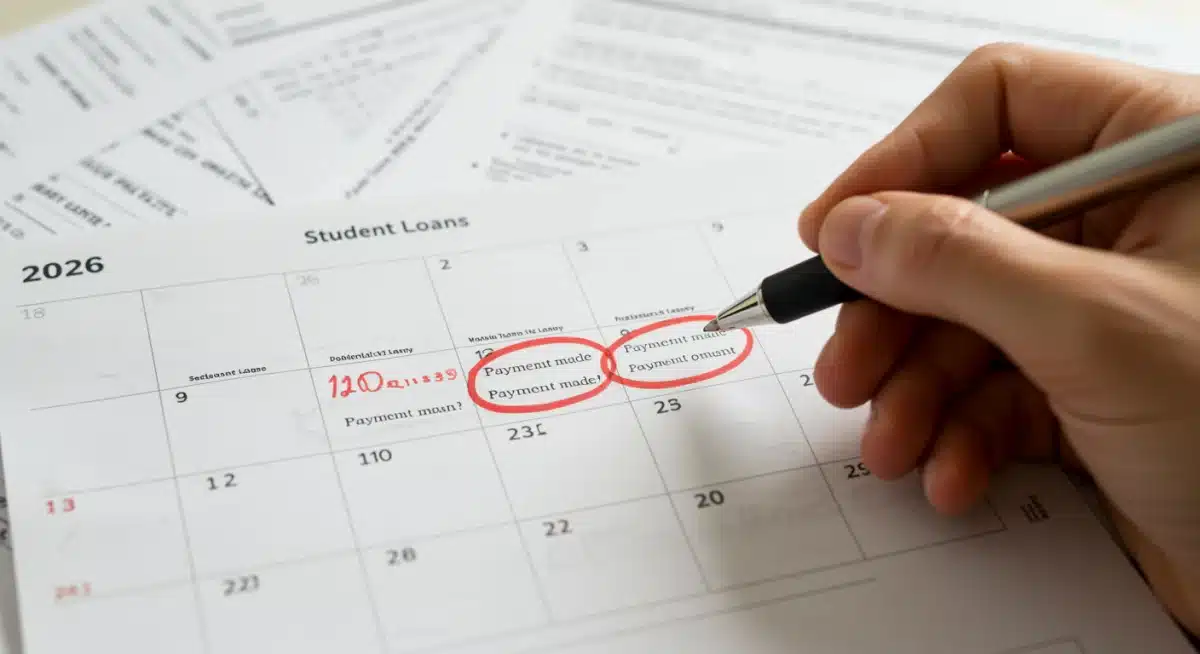
This proactive approach helps to identify and correct any discrepancies early on, preventing potential issues when you apply for forgiveness. Without consistent certification, you might mistakenly believe you are on track, only to find out years later that some of your payments do not qualify.
The 120 qualifying payments represent a decade of dedicated public service and financial responsibility. Meticulous tracking through annual employment certification and adherence to payment guidelines are the keys to successfully reaching the forgiveness finish line by 2026.
Navigating the PSLF Application Process in 2026
Once you believe you have made 120 qualifying payments, the final step is to apply for forgiveness. The PSLF application process, while seemingly straightforward, requires careful attention to detail. This is where all your diligent work over the past decade comes to fruition. The official application form, typically available through the Federal Student Aid website, is used to request forgiveness of your remaining loan balance.
It’s vital to ensure all your employment history is certified up to the date of your application. Any uncertified periods could delay the processing of your forgiveness request. The application will ask for details about your employers and the dates of your employment, which should align with the information you provided in your annual ECFs. Your loan servicer will then review your application, verify your employment and payment history, and ultimately determine your eligibility for forgiveness.
Common Pitfalls to Avoid
Despite improvements, some common issues can still derail an otherwise eligible application. These include:
- Incorrect employment dates on the application
- Missing or uncertified periods of employment
- Payments made while not in a qualifying repayment plan
- Loans that were not Direct Loans or not consolidated properly
- Not being employed full-time by a qualifying employer at the time of payments
To mitigate these risks, maintain thorough records of your employment, payment history, and all correspondence with your loan servicer. Keep copies of all submitted ECFs and any communication regarding your loan status. This documentation can be invaluable if discrepancies arise during the application review.
The PSLF application in 2026 is the culmination of years of effort. By meticulously preparing and understanding the potential hurdles, you can significantly increase your chances of a smooth and successful forgiveness outcome.
Strategies for Maximizing Your PSLF Benefits by 2026
For those still in the early or middle stages of their PSLF journey, strategic planning can significantly enhance your chances of achieving full forgiveness. Proactive management of your loans and employment can make a substantial difference. One of the most impactful strategies is to ensure you are on the lowest possible income-driven repayment plan. The lower your monthly payment, the less you pay out of pocket over the 10 years, and the larger the amount forgiven at the end.
Regularly updating your income and family size information with your loan servicer is crucial for keeping your IDR payments accurate and potentially lower. Life changes such as marriage, birth of a child, or a decrease in income should prompt an immediate update to your IDR plan to reflect your current financial situation. This not only keeps your payments affordable but also maximizes the forgiveness amount.
Consolidation and Loan Types
If you have older federal loans that are not Direct Loans, consolidating them into a Direct Consolidation Loan as soon as possible is a non-negotiable step. Payments made before consolidation do not count, so delaying this process only pushes back your forgiveness timeline. Ensure you understand the implications of consolidation, as it can sometimes reset your payment count, though recent waivers have often mitigated this for eligible borrowers.
- Choose the lowest IDR plan suitable for your income.
- Update your income and family size annually or as changes occur.
- Consolidate non-Direct Loans early in your PSLF journey.
- Maintain meticulous records of employment and payments.
Another often overlooked strategy is to understand your employment status. Full-time employment is generally defined as working at least 30 hours per week. If you hold multiple part-time jobs with qualifying employers, the combined hours can count towards full-time employment, provided each employer certifies your hours. This flexibility can be critical for some public servants.
By implementing these strategies, you can optimize your path towards PSLF in 2026, ensuring that every qualifying payment brings you closer to financial freedom.
Potential Changes and What to Watch for in PSLF by 2026
The landscape of federal student aid programs, including PSLF, is subject to ongoing review and potential legislative changes. While the core tenets of PSLF are expected to remain stable, staying informed about any new developments is vital for current and prospective applicants. Government administrations often propose adjustments to student loan policies, which could impact eligibility, repayment plans, or even the forgiveness process itself.
For instance, discussions around simplifying IDR plans or expanding the definition of qualifying employment could emerge. While these changes are typically designed to benefit borrowers, they also require careful attention to ensure you understand how they might apply to your specific situation. Reliable sources of information include the official Federal Student Aid website, your loan servicer, and reputable financial news outlets.
Advocacy and Program Evolution
The history of PSLF has shown that borrower advocacy and administrative reviews can lead to significant program improvements. The limited PSLF Waiver, which provided unprecedented flexibility for borrowers to count previously ineligible payments, is a prime example of how the program can evolve. While such broad waivers are often temporary, they set precedents and highlight areas where the program can be improved for future borrowers.
- Regularly check the Federal Student Aid website for updates.
- Subscribe to newsletters from your loan servicer or relevant government agencies.
- Be aware of potential legislative proposals affecting student loans.
By 2026, further administrative clarifications or even new legislative actions could be in place to simplify the PSLF process or address lingering issues. Being proactive in seeking out information and understanding how these changes might affect your eligibility and payment count is a crucial part of managing your PSLF journey. Don’t assume the rules from previous years will perfectly apply to your situation in 2026.
Staying vigilant and informed about the evolving nature of PSLF is essential. By monitoring official announcements and understanding potential shifts, you can adapt your strategy and ensure your path to forgiveness remains clear and unhindered by unforeseen changes.
Common Misconceptions and Clarifications for PSLF in 2026
Despite years of the Public Service Loan Forgiveness program being in effect, several misconceptions continue to circulate, leading to confusion and frustration for many borrowers. Addressing these directly can save significant time and effort for those pursuing PSLF in 2026. One pervasive myth is that any federal student loan qualifies. As previously discussed, only Direct Loans are eligible. This is a critical distinction that often trips up borrowers with older FFEL or Perkins Loans who haven’t consolidated.
Another common misunderstanding revolves around the definition of ‘full-time employment.’ Some believe it requires a single 40-hour-per-week job, but PSLF generally considers 30 hours per week as full-time. Moreover, combining hours from multiple qualifying part-time jobs to reach 30 hours per week is often permissible, offering flexibility for those with varied public service roles.
Clarifying Payment Requirements
The idea that all 120 payments must be consecutive is another significant misconception. While consistent payments are ideal, the 120 qualifying payments do not need to be consecutive. If you take a break from qualifying employment or make payments under an ineligible plan, those periods simply won’t count, but you can pick up where you left off once you return to eligible status. The total count just needs to reach 120.
- Only Direct Loans are eligible; consolidate others.
- Full-time is generally 30 hours/week, can be combined from multiple jobs.
- Payments do not need to be consecutive.
- You must be employed by a qualifying employer when making each qualifying payment.
Furthermore, some borrowers mistakenly believe they need to earn a specific income level to qualify for PSLF. The program has no income cap; rather, it’s about working for a qualifying employer and being on an income-driven repayment plan. The IDR plan ensures your payments are affordable relative to your income, regardless of how high or low that income might be.
Dispelling these common myths is crucial for a smooth PSLF journey. By understanding the precise requirements and avoiding widespread misunderstandings, public servants can confidently pursue their path to loan forgiveness by 2026.
| Key Aspect | Description for PSLF 2026 |
|---|---|
| Eligible Employers | Government entities (federal, state, local, tribal) and 501(c)(3) non-profits. |
| Loan Types | Only Direct Loans qualify. Consolidate FFEL/Perkins loans into Direct Loans. |
| Qualifying Payments | 120 payments made on time, full amount, under an IDR plan, while employed full-time. |
| Employment Certification | Submit ECF annually or when changing employers to track progress accurately. |
Frequently Asked Questions About PSLF in 2026
No, only Direct Loans are eligible for PSLF. If you have other federal loan types like FFEL or Perkins, you must consolidate them into a Direct Consolidation Loan to participate in the program. Payments made before consolidation do not count.
A qualifying payment is made on a Direct Loan, under an income-driven repayment plan, for the full amount due, within 15 days of the due date, and while employed full-time by a qualifying employer.
It is highly recommended to submit the ECF annually or whenever you change employers. This ensures your employment and payments are correctly tracked and any discrepancies can be addressed promptly, preventing issues later.
Yes, you must be employed full-time by a qualifying employer at the time you apply for PSLF forgiveness and at the time the remaining balance is forgiven. This is a critical requirement often overlooked by applicants.
Generally, no. Periods of deferment or forbearance do not count towards the 120 qualifying payments because you are not making payments. However, temporary waivers have occasionally allowed certain non-payment periods to count.
Conclusion
Achieving Public Service Loan Forgiveness by 2026 is a significant milestone for many dedicated public servants, offering a clear path to financial freedom. The journey, while demanding meticulous attention to detail regarding loan types, repayment plans, and employment certification, is ultimately rewarding. By understanding the core principles, strategically managing your loans, and staying informed about potential program changes, you can confidently navigate the requirements and successfully reach your goal of full loan forgiveness. Your commitment to public service is invaluable, and PSLF is designed to recognize that contribution.