Section 179 Expensing 2026: Deduct Up to $1.22 Million in Qualified Property

For 2026, businesses can utilize Section 179 expensing to deduct up to $1.22 million for qualified property, a critical strategy for maximizing tax savings and investing in growth.
As we navigate the complexities of tax season in 2026, understanding key provisions like Section 179 Expensing for 2026 becomes paramount for businesses aiming to optimize their financial strategies. This essential tax incentive allows eligible businesses to deduct the full purchase price of qualifying equipment and software placed into service during the tax year, rather than depreciating it over several years. This immediate deduction can significantly reduce taxable income, freeing up capital for further investment and growth. Staying informed about the latest updates and limits is crucial for maximizing these substantial benefits.
Understanding Section 179: The Basics for 2026
Section 179 of the IRS tax code is a powerful tool designed to help businesses, particularly small and medium-sized enterprises, invest in themselves. It permits businesses to deduct the full purchase price of qualifying equipment and/or software purchased or financed during the tax year, rather than having to depreciate the asset over its useful life. This immediate deduction can provide a substantial boost to a company’s cash flow and reduce its overall tax burden. For 2026, the provisions continue to offer significant advantages, making it a cornerstone of effective tax planning.
What Qualifies Under Section 179?
Identifying what constitutes ‘qualified property’ is the first step in leveraging Section 179. Generally, this includes tangible personal property like machinery, equipment, vehicles (with certain limitations), and off-the-shelf software. The property must be purchased for use in the active conduct of a trade or business and placed into service during the tax year the deduction is claimed. Understanding these specific criteria is vital to ensure compliance and avoid potential issues with the IRS.
- Tangible Personal Property: This covers a wide range of assets, from manufacturing equipment to office furniture.
- Off-the-Shelf Software: Software readily available for purchase by the general public, not custom-designed.
- Qualified Real Property: Certain improvements to nonresidential real property, such as roofs, HVAC, fire protection, and security systems.
The flexibility of Section 179 allows businesses to make strategic investments in a variety of assets that directly contribute to their operations. By understanding the types of assets that qualify, businesses can better plan their capital expenditures to align with their tax strategy and maximize their deductions. This proactive approach ensures that every eligible dollar spent on business improvements translates into immediate tax savings.
The $1.22 Million Deduction Limit for 2026
For the 2026 tax year, the maximum amount a business can elect to expense under Section 179 is set at an impressive $1.22 million. This substantial limit provides a significant opportunity for businesses to make considerable investments in their infrastructure and operations, knowing that a large portion of these costs can be immediately deducted. This updated figure reflects adjustments for inflation, ensuring the provision remains relevant and impactful for modern businesses.
This deduction limit is not static; it is subject to changes and annual adjustments by the IRS. Businesses need to stay informed of these updates to accurately plan their expenditures and deductions. The $1.22 million limit for 2026 is a crucial figure that will shape capital expenditure decisions for many enterprises across various sectors. Exceeding this limit means the excess portion must be depreciated using standard methods, which is why careful planning is essential.
Understanding the Phase-Out Threshold
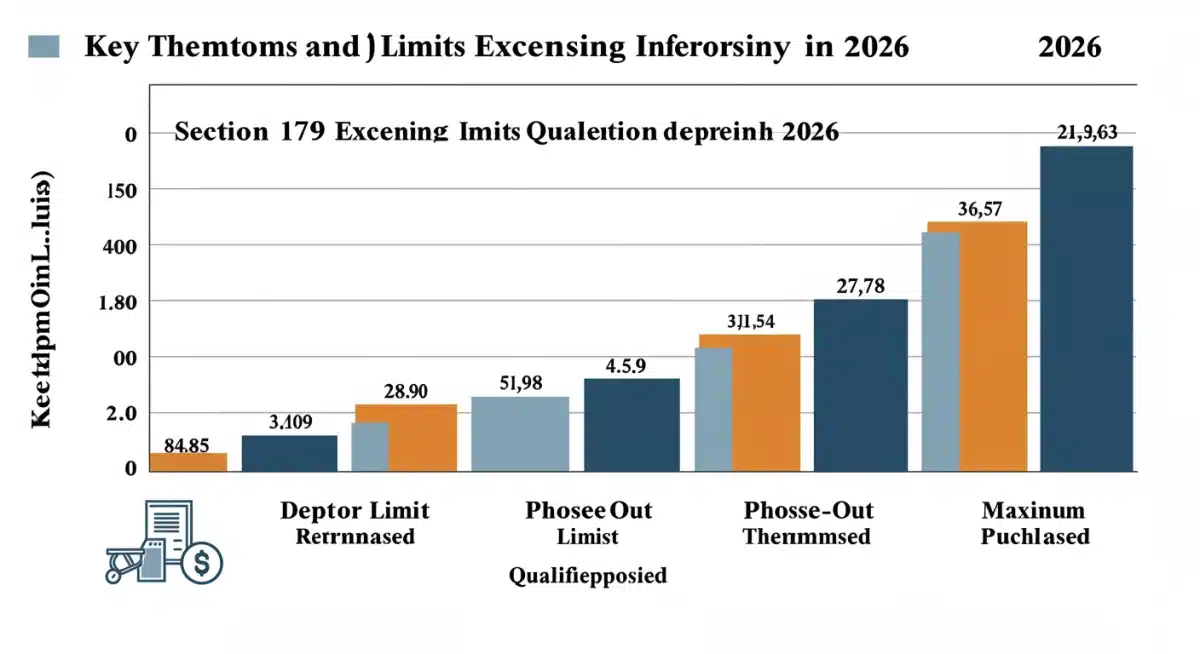
While the $1.22 million deduction limit is generous, it’s important to be aware of the Section 179 phase-out threshold. For 2026, this threshold begins to apply once a business purchases more than $3.05 million in qualified property during the tax year. For every dollar spent above this amount, the maximum deduction limit is reduced dollar-for-dollar. This means that businesses purchasing a significant amount of property might see their Section 179 deduction capability diminished.
- Deduction Limit: $1.22 million for qualified property.
- Phase-Out Threshold: Begins at $3.05 million of purchased property.
- Complete Phase-Out: The deduction is entirely phased out once purchases reach $4.27 million ($3.05M + $1.22M).
This phase-out mechanism is designed to primarily benefit small and medium-sized businesses, preventing larger corporations from disproportionately utilizing the incentive. Businesses that anticipate large capital expenditures should actively monitor their total purchases to understand how the phase-out might affect their eligible deduction. Strategic timing of purchases can sometimes mitigate the impact of this threshold, allowing for maximum benefit from Section 179.
Benefits of Section 179 Expensing for Business Growth
The immediate expensing allowed by Section 179 offers numerous advantages that extend beyond mere tax savings. It acts as a powerful catalyst for business growth, encouraging companies to invest in new equipment, technology, and infrastructure. By reducing the upfront cost of these investments through tax deductions, businesses can free up capital that can be reinvested into other areas, such as hiring new employees, expanding marketing efforts, or developing new products and services.
One of the primary benefits is improved cash flow. Instead of tying up significant capital in depreciating assets over several years, businesses can claim a large deduction in the current year. This immediate financial relief can be particularly impactful for small businesses that often operate with tighter budgets. Enhanced cash flow allows for greater flexibility and resilience, enabling businesses to respond more effectively to market changes and seize new opportunities.
Encouraging Capital Investment
Section 179 directly incentivizes businesses to modernize and upgrade their assets. This is crucial for maintaining competitiveness in rapidly evolving markets. Whether it’s investing in advanced manufacturing machinery, state-of-the-art computer systems, or more efficient vehicles, the ability to expense these costs quickly makes such investments more appealing. This continuous cycle of investment and modernization contributes to increased productivity and innovation.
- Boosted Productivity: New equipment often leads to greater efficiency and output.
- Technological Advancement: Encourages adoption of the latest technologies.
- Competitive Edge: Helps businesses stay ahead by having modern tools and infrastructure.
Ultimately, Section 179 is more than just a tax break; it’s an economic stimulus. By encouraging businesses to invest in themselves, it supports job creation, fosters innovation, and strengthens the overall economy. Businesses that strategically utilize this provision are not only improving their own financial health but also contributing to broader economic development. Careful planning around these benefits can lead to sustainable growth.
Key Changes and Updates Affecting 2026
While the core principles of Section 179 remain consistent, tax laws are dynamic, and businesses must always be aware of any recent updates or changes that could impact their expensing strategies for 2026. The IRS periodically adjusts deduction limits and phase-out thresholds, primarily to account for inflation, but also in response to broader economic policies. Staying informed through reliable sources is essential to ensure compliance and maximize benefits.
The $1.22 million deduction limit and the $3.05 million phase-out threshold for 2026 are the most significant updates for the upcoming tax year, representing increases from previous years. These adjustments reflect ongoing efforts to provide meaningful tax relief and incentive for business investment. However, businesses should also be mindful of any potential legislative changes that could modify these provisions in the future, as tax policy can sometimes shift unexpectedly.
Interaction with Bonus Depreciation
Another critical aspect to consider is the interaction between Section 179 expensing and bonus depreciation. While both allow for accelerated deductions, they operate differently. Bonus depreciation typically allows businesses to deduct a percentage of the cost of eligible property in the year it’s placed in service, without the same per-item limit as Section 179.
For 2026, the bonus depreciation percentage is set to continue its gradual phase-down. This means that while bonus depreciation remains a valuable tool, its impact will be less significant than in prior years when 100% bonus depreciation was available. Businesses often use Section 179 first, up to its maximum limit, and then apply bonus depreciation to any remaining eligible property. Understanding how these two provisions complement each other is key to a comprehensive depreciation strategy.
The strategic interplay between Section 179 and bonus depreciation requires careful calculation and foresight. Businesses should consult with tax professionals to determine the optimal approach for their specific circumstances, ensuring they leverage both provisions effectively to minimize their tax liability. The declining bonus depreciation percentage makes Section 179 even more critical for immediate expensing.
Strategic Planning for Maximizing Section 179 Deductions
Effective utilization of Section 179 expensing requires more than just knowing the limits; it demands strategic planning and foresight. Businesses should integrate their capital expenditure plans with their tax strategy well in advance of the tax year. This proactive approach ensures that all eligible purchases are identified, and the timing of these acquisitions is optimized to maximize the deduction.
One crucial aspect of planning involves projecting total qualified property purchases for the year. This helps in understanding whether the business will approach or exceed the phase-out threshold. If a business anticipates exceeding the threshold, they might consider staggering purchases across tax years, if feasible, to maintain eligibility for the full Section 179 deduction. This careful balancing act can yield substantial tax savings.
Consulting with Tax Professionals
Given the complexities of tax law and the specific nuances of Section 179, engaging with a qualified tax professional is highly recommended. A tax advisor can provide tailored guidance, ensuring businesses accurately identify qualified property, correctly apply the deduction limits, and navigate any potential pitfalls. They can also help integrate Section 179 into a broader tax strategy that includes other deductions and credits.
- Accurate Qualification: Ensures property meets IRS criteria.
- Optimal Timing: Advises on the best time to make purchases.
- Compliance: Helps avoid errors and potential audits.
A professional can also assist with the necessary IRS forms, such as Form 4562, which is used to elect Section 179 expensing. Proper documentation and reporting are just as important as the planning itself. By working with experts, businesses can have confidence that their Section 179 strategy is sound, compliant, and fully optimized to achieve the maximum possible tax benefit for 2026.
Common Misconceptions and Best Practices for 2026
Despite its widespread use, Section 179 expensing is often misunderstood, leading to missed opportunities or, worse, compliance issues. One common misconception is that the deduction applies to all business expenses. In reality, it is specifically for qualifying tangible personal property and certain real property improvements placed into service during the tax year. Understanding this distinction is fundamental to correctly applying the provision.
Another frequent misunderstanding relates to the ‘use it or lose it’ nature of the deduction. If a business doesn’t elect Section 179 in the year the property is placed in service, they generally cannot go back and claim it later. Therefore, timely election is critical. Businesses must be proactive in their tax planning and ensure they make the election on their tax return for the relevant year, typically by filing Form 4562.
Best Practices for Implementation
To effectively leverage Section 179 for 2026, several best practices should be adopted. Firstly, maintain meticulous records of all capital expenditures, including purchase dates, costs, and dates placed in service. This documentation is essential for substantiating claims during an audit. Secondly, regularly review the IRS guidelines and publications, as rules can be updated annually, affecting eligibility or limits.
- Detailed Record-Keeping: Document all property purchases and usage.
- Annual Review of IRS Guidelines: Stay updated on changes and adjustments.
- Proactive Planning: Integrate Section 179 into overall business and tax strategy.
Finally, consider the long-term impact of expensing versus traditional depreciation. While immediate expensing offers significant short-term benefits, there might be scenarios where traditional depreciation could be more advantageous over the asset’s life, especially if future tax rates are expected to be higher. A comprehensive analysis, ideally with a tax professional, can help determine the most beneficial approach for your specific business context. Adhering to these best practices ensures that businesses can confidently and effectively utilize Section 179 for maximum benefit.
| Key Aspect | Description for 2026 |
|---|---|
| Deduction Limit | Up to $1.22 million for qualifying property. |
| Phase-Out Threshold | Begins when total property purchases exceed $3.05 million. |
| Qualified Property | Tangible personal property, off-the-shelf software, certain real property improvements. |
| Business Benefit | Boosts cash flow, encourages investment, reduces taxable income. |
Frequently Asked Questions About Section 179 in 2026
The main benefit is allowing businesses to immediately deduct the full purchase price of qualifying equipment and software up to $1.22 million, rather than depreciating it over several years. This significantly reduces current taxable income and improves cash flow for reinvestment.
Qualified property generally includes tangible personal property like machinery, computers, office furniture, certain vehicles, and off-the-shelf software. It also extends to specific improvements made to nonresidential real property, such as roofs and HVAC systems, placed in service during the tax year.
For 2026, the deduction begins to phase out dollar-for-dollar once a business purchases more than $3.05 million in qualified property. This means if you buy $3.55 million, your deduction limit would be reduced by $500,000, illustrating the importance of careful spending projections.
Yes, businesses can often combine Section 179 expensing with bonus depreciation. Typically, Section 179 is applied first up to its maximum limit, and then bonus depreciation is used for any remaining eligible property. However, bonus depreciation is gradually phasing down in 2026, making Section 179 increasingly vital.
Timely election is crucial because the Section 179 deduction must be claimed in the same tax year the qualifying property is placed in service. Failing to make the election on the appropriate tax return, typically Form 4562, means you generally lose the opportunity to claim the deduction later.
Conclusion
The provisions of Section 179 Expensing for 2026 present a significant opportunity for businesses to reduce their taxable income and stimulate growth through strategic investments. With a deduction limit of $1.22 million and a phase-out threshold starting at $3.05 million, understanding these figures is crucial for effective financial planning. By leveraging this incentive, businesses can enhance their cash flow, modernize their operations, and remain competitive in an evolving economic landscape. Proactive planning and consultation with tax professionals are highly recommended to navigate the complexities and fully capitalize on these valuable tax benefits, ensuring compliance and maximizing every eligible deduction for the upcoming tax year.