2026 Financial Check-Up: 5 Key Areas by March for Optimal Health

A timely 2026 financial check-up by March is essential for proactive financial health, enabling individuals to adapt strategies across budgeting, investments, debt management, savings, and tax planning for the year ahead.
As we navigate the complexities of another year, understanding and optimizing your financial standing becomes more critical than ever. A thorough 2026 financial check-up by March is not just a recommendation; it’s a strategic imperative to ensure your financial health remains robust and resilient. This early-year review allows you to align your financial goals with the evolving economic landscape and harness new opportunities.
Reassessing Your Budget and Cash Flow in 2026
The foundation of any sound financial plan is a well-managed budget. In 2026, with shifting economic indicators and potential new inflation trends, a fresh look at your budget and cash flow is paramount. This isn’t about restriction, but about understanding where your money goes and ensuring it aligns with your priorities.
Many individuals find that their spending habits subtly change over time, often without conscious effort. What was a balanced budget last year might be less effective now due to increased living costs, subscription creep, or new lifestyle choices. A March review gives you ample time to identify discrepancies and recalibrate.
Understanding Your Income Streams
Begin by consolidating all your income sources. This includes your primary salary, any side hustles, investment dividends, or rental income. A clear picture of your total monthly inflow is the starting point for effective budgeting.
- Identify all sources: Ensure every penny coming in is accounted for.
- Anticipate changes: Consider potential raises, bonuses, or changes in supplementary income.
- Automate income tracking: Utilize budgeting apps or spreadsheets for real-time monitoring.
Analyzing Your Expenditure
Next, meticulously categorize your expenses. Differentiate between fixed costs (rent/mortgage, loan payments, insurance) and variable costs (groceries, entertainment, utilities). This distinction is vital for identifying areas where adjustments can be made without significantly impacting your quality of life.
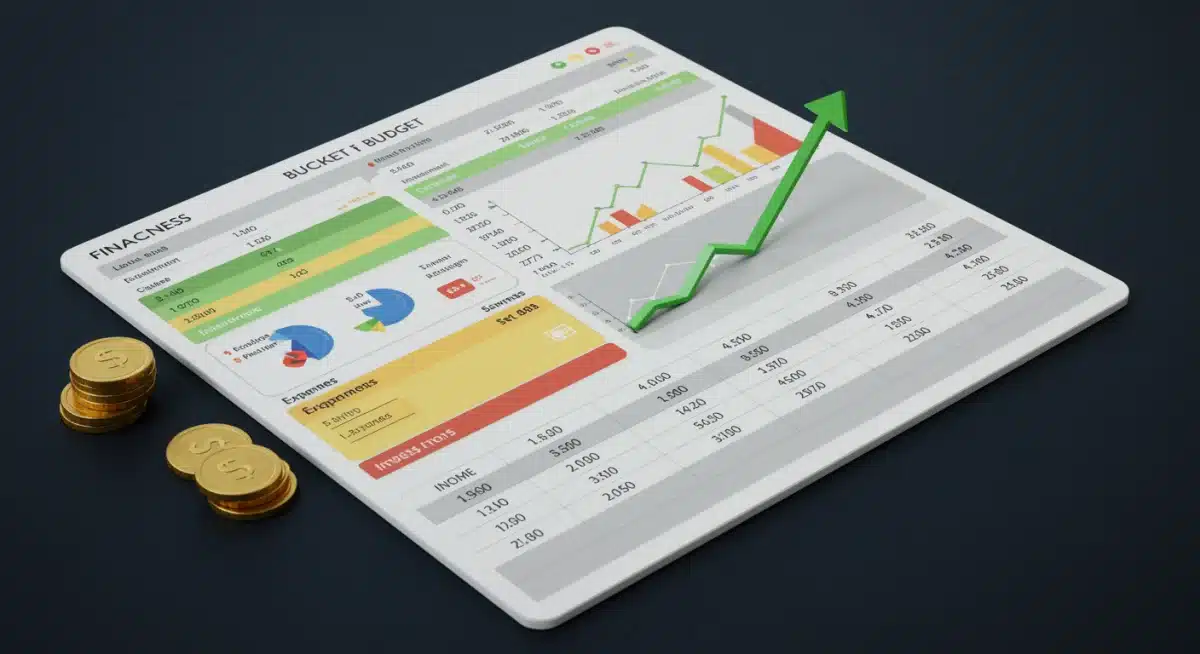
Pay close attention to discretionary spending. Often, small, frequent purchases can add up to substantial amounts over a month. Tools that automatically categorize transactions can be incredibly helpful here, providing a clear visual representation of your spending habits.
Optimizing Cash Flow for Growth
Once you have a clear picture of your income and expenses, the goal is to optimize your cash flow. This means ensuring that more money is coming in than going out, and that the surplus is actively working for you, rather than sitting idle. Consider setting up automatic transfers to savings or investment accounts immediately after receiving your paycheck.
For example, if you find you’re consistently overspending in one category, look for alternatives. Can you cook more meals at home? Are there subscription services you no longer use? Small changes can yield significant results, freeing up funds for debt repayment or wealth building. Regularly reviewing your budget helps you stay agile and responsive to both personal and economic shifts, ensuring your financial plan remains a living, breathing document that serves your current needs.
Evaluating Your Investment Portfolio for 2026 Goals
The investment landscape is constantly evolving, and 2026 is no exception. A critical component of your annual financial check-up is a thorough review of your investment portfolio. This means assessing its performance, ensuring it aligns with your risk tolerance, and verifying that it’s still on track to meet your long-term goals.
Market conditions change, and what was an appropriate asset allocation last year might not be optimal today. Economic forecasts, industry shifts, and technological advancements can all impact the performance of your investments. Proactive evaluation helps you capitalize on opportunities and mitigate potential risks.
Assessing Performance and Rebalancing
Start by evaluating how each of your investments has performed over the past year. Compare their actual returns against market benchmarks and your initial expectations. Don’t just look at the raw numbers; consider the underlying factors contributing to gains or losses.
- Review asset allocation: Has market movement shifted your desired equity-to-bond ratio?
- Identify underperforming assets: Determine if any investments are consistently lagging due to fundamental issues.
- Consider rebalancing: Adjust your portfolio back to your target allocation to maintain risk levels.
Aligning with Risk Tolerance and Goals
Your personal circumstances and financial goals might have changed since you first set up your portfolio. Perhaps you’re closer to retirement, or you have new financial obligations. These changes should prompt a re-evaluation of your risk tolerance and how it’s reflected in your investments.
If your risk tolerance has decreased, you might consider shifting towards more conservative assets. Conversely, if you have a longer time horizon and are comfortable with more volatility, you might explore growth-oriented opportunities. Ensure your investments are still aligned with specific goals, such as saving for a down payment, retirement, or a child’s education. Each goal may require a different investment strategy.
Exploring New Investment Opportunities
The financial world of 2026 presents a range of innovative investment avenues. Consider researching emerging sectors, sustainable investments, or alternative assets that might offer diversification and potential for growth. However, always conduct thorough due diligence before committing to new investments.
Consulting with a financial advisor can provide valuable insights into complex investment products and help you understand their suitability for your portfolio. They can also help you navigate the tax implications of any investment decisions. A regular review ensures your portfolio remains dynamic, responsive, and aligned with your evolving financial journey.
Optimizing Debt Management and Credit Health in 2026
Debt can be a significant drag on financial progress if not managed effectively. Your 2026 financial check-up must include a comprehensive review of your outstanding debts and your overall credit health. The goal is to minimize interest payments, accelerate debt repayment, and maintain a strong credit score, which is crucial for future financial flexibility.
High-interest debt, such as credit card balances, can quickly erode your savings and make it challenging to achieve other financial goals. By proactively addressing debt, you free up cash flow and improve your financial standing.
Assessing Current Debts
Compile a complete list of all your debts, including credit cards, personal loans, student loans, auto loans, and your mortgage. Note the interest rate, outstanding balance, and minimum payment for each. This clear overview will help you prioritize which debts to tackle first.
Focus on high-interest debts as a priority. The ‘debt avalanche’ method, where you pay off the highest interest debt first while making minimum payments on others, can save you a substantial amount in interest over time. Alternatively, the ‘debt snowball’ method, focusing on the smallest balance first, provides psychological wins.
Strategies for Debt Reduction
Consider refinancing options for high-interest loans, especially if your credit score has improved since you initially took out the loan. For example, consolidating multiple credit card debts into a single personal loan with a lower interest rate can simplify payments and reduce overall costs.
- Debt refinancing: Explore options to lower interest rates on existing loans.
- Balance transfers: Utilize 0% APR balance transfer offers if you can pay off the balance within the promotional period.
- Increased payments: Even small additional payments can significantly reduce the principal and interest paid over time.
Monitoring and Improving Credit Score
Your credit score is a reflection of your financial reliability and impacts everything from loan approvals to insurance premiums. Regularly check your credit report from all three major bureaus (Equifax, Experian, TransUnion) for inaccuracies or fraudulent activity. You are entitled to a free report annually.
To improve your credit score, focus on making all payments on time, keeping credit utilization low (ideally below 30% of your available credit), and avoiding opening too many new credit accounts simultaneously. A healthy credit score opens doors to better financial products and lower interest rates, saving you money in the long run.
Boosting Your Savings and Emergency Funds for 2026
A robust savings strategy and a well-funded emergency reserve are non-negotiable components of financial security in 2026. The economic landscape can be unpredictable, making a strong financial buffer more important than ever. Your March check-up should assess the adequacy of your current savings and identify opportunities to boost these vital accounts.
An emergency fund acts as a safety net, protecting you from unforeseen expenses such as job loss, medical emergencies, or significant home repairs. Without it, you might be forced to incur high-interest debt or liquidate investments, derailing your long-term financial goals.
Assessing Emergency Fund Adequacy
The general rule of thumb is to have 3 to 6 months’ worth of essential living expenses saved in an easily accessible account, such as a high-yield savings account. For individuals with fluctuating income or higher financial dependents, aiming for 6 to 12 months might be more prudent.
Calculate your monthly essential expenses (rent/mortgage, utilities, food, insurance, debt payments) and compare it to your current emergency fund balance. If there’s a shortfall, make it a top priority to close that gap. Automating transfers from your checking account to your emergency fund can make this process seamless.
Optimizing Savings Strategies
Beyond the emergency fund, review your other savings goals. Are you saving for a down payment on a home, a new car, a vacation, or a child’s education? Each goal might benefit from a specific savings approach.
Consider using separate savings accounts for different goals to keep them organized and motivate your progress. High-yield savings accounts offer better returns than traditional accounts, allowing your money to grow faster. For longer-term goals, explore certificates of deposit (CDs) or other low-risk investment vehicles.
Leveraging Automated Savings and “Found Money”
Automating your savings is one of the most effective ways to ensure consistent contributions. Set up recurring transfers that align with your paychecks. This “pay yourself first” approach ensures that saving isn’t an afterthought but a fundamental part of your financial routine.
- Automate transfers: Schedule regular deposits to your savings accounts.
- “Found money” savings: Direct tax refunds, bonuses, or unexpected windfalls directly into savings.
- Round-up apps: Utilize apps that round up your purchases and deposit the difference into savings.
By making savings a priority and employing smart strategies, you build a resilient financial foundation for 2026 and beyond, providing peace of mind and the flexibility to pursue your aspirations.
Reviewing Your Tax Strategy and Deductions for 2026
Tax planning is not a once-a-year event; it’s an ongoing process that should be integrated into your annual financial check-up. March is an ideal time to review your tax strategy for 2026, especially after the previous year’s tax season. This allows you to identify potential deductions, credits, and strategies to minimize your tax liability legally and effectively.
Tax laws can change, and your financial situation undoubtedly evolves. Proactive tax planning ensures you are taking advantage of all available opportunities and avoiding any costly surprises.
Understanding 2026 Tax Law Updates
Stay informed about any new tax legislation or changes to existing laws that will impact the 2026 tax year. These changes can affect everything from standard deductions and tax brackets to specific credits and investment rules. Resources like the IRS website and reputable financial news sources can provide valuable updates.
For instance, there might be new incentives for energy-efficient home improvements, changes to retirement contribution limits, or adjustments to child tax credits. Being aware of these changes allows you to adapt your financial behavior accordingly. Consulting a tax professional is highly recommended to interpret complex changes.
Identifying Potential Deductions and Credits
Take stock of all potential deductions and credits you might be eligible for. This includes contributions to retirement accounts (401(k), IRA), health savings accounts (HSA), student loan interest, and certain itemized deductions if they exceed the standard deduction. Keep meticulous records throughout the year to support these claims.
Consider your charitable contributions, medical expenses, and business expenses if you are self-employed. Even small deductions can add up, reducing your taxable income. For example, if you’ve done any significant home renovations for energy efficiency, ensure you understand any related tax credits.
Optimizing Withholding and Estimated Taxes
Review your W-4 form with your employer to ensure your tax withholding is accurate. Over-withholding means you’re giving the government an interest-free loan, while under-withholding could lead to a tax bill or penalties. The goal is to have your withholding as close as possible to your actual tax liability.
- Adjust W-4: Ensure your withholding matches your expected tax liability.
- Estimated taxes: If self-employed, review and adjust quarterly estimated tax payments.
- Retirement contributions: Maximize contributions to tax-advantaged accounts to reduce taxable income.
For self-employed individuals or those with significant income from investments, accurately calculating and paying estimated taxes quarterly is crucial to avoid penalties. A proactive tax strategy throughout 2026 can lead to significant savings and a more favorable financial outcome.
Planning for Retirement and Long-Term Financial Security
While immediate financial concerns are important, your 2026 financial check-up must also encompass a forward-looking perspective, specifically regarding retirement planning and long-term financial security. March is an excellent time to assess your progress towards retirement, adjust your contribution strategies, and ensure your long-term vision remains clear.
Retirement planning is not a static process; it requires regular adjustments based on life events, market performance, and changes in your financial capacity. The earlier you start and the more consistently you review, the greater your chances of achieving a comfortable retirement.
Assessing Retirement Progress
Begin by reviewing your current retirement savings across all accounts, including 401(k)s, IRAs, and any other investment vehicles designated for retirement. Compare your current balance with your projected retirement needs. Are you on track, ahead, or behind?
Consider using online retirement calculators to model different scenarios, adjusting for factors like inflation, investment returns, and potential changes in retirement age. This assessment provides a realistic picture of where you stand and what adjustments might be necessary.
Optimizing Retirement Contributions
Maximize your contributions to tax-advantaged retirement accounts. If your employer offers a 401(k) match, contribute at least enough to receive the full match – it’s essentially free money. For 2026, be aware of any updated contribution limits for 401(k)s and IRAs and aim to contribute the maximum if your budget allows.
Explore the benefits of Roth IRAs, especially if you anticipate being in a higher tax bracket in retirement. Contributions are made with after-tax dollars, but qualified withdrawals in retirement are tax-free. Diversifying your retirement accounts can offer greater tax flexibility in the future.
Long-Term Care and Estate Planning
Beyond accumulating wealth, securing your long-term future involves planning for potential healthcare costs in retirement and ensuring your assets are distributed according to your wishes. Review your long-term care insurance options, as these costs can be substantial and are often not covered by traditional health insurance.
- Review long-term care insurance: Assess your needs and coverage options.
- Update estate documents: Ensure wills, trusts, and power of attorney are current.
- Beneficiary designations: Verify beneficiaries on all accounts are up to date.
Finally, ensure your estate planning documents, such as your will, trusts, and power of attorney, are up to date and reflect your current wishes. This proactive approach to retirement and long-term security provides peace of mind and ensures your legacy is protected.
| Key Area | Action by March 2026 |
|---|---|
| Budget & Cash Flow | Reassess income and expenses, identify optimization opportunities. |
| Investment Portfolio | Evaluate performance, rebalance, align with risk tolerance and goals. |
| Debt & Credit Health | Review all debts, seek refinancing, monitor credit score for improvements. |
| Tax Strategy | Understand 2026 tax law updates, identify deductions, optimize withholding. |
Frequently Asked Questions About Your 2026 Financial Check-Up
A March financial check-up is crucial because it allows you to analyze the previous year’s financial performance and make timely adjustments for the current year. This proactive approach ensures you can adapt to new economic trends, optimize budgeting, and capitalize on tax planning opportunities before they pass.
While a comprehensive annual review is essential, it’s advisable to check your investment portfolio at least quarterly, or whenever there are significant market shifts or personal life changes. This helps ensure your investments remain aligned with your risk tolerance and long-term financial goals, allowing for timely rebalancing.
The “debt avalanche” method, focusing on paying off the debt with the highest interest rate first while making minimum payments on others, is generally the most cost-effective. Alternatively, the “debt snowball” method, paying off the smallest balance first, can provide psychological motivation. Consider refinancing for lower rates.
For 2026, a well-funded emergency fund should ideally cover 3 to 6 months of essential living expenses. However, for those with unstable income or significant dependents, aiming for 6 to 12 months is often recommended. Store it in a high-yield savings account for easy access and modest growth.
Tax laws frequently evolve. For 2026, it’s important to monitor IRS announcements and legislative changes for new deductions or credits related to energy efficiency, education, or retirement contributions. Consulting a tax professional or staying updated with reputable financial news sources will help you identify applicable benefits.
Conclusion
Undertaking a comprehensive 2026 financial check-up by March is more than just an annual chore; it’s a powerful commitment to your financial future. By systematically reviewing your budget, investments, debt, savings, and tax strategies, you gain clarity, identify opportunities for growth, and build resilience against unforeseen challenges. This proactive approach ensures that your financial plan remains dynamic and aligned with your evolving goals and the prevailing economic conditions. Take the time now to secure your financial well-being for the entire year and beyond, laying a solid foundation for lasting prosperity.