Remote Work Tax Implications 2026: Home Office Deductions & State Nexus Guide

Remote Work Tax Implications 2026: A Comprehensive Guide to Home Office Deductions and State Nexus Rules
The landscape of work has undergone a seismic shift in recent years, with remote work transitioning from a niche perk to a mainstream operational model for countless businesses and individuals worldwide. As we look ahead to 2026, the tax implications of this widespread phenomenon continue to evolve, presenting both opportunities and challenges. Navigating the complexities of remote work taxes 2026 requires a deep understanding of ever-changing regulations, particularly concerning home office deductions and the intricate web of state nexus rules.
This comprehensive guide aims to demystify the tax landscape for remote workers and their employers in 2026. We’ll delve into the specifics of what constitutes a deductible home office, explore the critical concept of state nexus and its impact on business taxation, and offer actionable strategies to ensure compliance and optimize your tax position. Whether you’re a freelance professional working from your home office, an employee telecommuting across state lines, or a business managing a distributed workforce, understanding these nuances is paramount to avoiding costly pitfalls and maximizing your financial efficiency.
The Evolving Nature of Remote Work Taxes 2026
The year 2026 is poised to bring further clarity and, potentially, new complexities to remote work taxation. Governments, both federal and state, are continually refining their approaches to taxing income earned by individuals working remotely, especially when their physical presence differs from their employer’s location or their state of residence. This evolving environment necessitates proactive planning and a thorough understanding of current and anticipated regulations.
One of the primary areas of focus for remote workers is the deductibility of home office expenses. While the rules for employees have historically been restrictive at the federal level, self-employed individuals have long enjoyed more flexibility. However, the Tax Cuts and Jobs Act (TCJA) of 2017 suspended these deductions from 2018 through 2025. As of now, for 2026, unless new legislation is passed to reinstate them, W-2 employees will likely continue to be unable to claim these deductions at the federal level. This means that if your employer does not reimburse you for home office expenses, you generally cannot deduct them on your federal income tax return.
For self-employed individuals (including freelancers, independent contractors, and small business owners), the rules are much more favorable. If you use a portion of your home exclusively and regularly for your trade or business, you can typically deduct expenses related to that space. "Exclusively" means the area is used only for business, not for personal activities. "Regularly" means on an ongoing basis, not just occasionally.
Understanding Home Office Deductions for Remote Workers in 2026
For many remote workers, the home office is more than just a spare room; it’s the nerve center of their professional life. Consequently, the ability to deduct expenses associated with maintaining this space can significantly reduce taxable income. However, the rules surrounding home office deductions are specific and require careful adherence.
Who Qualifies for Home Office Deductions?
The primary distinction lies between self-employed individuals and employees. Historically, W-2 employees could claim unreimbursed employee expenses, including home office costs, as an itemized deduction. However, the Tax Cuts and Jobs Act (TCJA) of 2017 suspended these deductions from 2018 through 2025. As of now, for 2026, unless new legislation is passed to reinstate them, W-2 employees will likely continue to be unable to claim these deductions at the federal level. This means that if your employer does not reimburse you for home office expenses, you generally cannot deduct them on your federal income tax return.
For self-employed individuals (including freelancers, independent contractors, and small business owners), the rules are much more favorable. If you use a portion of your home exclusively and regularly for your trade or business, you can typically deduct expenses related to that space. "Exclusively" means the area is used only for business, not for personal activities. "Regularly" means on an ongoing basis, not just occasionally.
What Expenses Can Be Deducted?
Once you qualify, a range of expenses can be deducted as part of your home office. These generally fall into two categories:
- Direct Expenses: These are costs solely for your home office. Examples include painting or repairs specific to the office, or a dedicated business phone line.
- Indirect Expenses: These are costs for the entire home, a portion of which can be allocated to your home office based on its size relative to your total home. Common indirect expenses include:
- Rent or mortgage interest
- Property taxes
- Utilities (electricity, gas, internet)
- Homeowner’s insurance
- Repairs and maintenance for the entire home (e.g., roof repair, furnace maintenance)
- Depreciation (for homeowners)
It’s crucial to calculate the business-use percentage of your home accurately. The most common methods are:
- Square Footage Method: Divide the square footage of your dedicated office space by the total square footage of your home. This percentage is then applied to your indirect expenses.
- Simplified Option: This allows you to deduct $5 per square foot of your home used for business, up to a maximum of 300 square feet (a maximum deduction of $1,500). While simpler, it might result in a lower deduction than the actual expense method for some.
Key Considerations for 2026 Home Office Deductions
- State-Specific Rules: Even if federal rules restrict employee home office deductions, some states might allow them. Always check your state’s tax laws for 2026.
- Record Keeping: Meticulous record-keeping is non-negotiable. Keep all receipts, invoices, and documentation related to your home office expenses. This includes utility bills, rent statements, mortgage interest statements, and records of any repairs or improvements.
- Exclusive Use: The "exclusive use" rule is strictly enforced. Using your office space for personal activities, even occasionally, can jeopardize your deduction.
- Principal Place of Business: Your home office must be your principal place of business, meaning it’s where you conduct your most important business activities. If you have another fixed location where you conduct substantial business, it might complicate your home office deduction claim.
Navigating home office deductions for remote work taxes 2026 requires diligence, but the potential savings make it a worthwhile endeavor for qualifying individuals.
State Nexus Rules in 2026: What Remote Work Means for Businesses
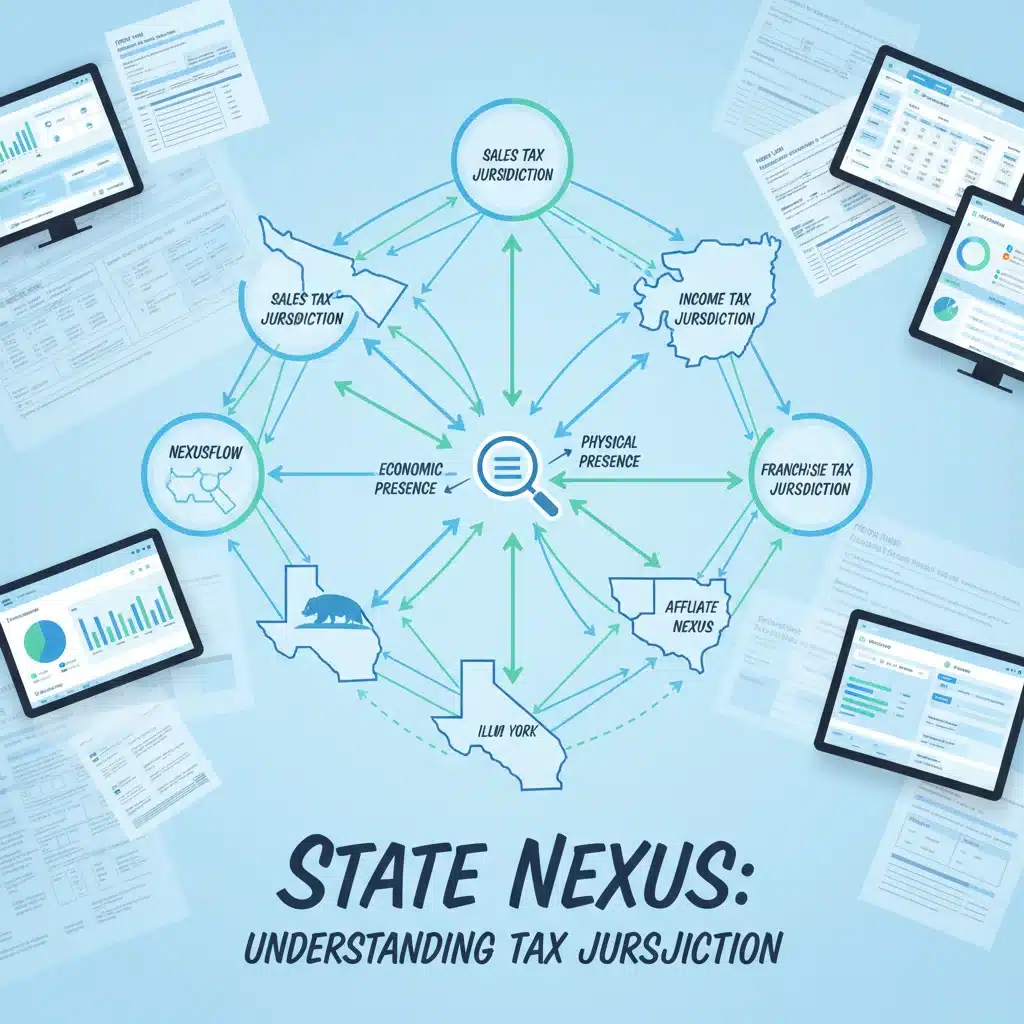
For businesses employing remote workers, the concept of "state nexus" has become one of the most critical and challenging aspects of remote work taxation. Nexus refers to the sufficient physical presence or economic activity a business has in a state to subject it to that state’s taxing jurisdiction. Historically, physical presence (like owning property or having employees) was the primary trigger. With remote work, an employee working from their home in a state where the company previously had no presence can create nexus, leading to significant tax obligations.
Types of Nexus and Their Implications
The creation of nexus can trigger various state tax responsibilities for a business:
- Income Tax Nexus: If an employee’s presence creates income tax nexus, the employer may be required to apportion a portion of its income to that state and pay state corporate income tax. This can be particularly complex for businesses operating across multiple states with remote workers.
- Sales and Use Tax Nexus: While less common for remote employees causing sales tax nexus directly (unless the employee is involved in sales activities), it’s a crucial consideration for businesses selling goods or services. Economic nexus rules, established after the South Dakota v. Wayfair Supreme Court decision, mean businesses can have sales tax nexus based solely on sales volume or transaction count in a state, regardless of physical presence. Remote workers can indirectly contribute to meeting these thresholds or complicate compliance.
- Payroll Tax Nexus: This is perhaps the most immediate and common impact. If an employee works in a state, the employer typically needs to register with that state’s Department of Labor and revenue agencies to withhold and remit state income taxes, unemployment insurance, and other payroll taxes specific to that state. This applies even if the business has no other presence in that state.
- Business Registration and Licensing: Creating nexus might also require the business to register as a foreign entity (doing business) in that state and obtain specific business licenses.
The "Trailing Nexus" Problem
One particular concern for businesses is "trailing nexus." Even if a remote employee moves out of a state or employment is terminated, the company might still have a tax obligation in that state for a period, depending on state-specific look-back periods or rules regarding the "unwinding" of nexus. This adds another layer of complexity to managing a distributed workforce.
Strategies for Managing State Nexus in 2026
Proactive management is key to navigating state nexus challenges for remote work taxes 2026:
- Understand Employee Locations: Businesses must accurately track where their employees physically perform their work. This goes beyond just their mailing address and requires clear communication with remote staff.
- Develop a Remote Work Policy: A comprehensive policy should outline where employees are permitted to work remotely, potentially restricting work to states where the company is already registered or is willing to establish nexus.
- Conduct Nexus Reviews: Regularly assess your company’s nexus footprint. This involves reviewing where employees are located, sales activities, and economic thresholds for each state.
- Register in New States: If nexus is triggered, promptly register your business in the relevant states to comply with income, payroll, and other business tax requirements. Failure to do so can result in penalties, interest, and even personal liability for business owners.
- Consult Tax Professionals: The rules are highly complex and vary by state. Engaging with tax professionals specializing in multi-state taxation is crucial for businesses with remote workforces. They can help interpret specific state laws, advise on compliance strategies, and assist with registration and filing.
- Payroll System Adjustments: Ensure your payroll system can handle withholding and reporting requirements for multiple states.
The impact of remote work on state nexus rules is profound and will continue to be a dominant factor in business taxation for 2026. Ignoring these rules can lead to substantial financial and legal repercussions.
State-Specific Tax Considerations for Remote Employees in 2026
Beyond federal taxes, remote employees themselves face a complex web of state income tax rules, especially when working in a different state than their employer or their state of residence. Understanding these rules is crucial for accurate filing and avoiding double taxation.
"Convenience of the Employer" Rule
Several states (notably New York, Delaware, Pennsylvania, and Nebraska, among others) employ a "convenience of the employer" rule. Under this rule, if an employee works remotely from a different state for the convenience of the employee rather than the necessity of the employer, the income earned while working remotely may still be sourced to the employer’s state. This means the employee could be taxed by both their resident state and the employer’s state, leading to potential double taxation issues, though tax credits often mitigate this.
As 2026 approaches, it’s important to monitor if more states adopt or modify this rule, as it significantly impacts remote employees’ state tax liabilities.
Reciprocal Agreements
To alleviate double taxation, some states have "reciprocal agreements." These agreements allow residents of one state who work in a neighboring state to pay income tax only to their state of residence. If your state of residence and your work state have such an agreement, you typically file an exemption form with your employer so that only your resident state’s taxes are withheld. This simplifies tax filing for many cross-border commuters and remote workers.
Credit for Taxes Paid to Another State
In the absence of a reciprocal agreement or the "convenience of the employer" rule, if you pay income tax to two different states on the same income (e.g., your resident state and the state where you physically work remotely), your resident state usually allows a credit for taxes paid to the other state. This credit prevents true double taxation but still requires careful reporting on both state returns.
Key Steps for Remote Employees in 2026
- Identify Your Work Location(s): Your physical location while performing work is paramount. If you move or frequently work from different states, this needs to be tracked.
- Understand Your Employer’s State Nexus: While primarily a business concern, knowing where your employer has nexus can indirectly affect your state tax obligations and withholding.
- Review State Withholding: Ensure your employer is withholding taxes for the correct states. You may need to adjust your W-4 or state equivalent forms.
- Consult Your State Tax Department: For specific guidance on your situation, always refer to the tax department of both your resident state and any state where you perform remote work.
The complexity of state income tax for remote workers underscores the importance of staying informed about remote work taxes 2026 and seeking professional advice when necessary.
Beyond Deductions: Other Tax Planning Strategies for Remote Work in 2026
While home office deductions and state nexus are central, several other tax planning strategies can benefit both remote workers and businesses in 2026.
For Remote Employees:
- Employer Reimbursement Programs: If you are an employee, encourage your employer to implement or expand reimbursement programs for home office expenses and internet/utility costs. Reimbursed expenses are generally non-taxable to the employee and deductible for the employer.
- Health Savings Accounts (HSAs): If you have a high-deductible health plan, utilizing an HSA can be a powerful tax-advantaged savings vehicle. Contributions are tax-deductible, earnings grow tax-free, and withdrawals for qualified medical expenses are tax-free.
- Retirement Contributions: Maximize contributions to 401(k)s, IRAs, or other retirement plans. These contributions often reduce your taxable income.
- Dependent Care Flexible Spending Accounts (DCFSAs): If you have childcare expenses, a DCFSA allows you to set aside pre-tax money to cover these costs, reducing your taxable income.
For Businesses with Remote Workforces:
- Stipend vs. Reimbursement: Understand the tax implications of providing stipends versus reimbursements for remote work expenses. Reimbursements for actual, substantiated business expenses are generally non-taxable to the employee and deductible for the employer. Stipends, if not properly accounted for as accountable plan payments, can be taxable income to the employee.
- Review Employee Classification: Ensure all remote workers are correctly classified as either employees or independent contractors. Misclassification can lead to significant penalties for businesses.
- State Tax Credits and Incentives: Some states offer tax credits or incentives for businesses that create jobs, which might include remote positions. Research these opportunities in states where you have nexus.
- Technology and Cybersecurity Costs: Businesses can deduct costs associated with providing remote workers with necessary technology, software, and cybersecurity measures, which are essential for secure remote operations.
- Professional Development and Training: Expenses for training remote employees or professional development to enhance remote work skills are generally deductible.

The Importance of Meticulous Record-Keeping
Regardless of whether you are an individual remote worker or a business managing a remote team, meticulous record-keeping is the bedrock of sound tax compliance and optimization for remote work taxes 2026. The IRS and state tax authorities require detailed documentation to substantiate any deductions or credits claimed. Without proper records, even legitimate expenses can be disallowed, leading to increased tax liabilities, penalties, and interest.
What to Keep:
- All Receipts and Invoices: For every expense you plan to deduct, whether it’s a utility bill, a supply purchase, or a repair, keep the original receipt or a clear digital copy.
- Bank Statements and Credit Card Statements: These provide proof of payment and can help categorize expenses.
- Mileage Logs: If you use your personal vehicle for business travel (outside of your commute to your home office), maintain a detailed mileage log.
- Time Logs: For certain deductions or apportionment calculations, documenting the time spent on business activities can be helpful.
- Home Office Measurements: For the square footage method of home office deductions, have accurate measurements of your dedicated business space and your entire home.
- Employment Agreements and Policies: Businesses should retain documentation of remote work policies, employee locations, and any reimbursement agreements.
- Payroll Records: Comprehensive payroll records, including state-specific withholding and unemployment contributions, are essential for businesses.
How to Keep Records:
- Digital Solutions: Utilize accounting software (e.g., QuickBooks, Xero), expense tracking apps (e.g., Expensify, Receipt Bank), or cloud storage (e.g., Google Drive, Dropbox) to digitize and organize your records. This offers easy access and redundancy.
- Physical Organization: For those who prefer physical copies, a well-organized filing system with clearly labeled folders for each tax year and expense category is crucial.
- Regular Review: Don’t wait until tax season. Review and organize your records regularly, ideally monthly or quarterly, to prevent overwhelm and ensure accuracy.
Investing time in robust record-keeping practices now will save significant time, stress, and potential financial headaches when filing your remote work taxes 2026.
The Future Outlook: What to Anticipate for Remote Work Taxes Beyond 2026
The tax landscape for remote work is not static. As remote and hybrid models become more entrenched, it’s reasonable to expect further legislative and regulatory developments beyond 2026. Here are some potential trends to watch:
- Federal Employee Home Office Deduction Reinstatement: There’s ongoing discussion about potentially reinstating federal home office deductions for W-2 employees. While not guaranteed, it’s an area to monitor for future tax years.
- Uniformity in State Nexus Rules: The current patchwork of state nexus rules creates significant complexity. There may be a push for more standardized approaches, though this is a challenging legislative undertaking.
- Digital Nomad Visas and Tax Treaties: As more individuals embrace international remote work, governments may explore new visa categories and bilateral tax treaties to address income sourcing and social security contributions for "digital nomads."
- Increased Scrutiny and Enforcement: As remote work becomes more common, tax authorities are likely to increase their scrutiny and enforcement efforts related to remote work taxation, making compliance even more critical.
- Technological Solutions: Expect further advancements in tax software and payroll systems designed to handle multi-state payroll, nexus tracking, and remote work expense management more efficiently.
Staying informed about these potential changes is part of a proactive approach to managing remote work taxes 2026 and beyond. Subscribing to tax news updates, consulting with tax professionals, and regularly reviewing official IRS and state tax agency publications will be essential for both individuals and businesses.
Conclusion: Mastering Remote Work Taxes 2026
The rise of remote work has undeniably reshaped how and where we earn a living, but it has also added layers of complexity to taxation. For 2026, both individuals and businesses must meticulously navigate federal and state regulations concerning home office deductions, state nexus, and various other tax planning strategies. Understanding who qualifies for deductions, what expenses are allowable, and how an employee’s location impacts a business’s tax obligations is not merely about compliance; it’s about strategic financial management.
By embracing proactive planning, maintaining impeccable records, and seeking expert guidance when needed, you can transform the challenges of remote work taxes 2026 into opportunities for tax efficiency and peace of mind. The future of work is remote, and with the right knowledge, your tax strategy can be just as agile and effective.
Don’t let the intricacies of remote work taxation overwhelm you. Use this guide as a starting point, and remember that personalized advice from a qualified tax professional is invaluable for your unique circumstances.