Federal Work-Study Program 2026: Maximizing Your Eligibility and On-Campus Opportunities
Federal Work-Study Program 2026: Maximizing Your Eligibility and On-Campus Opportunities
Navigating the complexities of college funding can be daunting, but programs like the Federal Work-Study Program (FWS) offer a beacon of hope for many students. As we look towards 2026, understanding the nuances of this program becomes even more critical. The Federal Work-Study Program is designed to help students earn money to pay for educational expenses while gaining valuable work experience. It’s not just about financial aid; it’s about fostering professional development and connecting students with their campus community. This comprehensive guide will delve deep into the Federal Work-Study Program for 2026, covering eligibility, application strategies, and how to make the most of your on-campus opportunities.
Understanding the Federal Work-Study Program (FWS)
The Federal Work-Study Program is a federal financial aid program administered by the U.S. Department of Education. It provides part-time jobs for undergraduate and graduate students with financial need, allowing them to earn money to help pay education expenses. The program encourages community service work and work related to the student’s course of study. Unlike loans, the money earned through FWS does not need to be repaid. This makes it an incredibly attractive option for students aiming to minimize their post-graduation debt.
How FWS Works
Under the Federal Work-Study Program, the federal government pays a portion of the student’s wages, and the employer (usually the university or a non-profit organization) pays the remaining portion. This cost-sharing model makes it appealing for departments and organizations to hire FWS-eligible students, as it reduces their payroll expenses. Students are paid at least the federal minimum wage, and the amount they can earn is limited by their FWS award amount. Once a student reaches their maximum award, they can no longer be paid through the program for that award year.
Benefits Beyond Financial Aid
While the primary benefit of the Federal Work-Study Program is financial, its advantages extend far beyond just earning money. Students gain practical work experience, develop professional skills, build their resumes, and often establish valuable connections with faculty and staff. These experiences can be crucial for future job applications and career development. Many FWS positions are also designed to be flexible around a student’s academic schedule, ensuring that work does not interfere with studies.
Eligibility for the Federal Work-Study Program 2026
To be considered for the Federal Work-Study Program in 2026, students must meet specific eligibility criteria set by the federal government and their respective institutions. Understanding these requirements is the first step towards securing an FWS award.
Demonstrating Financial Need
The cornerstone of FWS eligibility is demonstrated financial need. This is determined through the Free Application for Federal Student Aid (FAFSA). When you complete your FAFSA, the Department of Education calculates your Expected Family Contribution (EFC). Your EFC is then subtracted from the cost of attendance (COA) at your chosen institution to determine your financial need. If your financial need is sufficient, you may be offered Federal Work-Study as part of your financial aid package.
Enrollment Status
Generally, students must be enrolled at least half-time in an eligible degree or certificate program to participate in the Federal Work-Study Program. Some exceptions may apply, so it’s always best to check with your institution’s financial aid office. Graduate students are also eligible for FWS, provided they meet the financial need and enrollment criteria.
Satisfactory Academic Progress (SAP)
To remain eligible for federal financial aid, including the Federal Work-Study Program, students must maintain Satisfactory Academic Progress (SAP). This typically means maintaining a certain GPA and completing a minimum number of credits each academic year. SAP policies can vary slightly between institutions, so familiarize yourself with your school’s specific requirements.
Other General Eligibility Requirements
- Be a U.S. citizen or eligible non-citizen.
- Have a valid Social Security number.
- Be registered with Selective Service, if you are a male between the ages of 18 and 25.
- Not be in default on a federal student loan or owe a refund on a federal student grant.
Applying for the Federal Work-Study Program 2026
The application process for the Federal Work-Study Program is integrated with the general financial aid application process. There isn’t a separate application specifically for FWS, but rather, you indicate your interest and eligibility is determined based on your FAFSA submission.
1. Complete the FAFSA Early
The most crucial step is to complete and submit your FAFSA as early as possible. For the 2026-2027 academic year, the FAFSA typically opens on October 1st of the preceding year (i.e., October 1, 2025). Federal Work-Study funds are limited and often awarded on a first-come, first-served basis to eligible students. Submitting your FAFSA early increases your chances of receiving an FWS offer.
2. Indicate Interest in Work-Study
On the FAFSA form, there will be a question asking if you are interested in Federal Work-Study. Make sure to answer ‘Yes’ to this question. This signals to your financial aid office that you are interested in participating in the program.
3. Review Your Financial Aid Offer
Once your FAFSA is processed and your school has reviewed it, you will receive a financial aid offer package. This package will detail all the federal, state, and institutional aid you are eligible for, which may include an offer for the Federal Work-Study Program. Carefully review this offer and accept the FWS award if you wish to participate.
4. Contact Your Financial Aid Office
If you don’t see a Federal Work-Study offer but believe you are eligible and have financial need, or if you have questions about your award, contact your financial aid office immediately. They can provide clarification and sometimes, if funds are available, adjust your package.
Finding On-Campus Opportunities with Federal Work-Study
Once you’ve been awarded Federal Work-Study, the next exciting step is finding a job! Most institutions have a centralized system or office dedicated to helping FWS students find appropriate positions.
University Job Boards and Portals
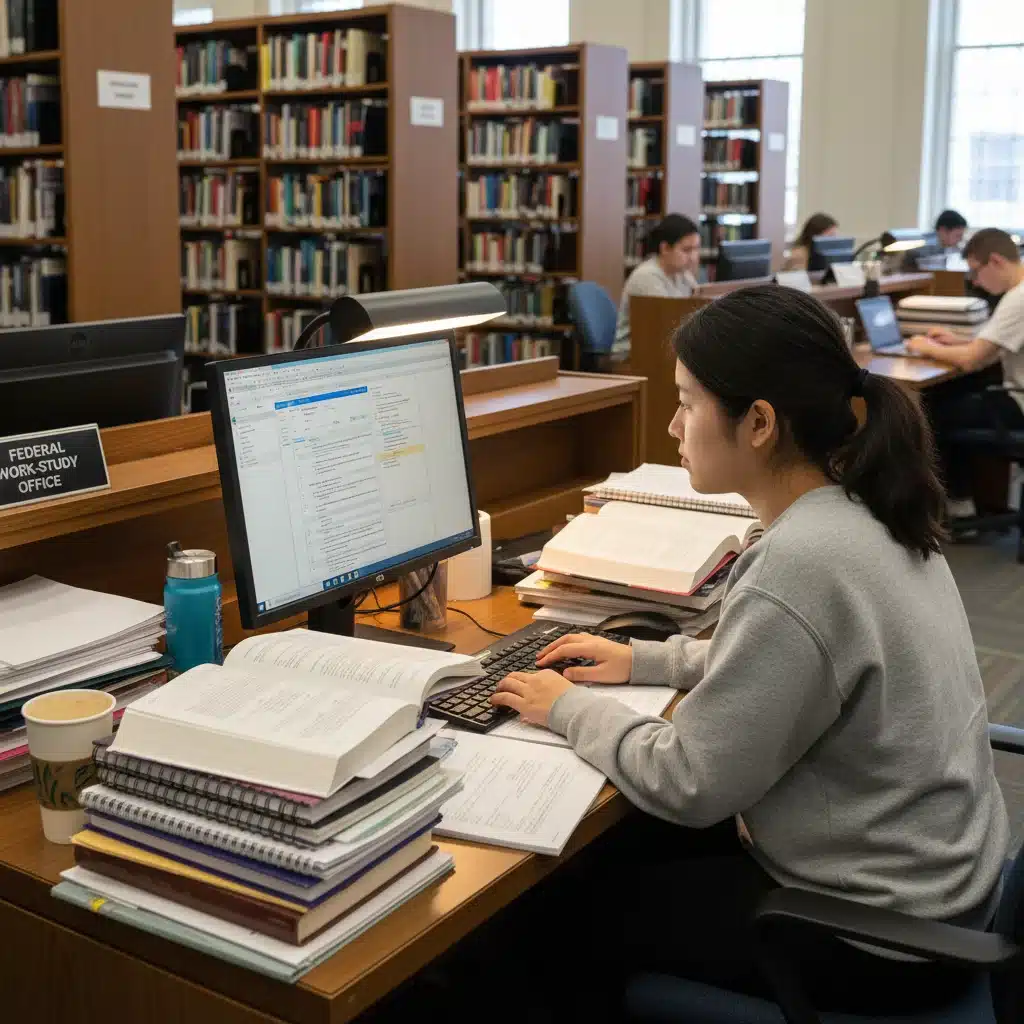
Your university will likely have an online job board or a specific portal for Federal Work-Study positions. These portals often list available jobs, job descriptions, required skills, and application instructions. Regularly check these resources, especially at the beginning of each semester, as new positions open up frequently.
Networking and Department Outreach
Don’t underestimate the power of networking. Talk to your professors, academic advisors, and departmental staff. Many departments hire FWS students for roles such as research assistants, administrative support, or lab assistants. Expressing your interest directly can sometimes lead to opportunities that aren’t widely advertised.
Career Services Office
Your university’s career services office is an invaluable resource. They can help you with resume building, interview skills, and often have connections with departments looking to hire FWS students. They can also provide guidance on how to tailor your applications to specific positions.
Types of Federal Work-Study Jobs
Federal Work-Study jobs are incredibly diverse and can range from traditional office roles to more specialized positions. Some common examples include:
- Library Assistant: Shelving books, assisting patrons, data entry.
- Administrative Assistant: Answering phones, filing, scheduling, general office support.
- Lab Assistant: Preparing materials for experiments, organizing labs, basic research tasks.
- Tutoring: Assisting fellow students in subjects you excel in.
- Research Assistant: Supporting faculty members with their research projects.
- IT Support: Helping with basic tech issues, managing computer labs.
- Community Service: Working with local non-profit organizations, often off-campus but still part of the FWS program.
Maximizing Your Federal Work-Study Experience
Securing a Federal Work-Study position is just the beginning. To truly maximize the benefits of the program, consider these strategies:
Choose a Job Related to Your Major or Career Goals
Whenever possible, seek out positions that align with your academic major or future career aspirations. This allows you to gain relevant experience, apply classroom knowledge, and build a professional network in your chosen field. For example, an aspiring biologist might work in a campus lab, while a marketing student could assist the university’s communications department.
Be Professional and Reliable
Treat your Federal Work-Study job like any other professional employment. Be punctual, communicate effectively with your supervisor, and take initiative. A strong work ethic will not only ensure a positive experience but can also lead to excellent references for future employment.
Balance Work and Academics
The Federal Work-Study Program is designed with students in mind, offering flexibility. However, it’s crucial to manage your time effectively to balance your work hours with your academic commitments. Communicate openly with your supervisor about your class schedule and any academic demands. Most FWS supervisors understand that your studies are your priority.
Track Your Earnings
Keep track of your hours worked and your earnings to ensure you don’t exceed your Federal Work-Study award limit. Your financial aid office or employer should provide guidance on how to monitor this. Once you reach your maximum award, you will no longer be paid through FWS for that academic year, though some employers may offer to continue employment using other funds.
Build Relationships
The people you work with – supervisors, colleagues, and other staff – can become valuable mentors and references. Cultivate positive relationships, learn from their experience, and expand your professional network. These connections can open doors to internships, graduate school opportunities, or full-time employment after graduation.
Common Questions About the Federal Work-Study Program 2026
What if I don’t receive a Federal Work-Study offer?
If you don’t initially receive an FWS offer, don’t despair. Funds are limited, and some schools have more awards than others. You can contact your financial aid office to inquire if additional funds become available later in the academic year. Also, explore other on-campus employment opportunities that are not tied to FWS, as many departments hire students directly using their own budgets.
Can I work off-campus with Federal Work-Study?
Yes, some Federal Work-Study positions are with private non-profit organizations or public agencies, and in some cases, even private for-profit organizations (though these are less common and must provide services related to your course of study). These off-campus jobs must be approved by your school and typically involve community service or work related to your academic program. Check with your financial aid office for a list of approved off-campus FWS employers.
How much can I earn through Federal Work-Study?
The amount you can earn depends on your Federal Work-Study award amount, which is determined by your financial need and the funds available at your school. Your total earnings cannot exceed your award amount for the academic year. Your hourly wage will be at least the federal minimum wage, but it can be higher depending on the job’s duties and the skills required. Your school will inform you of your maximum earnings potential.
Does Federal Work-Study affect other financial aid?
Generally, the money you earn through the Federal Work-Study Program is excluded from your income when calculating your Expected Family Contribution (EFC) for the next academic year’s FAFSA. This means that earning FWS money typically does not negatively impact your eligibility for other federal financial aid in subsequent years, which is a significant advantage over other types of student income.

What happens if I quit my Federal Work-Study job?
If you decide to quit your Federal Work-Study job, you should inform your supervisor and the financial aid office. While it won’t directly impact your financial aid package for that year (as long as you haven’t exceeded your award), it might mean you miss out on earning the full amount of your FWS award. You may be able to seek another FWS job if funds are still available and your school permits it.
The Future of Federal Work-Study: What to Expect in 2026
The landscape of federal financial aid is always subject to change, driven by legislative priorities and economic conditions. While predicting the exact future of the Federal Work-Study Program for 2026 can be challenging, we can anticipate certain trends and potential considerations.
Potential FAFSA Simplification Impact
Ongoing efforts to simplify the FAFSA and refine financial aid calculations could indirectly affect FWS. A more streamlined application process might make it easier for students to apply and understand their eligibility, potentially increasing demand for FWS funds. Changes to the Expected Family Contribution (EFC) formula, transitioning to the Student Aid Index (SAI), could also alter who is determined to have financial need and thus, who qualifies for FWS.
Funding Levels
The availability of Federal Work-Study funds is ultimately determined by congressional appropriations. Advocacy groups and educational institutions consistently push for increased funding to meet the growing financial needs of students. While the program has historically enjoyed bipartisan support, its funding levels can fluctuate. Students should always apply early to maximize their chances, regardless of potential funding changes.
Emphasis on Skill Development and Career Readiness
There’s a growing national emphasis on ensuring that higher education prepares students for the workforce. We might see an increased push for Federal Work-Study positions to be more directly aligned with career development and skill acquisition. This could lead to more structured training, mentorship opportunities, and a greater focus on transferable skills within FWS roles. Universities may be encouraged to partner more with employers to create internships and experiential learning opportunities under the FWS umbrella.
Technological Integration
As technology continues to evolve, so too might the types of Federal Work-Study jobs available. We could see an increase in positions related to digital literacy, data analysis, online content creation, and other tech-focused roles, reflecting the demands of the modern economy. Universities might leverage FWS students more in supporting their digital infrastructure and online learning initiatives.
Community Engagement and Social Impact
The Federal Work-Study Program has always had a component encouraging community service. There might be an enhanced focus on FWS positions that address pressing societal needs, such as environmental sustainability, public health, or educational outreach. This aligns with a broader trend of universities emphasizing their role in community development and social responsibility.
Conclusion
The Federal Work-Study Program for 2026 remains a vital component of financial aid for countless students. It offers an invaluable opportunity to earn money for educational expenses while simultaneously building a resume, gaining practical experience, and developing essential professional skills. By understanding the eligibility requirements, strategically completing your FAFSA, actively seeking out on-campus opportunities, and maximizing your work experience, you can leverage the Federal Work-Study Program to its fullest potential.
Remember, early application is key, and proactive engagement with your financial aid office and career services can make all the difference. The Federal Work-Study Program is more than just a job; it’s an investment in your education and your future career. Embrace the chance to learn, grow, and contribute to your campus community while easing your financial burden. As you plan for 2026, make sure the Federal Work-Study Program is at the forefront of your financial aid strategy.