Crafting a Diversified Investment Portfolio for 8% Annual Returns by 2026
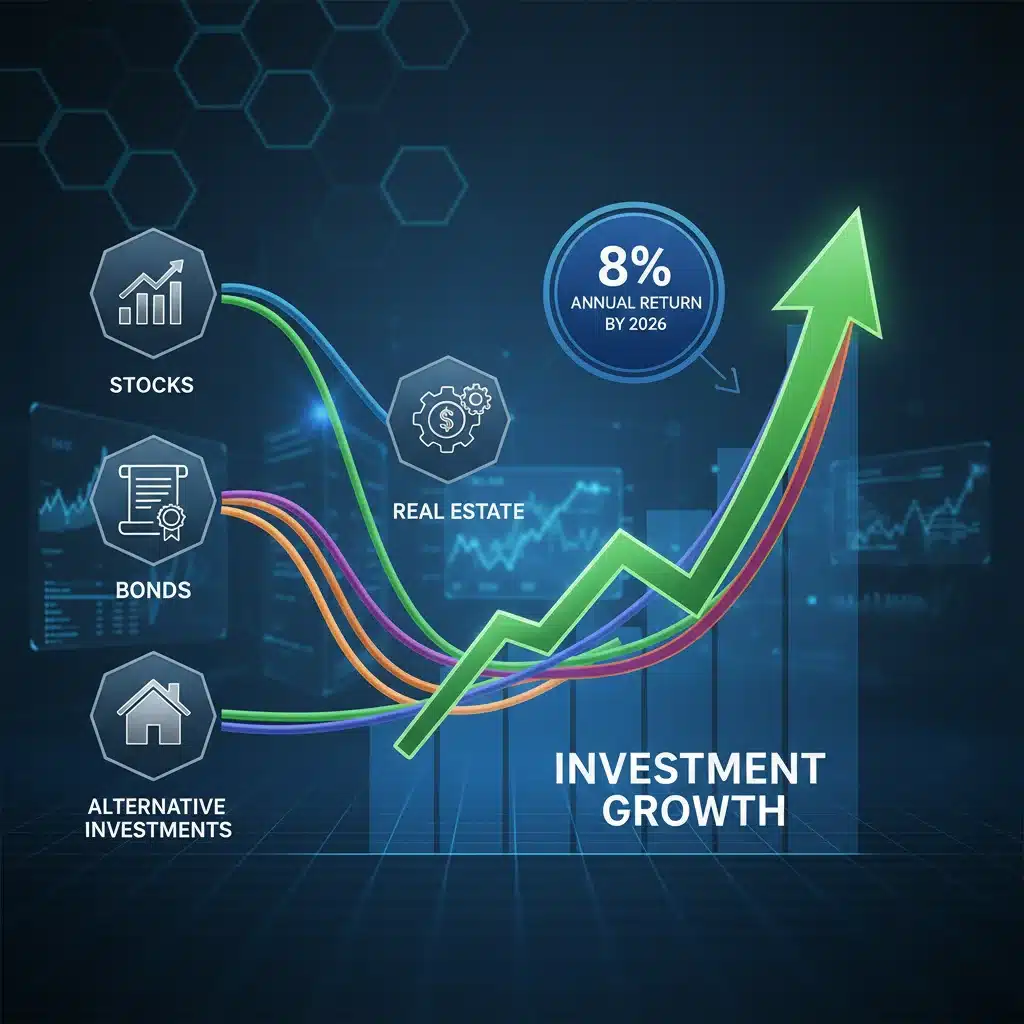
In the dynamic world of personal finance, setting ambitious yet achievable goals is the cornerstone of successful wealth accumulation. Many individuals aspire to grow their capital significantly, and targeting an 8% annual return by 2026 is a commendable objective. This isn’t a pipe dream; with a well-thought-out diversified investment portfolio, strategic planning, and diligent execution, this goal is within reach for many investors. The journey to achieving such returns requires a deep understanding of various investment vehicles, a disciplined approach to risk management, and a commitment to continuous learning and adaptation.
The concept of a diversified investment portfolio is not merely a buzzword; it’s a fundamental principle of sound investing. It involves spreading your investments across different asset classes, industries, and geographies to mitigate risk and enhance potential returns. Relying too heavily on a single asset class or a handful of investments can expose your capital to unnecessary volatility and significant losses if that particular sector or asset underperforms. By diversifying, you essentially reduce the impact of any single investment’s poor performance on your overall portfolio, creating a more stable and resilient foundation for growth.
This comprehensive guide will walk you through the essential steps to construct a robust and diversified investment portfolio designed to target an 8% annual return by 2026. We will delve into understanding your financial goals, assessing your risk tolerance, exploring various asset classes, and implementing effective diversification strategies. Furthermore, we will discuss the importance of regular portfolio review, rebalancing, and adapting to changing market conditions. Whether you are a seasoned investor looking to refine your strategy or a beginner eager to embark on your investment journey, this article provides actionable insights to help you navigate the complexities of the financial markets and work towards your financial aspirations.
Understanding Your Financial Goals and Risk Tolerance
Before diving into specific investments, the first and most critical step in building a diversified investment portfolio is to clearly define your financial goals and honestly assess your risk tolerance. Without a clear understanding of what you want to achieve and how much risk you’re comfortable taking, your investment strategy will lack direction and may lead to suboptimal decisions.
Defining Your Investment Horizon and Objectives
Your investment horizon refers to the length of time you plan to hold your investments before needing the funds. For a target of 8% annual returns by 2026, you’re looking at a relatively short to medium-term horizon. This timeframe influences the types of assets you might consider. Longer horizons often allow for greater exposure to growth-oriented assets like stocks, which can be more volatile in the short term but offer higher potential returns over the long run. Shorter horizons might necessitate a more conservative approach to preserve capital.
Beyond the 8% return target, what are your ultimate objectives? Are you saving for a down payment on a house, retirement, a child’s education, or simply aiming for general wealth accumulation? Each goal might have different liquidity requirements and urgency, which should inform your asset allocation decisions. For instance, funds needed within a year or two should generally not be exposed to significant market risk.
Assessing Your Personal Risk Tolerance
Risk tolerance is your psychological comfort level with the possibility of losing money on your investments. It’s a deeply personal aspect that varies from individual to individual. Some investors can stomach significant market fluctuations without losing sleep, while others prefer a more conservative approach even if it means lower potential returns. It’s crucial to be honest with yourself about your risk tolerance, as misjudging it can lead to panic selling during downturns, effectively locking in losses and undermining your long-term strategy.
Factors influencing risk tolerance include your age, income stability, existing savings, dependents, and even your personality. A young investor with a stable job and few financial obligations might have a higher risk tolerance than someone nearing retirement who relies heavily on their investment portfolio for income. There are numerous online questionnaires and tools that can help you gauge your risk tolerance more objectively. Understanding this will be pivotal in constructing a diversified investment portfolio that aligns with your emotional and financial capacity.
The Core Pillars of a Diversified Investment Portfolio
Achieving an 8% annual return by 2026 necessitates a strategic blend of asset classes. Diversification isn’t just about owning many different things; it’s about owning things that behave differently under various market conditions. This reduces overall portfolio volatility while maintaining growth potential. Here are the core pillars to consider for your diversified investment portfolio.
Equities (Stocks): The Engine of Growth
Stocks have historically been the best-performing asset class over the long term, making them a crucial component for achieving an 8% return target. They offer the potential for significant capital appreciation and dividend income. However, they also come with higher volatility compared to other asset classes. To diversify within equities, consider:
- Market Capitalization: Invest in a mix of large-cap, mid-cap, and small-cap companies. Large-caps offer stability, while mid and small-caps can provide higher growth potential.
- Geography: Don’t limit yourself to your home country. Global diversification through international and emerging market stocks can capture growth opportunities worldwide and insulate your portfolio from localized economic downturns.
- Sectors/Industries: Spread your investments across various sectors like technology, healthcare, financials, consumer staples, and industrials. This prevents over-reliance on a single industry’s performance.
- Growth vs. Value: A blend of growth stocks (companies expected to grow earnings faster than the market) and value stocks (companies trading below their intrinsic value) can offer a balanced approach.
For most investors aiming for 8% returns, a significant portion of their portfolio will likely be allocated to equities, especially if they have a medium to long-term horizon. Exchange-Traded Funds (ETFs) and mutual funds that track broad market indices (like the S&P 500) or specific sectors/regions are excellent tools for achieving broad equity diversification efficiently.
Fixed Income (Bonds): Stability and Income
Bonds offer stability, income, and a hedge against equity market volatility. While their returns are typically lower than stocks, they play a vital role in a diversified investment portfolio by reducing overall risk. When stocks are declining, bonds often hold their value or even appreciate, providing a ballast to your portfolio. Consider:
- Government Bonds: Highly secure, offering lower yields but strong capital preservation.
- Corporate Bonds: Issued by companies, offering higher yields than government bonds but with slightly more credit risk. Diversify across different credit ratings (investment grade vs. high-yield).
- Municipal Bonds: Issued by state and local governments, often offering tax-exempt interest for eligible investors.
- Bond Duration: A mix of short-term, intermediate-term, and long-term bonds. Shorter-duration bonds are less sensitive to interest rate changes.
For an 8% target, bonds might represent a smaller portion than equities, but their role in mitigating risk and providing a steady income stream is invaluable. Bond ETFs and mutual funds are popular ways to gain diversified exposure.

Real Estate: Tangible Assets and Income Potential
Real estate, both direct ownership and indirect investments, can offer diversification benefits, potential for capital appreciation, and rental income. It often has a low correlation with stocks and bonds, meaning it can perform well when other asset classes struggle. Options include:
- Real Estate Investment Trusts (REITs): Publicly traded companies that own, operate, or finance income-producing real estate. They offer liquidity and diversification without the hassle of direct property ownership.
- Real Estate Crowdfunding: Allows investors to pool money for fractional ownership in commercial or residential properties.
- Direct Property Ownership: While more involved, owning rental properties can provide significant income and appreciation, but requires substantial capital and management.
Including real estate in your diversified investment portfolio can provide a hedge against inflation and a consistent income stream, contributing to your 8% annual return goal.
Alternative Investments: Enhancing Diversification
Alternative investments are typically less correlated with traditional assets and can further enhance diversification. These may include commodities, private equity, hedge funds, and even cryptocurrencies. However, many alternatives come with higher risks, illiquidity, and often higher fees, making them more suitable for sophisticated investors or a smaller portion of a portfolio.
- Commodities: Gold, silver, oil, and agricultural products can act as inflation hedges and provide diversification. Commodity ETFs are a common way to invest.
- Private Equity/Venture Capital: Investing in private companies, often with high growth potential, but also high risk and illiquidity. Access is typically limited to accredited investors.
- Hedge Funds: Employ complex strategies to generate returns, often in both up and down markets, but come with high fees and minimum investment requirements.
- Cryptocurrencies: A highly volatile and speculative asset class, but with potential for significant returns. Should be approached with extreme caution and only with capital you can afford to lose.
Crafting Your Asset Allocation Strategy for 8% Returns
The magic of a diversified investment portfolio lies in its asset allocation – the specific mix of different asset classes. There’s no one-size-fits-all allocation, as it depends heavily on your risk tolerance, time horizon, and specific financial goals. However, to target an 8% annual return, you will generally need a growth-oriented allocation.
Typical Allocation for Growth-Oriented Portfolios
For an investor aiming for 8% annual returns by 2026, a common allocation might look something like this:
- Equities (Stocks): 60-80% (e.g., 65% US Stocks, 15% International Stocks, 5% Emerging Markets)
- Fixed Income (Bonds): 15-30% (e.g., 10% Investment Grade Corporate Bonds, 5% Government Bonds)
- Real Estate (REITs): 5-10%
- Alternatives/Cash: 0-5% (e.g., 2% Commodities, 3% Cash for liquidity)
This is merely a template. A younger investor with a higher risk tolerance might lean towards the higher end of the equity allocation (75-80%), while someone closer to their goal or with a more conservative bent might choose a slightly lower equity exposure (60-65%). The key is to find a balance that allows for growth while still providing enough stability to weather market downturns without panicking.
The Role of Rebalancing
Once you’ve established your target asset allocation, it’s crucial to stick to it. Over time, market movements will cause your portfolio’s actual allocation to drift from your target. For example, if stocks perform exceptionally well, their percentage in your portfolio might grow beyond your initial allocation. This is where rebalancing comes in.
Rebalancing involves periodically adjusting your portfolio back to your target asset allocation. This typically means selling some of the assets that have performed well and buying more of those that have underperformed. Rebalancing is a disciplined way to:
- Manage Risk: It prevents your portfolio from becoming overly concentrated in assets that have recently soared, which could expose you to greater downside risk if those assets then correct.
- Buy Low, Sell High: By selling winners and buying losers, you are essentially engaging in a form of contrarian investing, which can enhance returns over the long term.
- Maintain Diversification: It ensures your portfolio remains aligned with your initial risk tolerance and investment objectives.
You can rebalance on a fixed schedule (e.g., annually or semi-annually) or when an asset class deviates by a certain percentage from its target allocation (e.g., +/- 5%). Consistency is more important than the exact method.
Implementing Your Diversified Investment Portfolio
With your goals defined and asset allocation in mind, it’s time to put your plan into action. This involves selecting the right investment vehicles and understanding the practical aspects of building your diversified investment portfolio.
Choosing Investment Vehicles: ETFs, Mutual Funds, and Individual Securities
- Exchange-Traded Funds (ETFs): ETFs are an excellent choice for diversification. They hold a basket of securities (stocks, bonds, commodities, etc.) and trade like individual stocks on an exchange. They offer low expense ratios, tax efficiency, and instant diversification across various asset classes, sectors, or geographies. For example, you can buy an S&P 500 ETF, an international equity ETF, or a total bond market ETF to cover broad market segments.
- Mutual Funds: Similar to ETFs, mutual funds pool money from multiple investors to invest in a diversified portfolio. They are professionally managed, offering convenience, but often come with higher expense ratios and can be less tax-efficient than ETFs. Index mutual funds, which track a specific market index, are generally preferred over actively managed funds due to their lower costs and often superior long-term performance.
- Individual Stocks and Bonds: While it’s possible to build a diversified portfolio with individual securities, it requires significant research, time, and capital to achieve adequate diversification. For most retail investors, ETFs and mutual funds are a more practical and cost-effective way to get broad exposure and maintain a truly diversified investment portfolio. If you do choose individual stocks, ensure you hold a sufficient number (e.g., 20-30 across different sectors) to mitigate company-specific risk.
Automating Your Investments
One of the most powerful strategies for long-term investing is dollar-cost averaging, which involves investing a fixed amount of money at regular intervals, regardless of market fluctuations. This practice helps reduce the impact of market volatility and prevents you from trying to time the market, a notoriously difficult task.
Automating your contributions to your investment accounts (e.g., setting up automatic transfers from your checking account to your brokerage account or IRA) ensures consistency and discipline. This consistent investment, combined with the power of compounding, is a key driver for reaching your 8% annual return goal by 2026.
Minimizing Costs and Taxes
Every dollar lost to fees or taxes is a dollar that cannot compound and contribute to your returns. Therefore, minimizing these costs is paramount:
- Expense Ratios: Opt for low-cost ETFs and index funds. Even a 0.5% difference in expense ratios can significantly impact your long-term returns.
- Trading Fees: Choose brokerage platforms that offer commission-free trading for stocks and ETFs.
- Tax Efficiency: Utilize tax-advantaged accounts like 401(k)s, IRAs (Traditional or Roth), and HSAs. Within taxable accounts, consider tax-efficient investments like ETFs and municipal bonds. Tax-loss harvesting can also be a valuable strategy.

Monitoring and Adjusting Your Portfolio
Building a diversified investment portfolio is not a set-it-and-forget-it endeavor. Regular monitoring and periodic adjustments are essential to ensure it remains aligned with your goals and adapts to changing market conditions. While the goal is 8% annual returns by 2026, the path may not always be linear.
Regular Performance Review
At least once a year, preferably more frequently (e.g., quarterly or semi-annually), review your portfolio’s performance. Compare your actual returns against your 8% target and against relevant benchmarks (e.g., S&P 500 for US equities, a global bond index for fixed income). Don’t just look at the overall return; examine the performance of individual asset classes and holdings.
Ask yourself:
- Is my portfolio performing as expected given market conditions?
- Are there any underperforming assets that consistently lag behind their peers or benchmarks?
- Have there been any significant changes in my personal financial situation (income, expenses, risk tolerance) that warrant a portfolio adjustment?
Remember that short-term fluctuations are normal. Avoid making impulsive decisions based on daily or weekly market movements. Focus on the long-term trend and your progress towards your 2026 goal.
Revisiting Your Risk Tolerance and Goals
Life happens, and your circumstances can change. What was an appropriate risk tolerance five years ago might not be today. A new job, a major life event, or a shift in your financial obligations could all impact your comfort level with risk. Similarly, your financial goals might evolve. Perhaps you decide to retire earlier or pursue a different major purchase. It’s important to revisit and potentially adjust your risk tolerance and goals periodically. If your risk tolerance decreases, you might need to shift towards a more conservative asset allocation within your diversified investment portfolio.
Adapting to Market Cycles and Economic Conditions
The financial markets operate in cycles, influenced by economic conditions, interest rates, inflation, and geopolitical events. While you shouldn’t try to time the market, being aware of these broader trends can inform minor adjustments to your portfolio. For example:
- Rising Interest Rates: Can negatively impact bond prices, especially longer-duration bonds. You might consider shorter-duration bonds or inflation-protected securities.
- Inflationary Environments: Assets like real estate, commodities, and value stocks tend to perform better during periods of high inflation.
- Economic Recessions: Often lead to equity market downturns. A diversified portfolio with a bond component can help cushion the blow.
These adjustments are typically minor tweaks around your core asset allocation, not wholesale changes. The fundamental principle of a diversified investment portfolio remains constant: spread your risk and invest for the long term.
Common Pitfalls to Avoid
Even with the best intentions, investors often fall prey to common mistakes that can derail their efforts to build a successful diversified investment portfolio. Being aware of these pitfalls can help you steer clear of them.
Emotional Investing
Perhaps the biggest enemy of successful investing is emotion. Fear and greed often lead investors to make irrational decisions. During market downturns, fear can cause panic selling, locking in losses. During bull markets, greed can lead to chasing hot stocks or sectors, resulting in overconcentration and increased risk. Stick to your investment plan and asset allocation, and resist the urge to make impulsive decisions based on news headlines or market sentiment.
Lack of Diversification
As the core theme of this article emphasizes, inadequate diversification is a major pitfall. Putting all your eggs in one basket, whether it’s a single stock, a single industry, or even a single country, exposes you to immense risk. If that one investment or sector performs poorly, your entire portfolio suffers. A truly diversified investment portfolio spreads risk across multiple asset classes and geographies, ensuring that a downturn in one area doesn’t decimate your overall wealth.
Market Timing
Attempting to predict the short-term movements of the market (i.e., ‘buy low, sell high’ perfectly) is nearly impossible, even for professional investors. Constantly moving in and out of the market based on predictions often leads to missing out on the best performing days and incurring higher trading costs. A disciplined approach of consistent investing (dollar-cost averaging) and long-term holding within a diversified investment portfolio is far more effective than trying to time the market.
Ignoring Fees and Taxes
High fees and taxes can significantly erode your investment returns over time. Actively managed mutual funds often have high expense ratios, and frequent trading in taxable accounts can lead to substantial capital gains taxes. Always be mindful of the costs associated with your investments and prioritize tax-efficient strategies. Over decades, even small differences in fees can amount to hundreds of thousands of dollars in lost wealth.
Not Rebalancing
Neglecting to rebalance your portfolio can lead to unintended risk exposure. If your growth assets (like stocks) perform exceptionally well, they might grow to represent a larger portion of your portfolio than initially intended, increasing your overall risk. Conversely, if conservative assets grow, you might miss out on potential returns. Regular rebalancing ensures your portfolio stays aligned with your target asset allocation and risk tolerance, maintaining the integrity of your diversified investment portfolio.
Conclusion: Your Path to an 8% Annual Return by 2026
Achieving an 8% annual return by 2026 with a diversified investment portfolio is an ambitious yet attainable goal. It requires a clear understanding of your financial objectives, an honest assessment of your risk tolerance, and a strategic approach to asset allocation. By carefully blending equities, fixed income, real estate, and potentially select alternatives, you can construct a portfolio designed for growth while mitigating undue risk.
The journey involves disciplined execution: choosing low-cost, diversified investment vehicles like ETFs, automating your contributions through dollar-cost averaging, and diligently minimizing fees and taxes. Furthermore, remember that investing is an ongoing process. Regular monitoring, periodic rebalancing, and a willingness to adapt your strategy to evolving market conditions and personal circumstances are crucial for long-term success. Avoid common pitfalls such as emotional investing, market timing, or neglecting diversification, as these can severely hinder your progress.
By adhering to these principles and maintaining a long-term perspective, you are not just building a portfolio; you are building a financial future. The year 2026 is just around the corner, and with a well-constructed and thoughtfully managed diversified investment portfolio, you can confidently work towards achieving your 8% annual return target and beyond. Start today, stay informed, and remain disciplined on your investment journey. Your future self will thank you.