Avoid Tax Penalties 2026: Your Essential Guide to Deadlines and Best Practices
As the tax year 2026 approaches, understanding and adhering to tax regulations becomes paramount for every individual and business. The Internal Revenue Service (IRS) imposes various tax penalties for non-compliance, ranging from failure to file to underpayment of taxes. These penalties can significantly impact your financial health, making proactive planning and diligent execution essential. This comprehensive guide is designed to equip you with the knowledge and strategies to effectively avoid common Tax Penalties 2026, ensuring a smoother and more compliant tax season.
Navigating the complex world of tax laws can be daunting, but with the right information, you can safeguard yourself against unnecessary fines and interest charges. We’ll delve into the critical deadlines, outline best practices for accurate filing, and provide expert tips to help you stay ahead. Whether you’re an individual taxpayer, a small business owner, or managing a larger enterprise, this resource will serve as your go-to reference for minimizing your tax burden and maximizing compliance.
Understanding the Landscape of Tax Penalties 2026
Before we dive into prevention, it’s crucial to understand what constitutes a tax penalty and the different types you might encounter. The IRS levies penalties when taxpayers fail to meet their obligations. These obligations include filing on time, paying on time, and providing accurate information. Penalties are not meant to be punitive but rather to encourage compliance with tax laws.
Common Types of IRS Tax Penalties
- Failure to File Penalty: This is one of the most common penalties. If you don’t file your tax return by the due date (including extensions), the IRS may charge a penalty of 5% of the unpaid taxes for each month or part of a month that a return is late, capped at 25% of your unpaid tax. Even if you can’t pay, you should always file on time to avoid this penalty.
- Failure to Pay Penalty: If you don’t pay the taxes you owe by the due date, the IRS can charge a penalty of 0.5% of the unpaid taxes for each month or part of a month that taxes remain unpaid, also capped at 25% of your unpaid tax. This penalty can be reduced if you’ve set up a payment plan with the IRS.
- Accuracy-Related Penalty: This penalty applies if you underpay your tax due to negligence, disregard of rules or regulations, or a substantial understatement of income tax. The penalty is typically 20% of the underpayment.
- Underpayment of Estimated Tax Penalty: If you don’t pay enough tax throughout the year through withholding or estimated tax payments, you could face this penalty. This often affects self-employed individuals or those with significant income not subject to withholding.
- Failure to Deposit Penalty: Businesses that fail to make required federal tax deposits (e.g., payroll taxes) on time or in the correct amount can incur this penalty. This is particularly important for employers.
- Dishonored Checks and Other Payments: If your bank doesn’t honor a check or other form of payment you submit to the IRS, you may be charged a penalty.
Understanding these potential pitfalls is the first step in formulating a robust strategy to avoid Tax Penalties 2026. Each penalty has specific triggers and calculation methods, making general awareness vital.
Key Tax Deadlines for 2026: Mark Your Calendars!
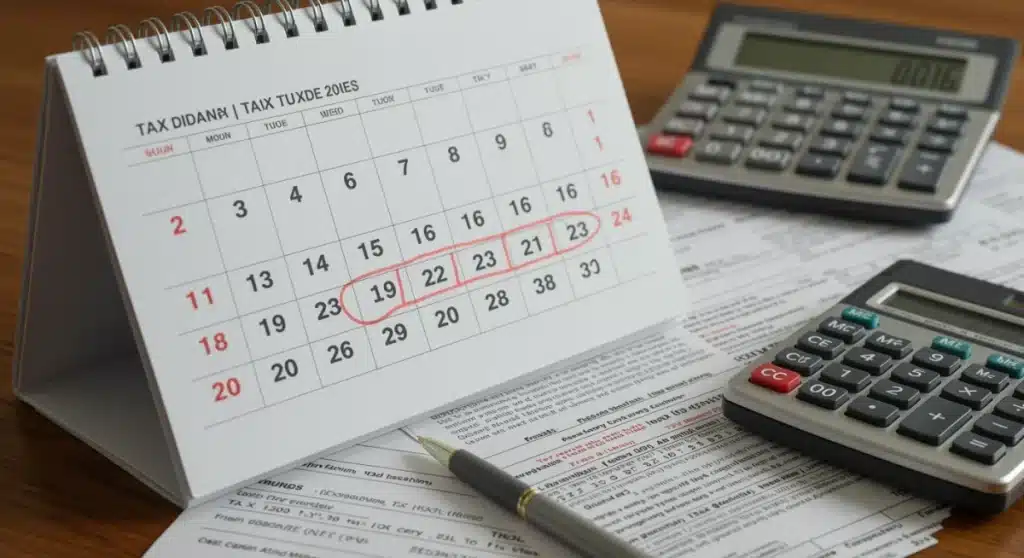
Missing a deadline is one of the quickest ways to incur tax penalties. While specific dates for 2026 will be officially announced closer to the year, we can anticipate the general schedule based on previous years. It’s crucial to remember that if a deadline falls on a weekend or holiday, it typically shifts to the next business day. Always verify the exact dates with the IRS or your tax professional as they become available.
Anticipated Federal Tax Deadlines for Individuals (2026)
- January 15, 2026: 4th quarter 2025 estimated tax payments due. This is for income earned between September 1 and December 31, 2025.
- April 15, 2026: Main tax filing deadline for individuals. This is when your 2025 federal income tax return (Form 1040) is due, along with any taxes owed. This is also the deadline to file for an extension (Form 4868) and the due date for the 1st quarter 2026 estimated tax payments.
- June 15, 2026: 2nd quarter 2026 estimated tax payments due. This is for income earned between April 1 and May 31, 2026.
- September 15, 2026: 3rd quarter 2026 estimated tax payments due. This is for income earned between June 1 and August 31, 2026.
- October 15, 2026: Extended deadline for individuals to file their 2025 federal income tax return if an extension was filed. Note: This extends the filing deadline, not the payment deadline. Taxes are still due by April 15.
Anticipated Federal Tax Deadlines for Businesses (2026)
Business tax deadlines can vary significantly based on the entity type (sole proprietorship, partnership, S corporation, C corporation). Here are general anticipated deadlines:
- March 15, 2026: For calendar year S corporations (Form 1120-S) and partnerships (Form 1065). This is also the deadline to request an extension.
- April 15, 2026: For calendar year C corporations (Form 1120). This is also the deadline to request an extension and the due date for the 1st quarter 2026 estimated tax payments for corporations.
- September 15, 2026: Extended deadline for S corporations and partnerships, if an extension was filed.
- October 15, 2026: Extended deadline for C corporations, if an extension was filed.
- Quarterly Estimated Taxes: Businesses, like individuals, also have quarterly estimated tax payment deadlines that often align with the individual deadlines (April 15, June 15, September 15, and January 15 of the following year).
- Payroll Tax Deadlines: These vary based on the size of your payroll and your deposit schedule (e.g., monthly or semi-weekly). Employers must deposit federal income tax withheld and FICA taxes. Failure to meet these can lead to significant Tax Penalties 2026.
Staying organized and marking these dates on your calendar is a fundamental step in avoiding Tax Penalties 2026. Consider setting up digital reminders or using tax software that alerts you to upcoming deadlines.
Filing Best Practices to Prevent Tax Penalties 2026
Beyond simply knowing the deadlines, adopting robust filing best practices is crucial for ensuring accuracy and compliance. A systematic approach to your tax preparation can significantly reduce the likelihood of errors that lead to penalties.
1. Maintain Meticulous Records All Year Round
The foundation of accurate tax filing is excellent record-keeping. Don’t wait until tax season to gather your documents. Throughout the year, keep organized records of:
- Income statements (W-2s, 1099s, K-1s)
- Receipts for deductible expenses (business expenses, medical expenses, charitable contributions)
- Bank statements and cancelled checks
- Investment statements
- Records of asset purchases and sales
- Mileage logs for business travel
- Previous year’s tax returns
Utilize digital tools, cloud storage, or dedicated tax software to keep everything accessible and secure. Good record-keeping not only helps you gather information for filing but also serves as vital documentation if your return is audited.
2. Understand Your Income and Deductions
Accurately reporting all sources of income is non-negotiable. This includes not only your primary employment but also freelance income, rental income, investment gains, and any other taxable income. Simultaneously, be aware of all eligible deductions and credits that can legally reduce your taxable income. Common deductions include student loan interest, IRA contributions, and health savings account (HSA) contributions. For businesses, understanding qualified business income (QBI) deductions, depreciation, and other operational expenses is key.
If you’re unsure about what counts as income or what you can deduct, consult with a tax professional. Misinterpreting tax laws can lead to significant accuracy-related Tax Penalties 2026.
3. Pay Estimated Taxes If Necessary
If you’re self-employed, have significant investment income, or receive income not subject to withholding, you’re likely required to pay estimated taxes quarterly. The ‘pay-as-you-go’ system ensures you’re meeting your tax obligations throughout the year. Failure to pay enough estimated tax can result in the underpayment penalty. Use Form 1040-ES (Estimated Tax for Individuals) to calculate and pay your quarterly taxes.
For businesses, especially C corporations, estimated tax payments are also mandatory. Ensure you accurately project your income and deductions to avoid underpayment. Regularly review your financial performance to adjust estimated payments as needed.

4. Double-Check Everything Before Filing
Errors in your tax return, even unintentional ones, can trigger tax penalties. Before submitting your return, thoroughly review all information. Check for:
- Correct Social Security Numbers (SSNs) or Employer Identification Numbers (EINs)
- Accurate reporting of income from all sources
- Correct calculations for deductions and credits
- Properly signed forms
- Matching information on your W-2s, 1099s, and other source documents
Using reputable tax preparation software can help catch mathematical errors, but it won’t necessarily identify incorrect data entry or missed deductions. A manual review is always recommended.
5. File Electronically and Pay Online
E-filing your tax return offers several advantages: it’s faster, more accurate (as software often flags common errors), and provides immediate confirmation of receipt by the IRS. Similarly, paying your taxes electronically through IRS Direct Pay or other authorized methods reduces the risk of lost mail or delayed payments, which can lead to failure-to-pay penalties.
6. Don’t Ignore IRS Correspondence
If you receive a letter from the IRS, don’t ignore it. It usually contains important information about your tax account, potential discrepancies, or proposed adjustments. Respond promptly and thoroughly to any IRS inquiries. Ignoring them can escalate issues and lead to more severe Tax Penalties 2026.
Expert Strategies to Minimize Your Tax Burden and Avoid Penalties
Beyond basic compliance, there are strategic approaches you can take to not only avoid penalties but also optimize your tax position. Proactive tax planning is key.
1. Seek Professional Tax Assistance
For many individuals and most businesses, especially those with complex financial situations, hiring a qualified tax professional (CPA, Enrolled Agent, or tax attorney) is an invaluable investment. A professional can help you:
- Interpret complex tax laws and identify eligible deductions and credits you might miss.
- Ensure accurate and timely filing.
- Develop a year-round tax planning strategy.
- Represent you in case of an IRS audit or inquiry.
- Navigate state and local tax requirements, which can also trigger penalties.
The cost of professional help often outweighs the potential savings and penalty avoidance, making it a wise decision to prevent Tax Penalties 2026.
2. Adjust Withholding or Estimated Payments
If you anticipate changes in your income or deductions during 2026, adjust your W-4 with your employer or modify your estimated tax payments. For employees, using the IRS Tax Withholding Estimator can help you fine-tune your withholding to avoid a large tax bill or underpayment penalty at year-end. For self-employed individuals, regularly review your profit and loss statements to adjust estimated payments accordingly.
3. Understand Penalty Abatement Options
Even with the best intentions, sometimes mistakes happen or unforeseen circumstances arise. The IRS does offer options for penalty abatement in certain situations. Common reasons for abatement include:
- First-Time Penalty Abatement: If you have a clean compliance history for the past three years, the IRS may waive failure-to-file, failure-to-pay, and failure-to-deposit penalties for a single tax period.
- Reasonable Cause: If you can demonstrate that you acted with ordinary business care and prudence but were unable to meet your tax obligations due to circumstances beyond your control (e.g., natural disaster, serious illness, unavoidable absence), penalties might be abated.
- Statutory Exception: Certain penalties may not apply in specific situations defined by tax law.
If you receive a penalty notice, don’t despair immediately. Investigate whether you qualify for abatement and be prepared to provide clear, written explanations and supporting documentation to the IRS.
4. Plan for Major Life Changes
Significant life events such as marriage, divorce, birth of a child, purchasing a home, starting a new business, or retirement can drastically alter your tax situation. These changes often have implications for your filing status, deductions, credits, and estimated tax requirements. Proactively consult with a tax professional when these events occur to adjust your tax planning and avoid unexpected Tax Penalties 2026.

5. Be Aware of State and Local Tax Obligations
While this guide focuses primarily on federal tax penalties, remember that most states and many local jurisdictions also impose their own income, sales, property, and other taxes. Each of these typically comes with its own set of deadlines and penalties for non-compliance. Ensure you are aware of and compliant with all relevant state and local tax laws to avoid a broader array of Tax Penalties 2026.
The Importance of Proactive Tax Planning
The overarching theme in avoiding Tax Penalties 2026 is proactive tax planning. Waiting until the last minute to gather documents and prepare your return significantly increases the risk of errors, missed deadlines, and ultimately, penalties. Tax planning is not just about filing a return; it’s an ongoing process that involves:
- Budgeting for Taxes: Setting aside funds throughout the year to cover your tax liability prevents a scramble for payment on tax day.
- Regular Review: Periodically reviewing your income, expenses, and financial situation allows for timely adjustments to withholding or estimated payments.
- Staying Informed: Tax laws can change. Keeping up-to-date with new legislation or consulting a professional ensures you’re always operating with the most current information.
- Utilizing Tax-Advantaged Accounts: Maximizing contributions to retirement accounts (401(k), IRA), HSAs, and other tax-advantaged vehicles can reduce your taxable income.
By integrating tax considerations into your financial decision-making throughout the year, you can transform tax season from a stressful scramble into a manageable, well-prepared event, significantly reducing your exposure to Tax Penalties 2026.
Conclusion: Your Path to a Penalty-Free 2026 Tax Season
Avoiding Tax Penalties 2026 is entirely achievable with careful planning, diligent record-keeping, and a thorough understanding of your tax obligations. Remember the key takeaways:
- Know Your Deadlines: Mark all relevant federal, state, and local tax deadlines on your calendar and set up reminders.
- Maintain Excellent Records: Organize all financial documents throughout the year.
- Pay Estimated Taxes: If you have income not subject to withholding, make timely and accurate estimated payments.
- Review Carefully: Double-check your tax return for accuracy before filing.
- Seek Professional Help: Don’t hesitate to consult a tax professional for complex situations or to ensure optimal compliance.
- Respond to IRS Correspondence: Address any notices from the IRS promptly and seriously.
By implementing these best practices and strategies, you can navigate the 2026 tax season with confidence, minimize your tax liability, and successfully avoid those unwelcome penalty notices. Proactive engagement with your taxes is not just about compliance; it’s about smart financial management that protects your hard-earned money.