2026 Financial Goal Setting: Achieve 3 Major Milestones

Are you ready to make 2026 your most financially successful year yet? The desire for financial stability, growth, and freedom is universal, yet many struggle to turn aspirations into tangible achievements. This year, we’re not just dreaming; we’re providing a concrete checklist to help you achieve three major financial milestones. This comprehensive guide on financial goal setting for 2026 will equip you with the strategies, tools, and mindset needed to transform your financial landscape.
The journey to financial success is rarely a straight line. It requires deliberate planning, consistent effort, and the ability to adapt. By focusing on three key milestones, we can create a clear roadmap, making the process less daunting and more achievable. Whether your goals involve boosting savings, paying down debt, making significant investments, or even starting a side hustle, the principles outlined here will guide you every step of the way.
The Importance of Strategic Financial Goal Setting
Before diving into the ‘how,’ let’s understand the ‘why.’ Why is strategic financial goal setting so crucial? Without clear goals, your financial efforts can feel like navigating without a compass. You might be working hard, but are you moving in the right direction? Strategic goal setting provides:
- Clarity and Focus: It defines what you want to achieve, giving purpose to your financial decisions.
- Motivation: Tangible goals provide something to work towards, keeping you motivated even when challenges arise.
- Measurable Progress: With defined milestones, you can track your progress, celebrate small victories, and adjust your strategy as needed.
- Better Decision-Making: Goals act as a filter for financial choices, helping you prioritize spending and investment opportunities.
In 2026, let’s move beyond vague resolutions and embrace a structured approach to financial goal setting. This means not just saying “I want to save more,” but specifying “I will save $10,000 for a down payment by December 31, 2026.”
Laying the Foundation: Your 2026 Financial Health Check
Before you can build, you need to know what you’re working with. A thorough financial health check is the bedrock of effective financial goal setting. This involves a candid assessment of your current financial situation.
1. Assess Your Current Financial Standing
- Net Worth Calculation: Tally up all your assets (savings, investments, property, etc.) and subtract your liabilities (debts like mortgages, loans, credit card balances). This gives you a snapshot of your financial health.
- Income and Expenses Review: Go through your bank statements, credit card statements, and pay stubs for the past few months. Where is your money coming from? Where is it going? Categorize your expenses to identify areas where you can cut back.
- Debt Analysis: List all your debts, including interest rates, minimum payments, and total outstanding balances. Prioritize high-interest debts for faster repayment.
- Credit Score Check: Your credit score impacts your ability to borrow and the interest rates you’ll pay. Obtain a free credit report and score to understand your standing.
2. Define Your Financial Values and Priorities
What truly matters to you financially? Is it early retirement, buying a home, funding your children’s education, or achieving complete debt freedom? Aligning your financial goal setting with your core values ensures that your efforts are meaningful and sustainable. This personal reflection is critical because it fuels your long-term commitment.
Milestone 1: Establishing a Robust Emergency Fund (The Security Blanket)
The first major milestone for 2026 should be to solidify your financial security. An emergency fund is your buffer against life’s unexpected twists – job loss, medical emergencies, car repairs, etc. Without it, these events can derail your entire financial plan and force you into debt.
Why an Emergency Fund is Non-Negotiable
Think of your emergency fund as your financial security blanket. It provides peace of mind and prevents you from dipping into investments or relying on high-interest credit cards when unforeseen expenses arise. It’s the foundation upon which all other financial goal setting is built.
How to Achieve This Milestone: The Checklist
- Determine Your Target Amount: Most experts recommend 3-6 months’ worth of essential living expenses. For 2026, let’s aim for a minimum of 3 months, with a stretch goal of 6 months. Calculate this number accurately based on your expense review.
- Set Up a Dedicated, Accessible Account: This fund should be in a separate, easily accessible savings account, ideally a high-yield savings account, but distinct from your everyday checking account. This prevents accidental spending.
- Automate Your Contributions: Set up an automatic transfer from your checking account to your emergency fund every payday. Even small, consistent contributions add up quickly.
- Prioritize & Cut Back: Temporarily reduce discretionary spending to accelerate your savings. Every dollar saved brings you closer to your emergency fund goal.
- Consider “Windfalls”: Direct any unexpected income (bonuses, tax refunds, gifts) directly into your emergency fund until it’s fully funded.
Example: If your essential monthly expenses are $2,500, your 3-month emergency fund target is $7,500. If you can save $625 per month, you’ll hit this target in 12 months.
Milestone 2: Aggressively Tackling High-Interest Debt (The Freedom Builder)
High-interest debt, such as credit card debt or personal loans, acts like a financial anchor, dragging down your progress. Achieving debt freedom from these burdens is a powerful second milestone for 2026, freeing up significant cash flow for future investments and savings.
The Cost of High-Interest Debt
The interest payments on high-interest debt can be staggering, often consuming a large portion of your minimum payments and making it feel impossible to get ahead. Eliminating this debt is one of the most effective ways to improve your financial health and accelerate your other financial goal setting.
How to Achieve This Milestone: The Checklist
- List All High-Interest Debts: Create a detailed list of all credit cards, personal loans, or other debts with high interest rates. Include the balance, interest rate, and minimum payment for each.
- Choose a Debt Repayment Strategy:
- Debt Snowball Method: Pay off the smallest debt first, regardless of interest rate, while making minimum payments on others. Once the smallest is paid, roll that payment into the next smallest. This method provides psychological wins.
- Debt Avalanche Method: Pay off the debt with the highest interest rate first, while making minimum payments on others. This method saves you the most money on interest.
Choose the method that best suits your personality and stick to it.
- Automate Payments (Above Minimums): Set up automatic payments to ensure you never miss a due date. If using the snowball or avalanche, automate the larger payments to your target debt.
- Negotiate Lower Interest Rates: Call your credit card companies and ask if they can lower your interest rate. It never hurts to ask!
- Consider Balance Transfers: If you have good credit, a 0% APR balance transfer card can give you a window to pay down debt without accruing interest, but be mindful of transfer fees and the promotional period end date.
- Direct “Found Money” Towards Debt: Similar to the emergency fund, use bonuses, tax refunds, or extra income to make lump-sum payments on your target debt.
Milestone 3: Initiating or Significantly Boosting Investments (The Wealth Accelerator)
Once your emergency fund is robust and high-interest debt is under control, your third major milestone for 2026 should be to start or significantly increase your investments. This is where your money truly starts working for you, leveraging the power of compounding to build long-term wealth.
Why Investing is Crucial for Long-Term Financial Goal Setting
Inflation erodes the purchasing power of your savings over time. Investing allows your money to grow, often outpacing inflation, and is essential for achieving long-term goals like retirement, a down payment on a house, or financial independence. This pillar of financial goal setting is about building your future self a better life.
How to Achieve This Milestone: The Checklist
- Define Your Investment Goals: What are you investing for? Retirement? A home down payment in 5 years? A child’s education? Your goals will determine your investment timeline and risk tolerance.
- Understand Your Risk Tolerance: Are you comfortable with market fluctuations for higher potential returns, or do you prefer a more conservative approach? This will influence your asset allocation.
- Choose the Right Investment Accounts:
- Retirement Accounts (401k, IRA, Roth IRA): These offer significant tax advantages and are often the best starting point for long-term wealth building. Maximize employer matching first!
- Taxable Brokerage Accounts: For goals beyond retirement or for funds you might need before retirement age.
- Start with Diversified, Low-Cost Investments:
- Index Funds: These passively managed funds track a market index (like the S&P 500) and offer broad diversification at a very low cost.
- ETFs (Exchange-Traded Funds): Similar to index funds, offering diversification and low fees.
Avoid individual stock picking unless you have a deep understanding and enjoy the research. For most beginners, diversified funds are superior.
- Automate Your Investments: Set up automatic contributions to your investment accounts. Consistency is key to successful investing and dollar-cost averaging.
- Educate Yourself Continuously: Read books, follow reputable financial news sources, and understand the basics of investing. The more you know, the more confident you’ll be in your decisions.
- Rebalance Periodically: As your investments grow, their allocation might drift from your target. Periodically rebalance your portfolio to maintain your desired risk level.
The Power of the SMART Framework for Financial Goal Setting
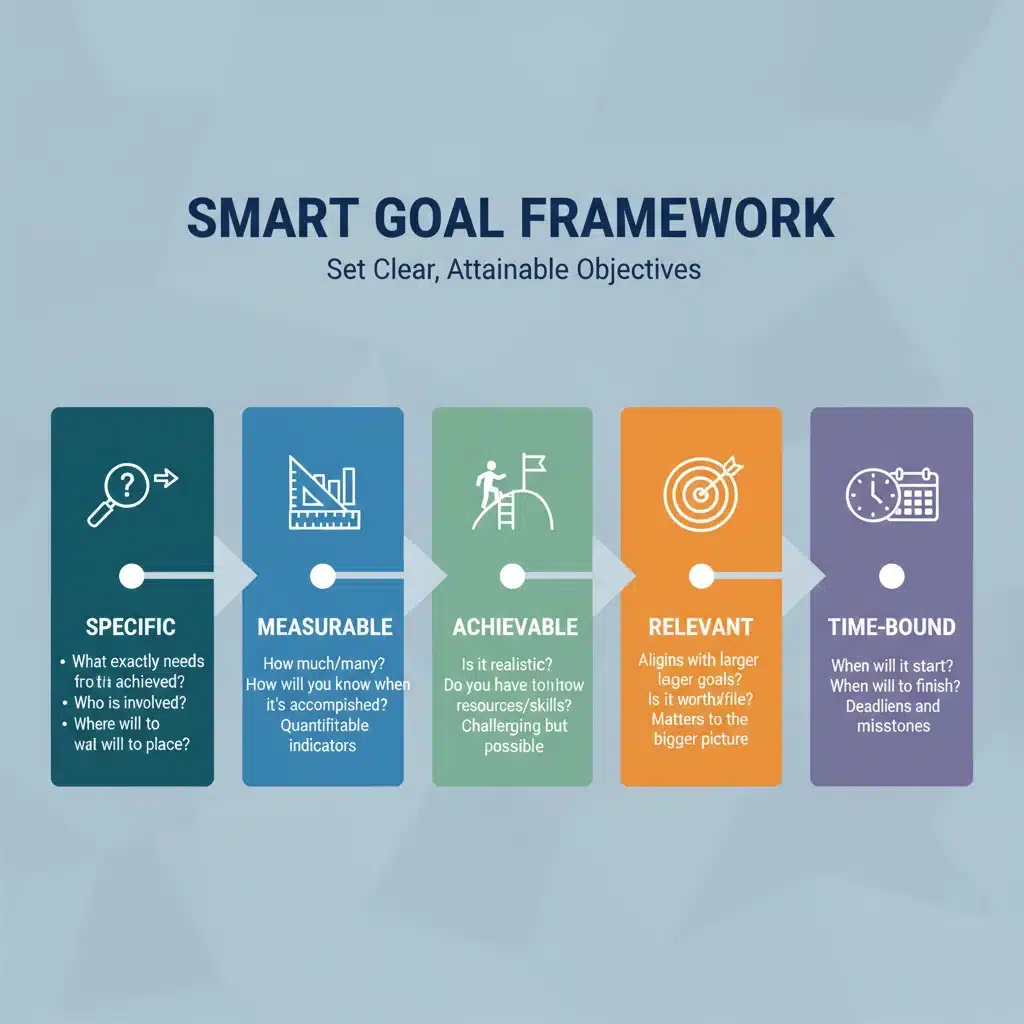
Throughout these milestones, the SMART framework will be your best friend. SMART stands for:
- Specific: Clearly define what you want to achieve. Instead of “save money,” say “save $5,000 for a vacation.”
- Measurable: How will you track progress? “Save $5,000” is measurable; “save more” is not.
- Achievable: Is the goal realistic given your current income and expenses? Stretch goals are good, but impossible goals lead to frustration.
- Relevant: Does the goal align with your overall financial values and long-term aspirations?
- Time-bound: Set a deadline. “Save $5,000 for a vacation by December 2026” provides urgency and a target.
Applying the SMART framework to all your financial goal setting ensures that your objectives are well-defined, trackable, and ultimately attainable.
Strategies for Sustained Financial Success in 2026 and Beyond
Achieving these three milestones isn’t a one-time event; it’s about building sustainable habits. Here are additional strategies to support your financial goal setting throughout 2026 and for years to come:
1. Master Your Budget (The Blueprint)
A budget isn’t about restriction; it’s about control and knowing where every dollar goes. It’s the blueprint for all your financial goal setting. There are various budgeting methods:
- 50/30/20 Rule: 50% needs, 30% wants, 20% savings/debt repayment.
- Zero-Based Budgeting: Assign every dollar a job.
- Envelope System: Physically allocate cash for different spending categories.
Find a method that works for you and stick with it. Regularly review and adjust your budget as your income and expenses change.
2. Increase Your Income (The Accelerator)
While cutting expenses is important, increasing your income can significantly accelerate your financial goal setting. Consider:
- Negotiating a Raise: Research market rates for your position and prepare a strong case for why you deserve more.
- Side Hustles: Freelancing, ride-sharing, selling crafts, or consulting can provide extra income.
- Developing New Skills: Invest in yourself to open doors to higher-paying opportunities.
3. Protect Your Assets (The Shield)
Protecting what you’ve built is just as important as building it. This includes:
- Adequate Insurance: Health, auto, home, life, and disability insurance provide a safety net against major financial setbacks.
- Estate Planning: A will, power of attorney, and potentially a trust ensure your assets are distributed according to your wishes.
- Cybersecurity: Protect your financial accounts from fraud and identity theft.
4. Seek Professional Advice (The Navigator)
For complex financial situations or if you feel overwhelmed, consider consulting a financial advisor. A certified financial planner (CFP) can help you create a personalized plan, optimize your investments, and stay on track with your financial goal setting.

Overcoming Obstacles in Your Financial Goal Setting Journey
The path to financial success isn’t always smooth. You’ll encounter challenges, but recognizing and preparing for them can help you stay on track.
Common Obstacles and How to Overcome Them:
- Unexpected Expenses: This is precisely why your emergency fund (Milestone 1) is so vital. It’s designed to absorb these shocks without derailing your other goals.
- Loss of Motivation: Regularly review your progress. Celebrate small wins. Remind yourself of your “why” – your values and ultimate financial freedom. Consider finding an accountability partner.
- Market Volatility: For investments (Milestone 3), remember that markets fluctuate. Stay calm, avoid panic selling, and stick to your long-term investment strategy. Time in the market beats timing the market.
- Lifestyle Inflation: As your income increases, resist the urge to immediately upgrade your lifestyle proportionally. Instead, direct a significant portion of any raises or bonuses towards your financial goal setting.
- Analysis Paralysis: Don’t let the sheer volume of financial information prevent you from taking action. Start small, make consistent progress, and refine your approach as you learn.
The 2026 Financial Goal Setting Checklist: Your Action Plan
Here’s a condensed checklist to keep you focused throughout 2026:
Quarter 1 (January – March): Foundation & Assessment
- ✓ Conduct a full financial health check (net worth, income/expenses, debts, credit score).
- ✓ Define your financial values and priorities.
- ✓ Set SMART goals for your emergency fund (Milestone 1).
- ✓ Create or refine your budget.
- ✓ Automate initial savings contributions to your emergency fund.
Quarter 2 (April – June): Building Security & Tackling Debt
- ✓ Continue building your emergency fund.
- ✓ List all high-interest debts and choose a repayment strategy (snowball/avalanche).
- ✓ Set SMART goals for high-interest debt repayment (Milestone 2).
- ✓ Automate extra payments to your target debt.
- ✓ Explore options for increasing income.
Quarter 3 (July – September): Accelerating Wealth
- ✓ Assess emergency fund progress. If not fully funded, continue prioritizing.
- ✓ Assess high-interest debt progress. If not eliminated, continue prioritizing.
- ✓ Define your investment goals and risk tolerance.
- ✓ Set SMART goals for initiating or boosting investments (Milestone 3).
- ✓ Open appropriate investment accounts (401k, IRA, brokerage).
- ✓ Automate investment contributions.
Quarter 4 (October – December): Review & Refine
- ✓ Review progress on all three milestones. Celebrate achievements!
- ✓ Rebalance investments if necessary.
- ✓ Adjust budget and financial plan for 2027 based on lessons learned.
- ✓ Plan for year-end tax implications.
- ✓ Consult with a financial advisor if needed.
Conclusion: Your Financial Future Starts Now
Achieving three major financial milestones in 2026 is an ambitious yet entirely attainable goal with the right approach to financial goal setting. By focusing on establishing a robust emergency fund, aggressively tackling high-interest debt, and initiating or boosting your investments, you’re not just making financial changes; you’re building a foundation for lasting financial freedom and peace of mind.
Remember, consistency and discipline are your greatest allies. Review your progress regularly, celebrate small victories, and don’t be afraid to adjust your plan as life unfolds. Your financial future is in your hands. Start today, commit to this checklist, and make 2026 the year you truly take control of your financial destiny. Happy financial goal setting!