Achieve 20% Savings Rate by 2026: Your Ultimate Guide

In today’s dynamic economic landscape, financial security and long-term wealth accumulation are paramount. One of the most powerful tools at your disposal for achieving these goals is your savings rate. A robust savings rate not only provides a safety net but also significantly accelerates your journey towards financial independence. This comprehensive guide is designed to help you understand, calculate, and, most importantly, boost your savings rate to an ambitious yet achievable 20% by 2026. Whether you’re just starting your financial journey or looking to optimize your existing habits, the strategies outlined here will provide a clear roadmap to success.
The concept of a savings rate is simple: it’s the percentage of your income that you save rather than spend. While a 10% savings rate is often recommended as a good starting point, aiming for 20% or more can dramatically reduce the time it takes to reach your financial milestones, such as retirement, a down payment on a home, or funding a child’s education. The year 2026 offers a realistic timeframe to implement significant changes and see substantial progress. Let’s embark on this journey together to transform your financial future.
Understanding Your Current Savings Rate: The Foundation of Progress
Before you can set a target and build a plan to achieve a 20% savings rate, you need to understand where you currently stand. This involves a clear assessment of your income and expenses. Many people shy away from this step, fearing what they might uncover, but it’s a crucial foundation for any successful financial strategy.
How to Calculate Your Current Savings Rate
Calculating your savings rate is straightforward. You’ll need two key figures: your total monthly savings and your total monthly income (after taxes). The formula is:
Savings Rate = (Total Monthly Savings / Total Monthly Income) * 100
Let’s break down each component:
- Total Monthly Savings: This includes any money you put into a savings account, investment accounts (retirement accounts like 401(k)s, IRAs, brokerage accounts), and any principal payments on debt that exceed the minimum required (e.g., extra payments on a mortgage or car loan, though some financial philosophies may exclude this from a strict savings rate calculation, we’ll consider it here as it builds equity or reduces future obligations).
- Total Monthly Income: This refers to your net income, or take-home pay, after taxes, health insurance premiums, and other deductions. For self-employed individuals, it’s your net earnings after business expenses and self-employment taxes.
For example, if your take-home pay is $4,000 per month and you save $400, your current savings rate is (400 / 4000) * 100 = 10%. If you’re currently at 10% and aim for 20% by 2026, you’ll need to double your monthly savings to $800.
Tracking Your Income and Expenses
Accurate calculation relies on accurate data. Most people have a general idea of their income, but expenses can be trickier. This is where diligent tracking comes in. There are several methods you can use:
- Budgeting Apps: Tools like Mint, YNAB (You Need A Budget), Personal Capital, or Simplifi can automatically categorize your transactions from linked bank accounts and credit cards, providing a clear overview of your spending.
- Spreadsheets: For those who prefer a more hands-on approach, a simple spreadsheet can be highly effective. Manually inputting transactions can increase your awareness of where your money is going.
- Bank Statements: Regularly reviewing your bank and credit card statements can help you identify spending patterns and areas where you might be overspending.
The goal here is not to judge your past spending but to gather the necessary information to create a realistic and effective plan for the future. Understanding your current habits is the first step toward changing them and improving your savings rate.
Setting Your 20% Savings Rate Goal by 2026: A SMART Approach
Setting a goal to achieve a 20% savings rate by 2026 is ambitious, but entirely feasible with a well-structured plan. The SMART goal framework (Specific, Measurable, Achievable, Relevant, Time-bound) is an excellent way to ensure your objective is clear and actionable.
Specific: Define Your Target
Instead of just saying ‘save more,’ your goal is specific: ‘Achieve a 20% savings rate of my net income by December 31, 2026.’ This clarity removes ambiguity and gives you a precise target to aim for.
Measurable: Track Your Progress
Your savings rate is inherently measurable. You can track it monthly, quarterly, and annually. Regular check-ins will allow you to see if you’re on track, identify any deviations, and make necessary adjustments. Consider creating a visual tracker, like a chart or graph, to see your progress towards that 20% savings rate.
Achievable: Is 20% Realistic for You?
While 20% is an excellent target, it’s important to assess if it’s achievable given your current income, expenses, and financial obligations. If you’re starting from 0% or 5%, jumping straight to 20% might be too aggressive, leading to burnout. Instead, consider a phased approach:
- Year 1 (2024): Aim for a 10-12% savings rate.
- Year 2 (2025): Increase to 15-17% savings rate.
- Year 3 (2026): Reach or exceed the 20% savings rate.
This gradual increase makes the goal more manageable and sustainable, allowing you to adapt your lifestyle without feeling deprived.
Relevant: Why is This Goal Important to You?
Connecting your 20% savings rate goal to your personal financial aspirations will provide the motivation needed to stick with it. Are you saving for early retirement, a down payment, a child’s education, or simply greater financial freedom? Clearly define the ‘why’ behind your goal. This relevance will be your driving force during challenging times.
Time-bound: The 2026 Deadline
The deadline of December 31, 2026, provides a clear timeframe for your efforts. This allows you to break down the larger goal into smaller, manageable steps over the next few years. Without a deadline, goals tend to drift and lose momentum. A time-bound goal creates urgency and accountability.
Strategies to Boost Your Savings Rate: The Income Side
To reach a 20% savings rate, you essentially have two levers to pull: increase your income or decrease your expenses. Optimizing both simultaneously will yield the fastest results. Let’s start by exploring strategies to increase your income.
Negotiate Salary or Seek a Promotion
Your primary income source is often the most significant opportunity for growth. Regularly assess your market value and be prepared to negotiate for higher compensation. Research average salaries for your role and industry, highlight your achievements, and confidently present your case. Don’t underestimate the power of a well-prepared negotiation. Even a modest increase can significantly impact your savings rate over time.
Start a Side Hustle
In the digital age, opportunities for side hustles are abundant. Whether it’s freelancing, consulting, driving for a ride-sharing service, selling crafts online, or tutoring, a side hustle can provide additional income that can be directly channeled into savings. The beauty of a side hustle is that often, the income generated feels like ‘extra’ money, making it easier to save a higher percentage of it.
Monetize a Hobby or Skill
Do you have a passion or a unique skill? Consider turning it into a source of income. This could range from photography and graphic design to writing, coding, or even baking. Monetizing a hobby not only brings in extra cash but can also be a fulfilling way to spend your time, directly contributing to your 20% savings rate goal.
Sell Unused Items
Decluttering your home can also be a source of income. Platforms like eBay, Facebook Marketplace, Poshmark, or local consignment shops allow you to sell items you no longer need or use. This isn’t a long-term income strategy, but it can provide a quick boost to your savings, especially at the beginning of your journey towards a higher savings rate.
Leverage Passive Income Streams
While often requiring an initial investment of time or capital, passive income streams can provide ongoing income with minimal effort. Examples include:
- Dividend Stocks or REITs: Investing in companies that pay regular dividends or real estate investment trusts.
- Rental Properties: Generating income from renting out a property or even a spare room.
- High-Yield Savings Accounts (HYSAs): While not substantial, the interest earned adds to your income.
- Creating Digital Products: E-books, online courses, or stock photos can generate royalties over time.
Building passive income takes time but can be a powerful accelerator for your savings rate in the long run.
Strategies to Boost Your Savings Rate: The Expense Side
Controlling your spending is equally, if not more, important than increasing your income, especially when striving for a 20% savings rate. Many people find it easier to cut expenses than to significantly increase their income in the short term.
Create a Detailed Budget and Stick to It
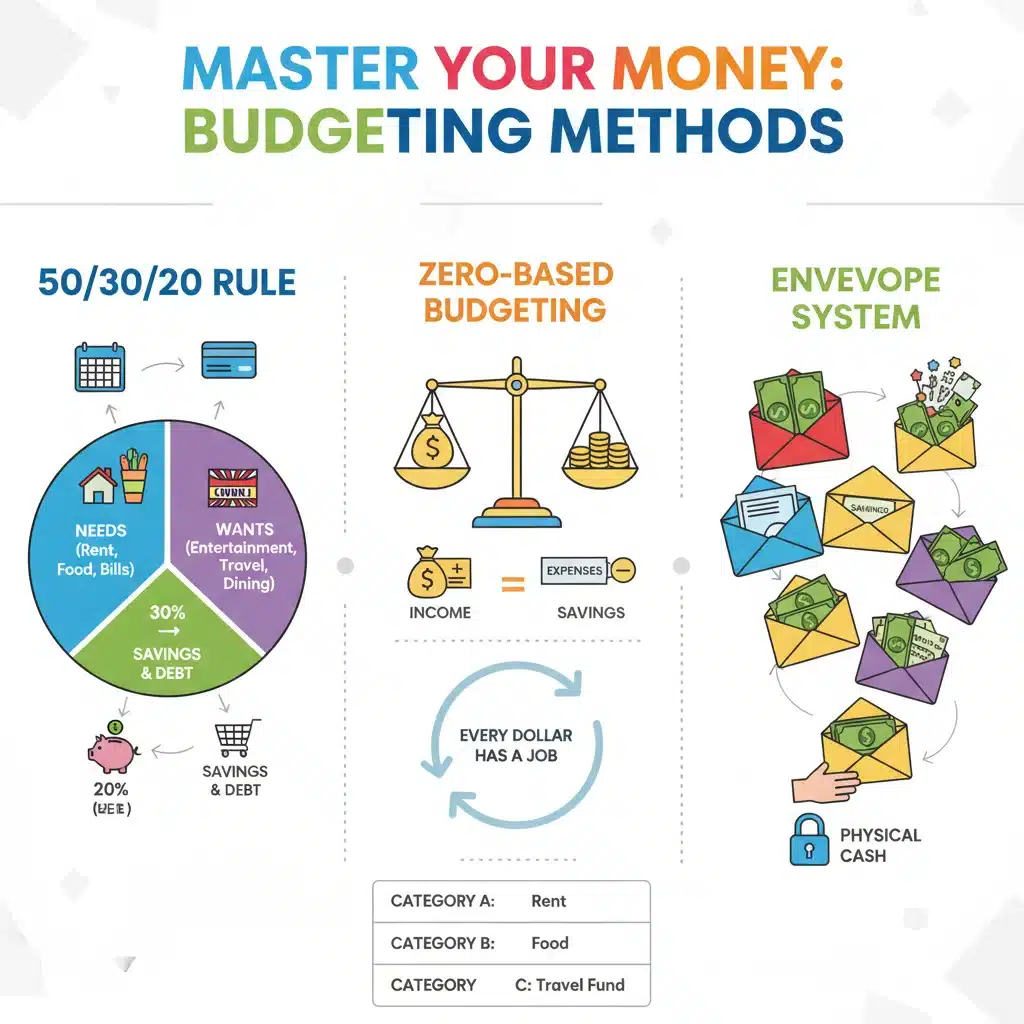
This is the cornerstone of expense management. A budget isn’t about restriction; it’s about intentional spending. Categorize your expenses (housing, food, transportation, entertainment, etc.) and allocate a specific amount to each. Popular budgeting methods include:
- 50/30/20 Rule: 50% for Needs, 30% for Wants, 20% for Savings/Debt Repayment. This is a great framework for aiming for a 20% savings rate.
- Zero-Based Budgeting: Every dollar has a job. You allocate all your income to expenses, savings, or debt repayment until your balance is zero.
- Envelope System: Physically allocating cash into envelopes for different spending categories, helping to visualize and limit spending.
Regularly review your budget to ensure it aligns with your goals and make adjustments as needed. Consistency is key here.
Identify and Reduce Unnecessary Spending
Once you have a budget, you’ll likely identify areas where you can cut back. Common culprits include:
- Dining Out/Takeout: Cooking at home is almost always cheaper and often healthier.
- Subscriptions: Review all your streaming services, gym memberships, and other recurring charges. Cancel those you don’t use regularly.
- Impulse Buys: Implement a ’24-hour rule’ for non-essential purchases – wait a day before buying to see if you still truly need it.
- High-Interest Debt: Prioritize paying down credit card debt or other high-interest loans, as the interest payments are a significant drain on your income.
Even small cuts in daily spending can add up significantly over three years, pushing you closer to your 20% savings rate.
Optimize Fixed Expenses
Fixed expenses, while seemingly set in stone, can often be optimized:
- Housing: Can you refinance your mortgage for a lower interest rate? Consider house hacking (renting out a spare room) or even downsizing if your current housing is disproportionately expensive.
- Transportation: Can you carpool, use public transport more often, or even sell a second car? Shop around for better auto insurance rates.
- Insurance: Regularly compare quotes for auto, home, and health insurance. Bundling policies can sometimes offer discounts.
- Utilities: Be mindful of energy consumption. Unplug electronics, use energy-efficient appliances, and consider smart thermostats.
Reducing fixed expenses has a lasting impact on your monthly cash flow, making it easier to maintain a high savings rate.
Embrace Frugality and Conscious Spending
Frugality isn’t about deprivation; it’s about making intentional choices that align with your values and financial goals. This could involve:
- Shopping sales and using coupons.
- Buying generic brands.
- Repairing items instead of replacing them.
- Finding free or low-cost entertainment options.
- Making your own coffee and packing lunches.
Every dollar saved is a dollar earned for your future. Adopt a mindset where you question every purchase and prioritize your 20% savings rate.
Automating Your Savings: The Path of Least Resistance
One of the most effective strategies for achieving any savings goal, especially a 20% savings rate, is automation. By setting up automatic transfers, you remove the temptation to spend the money and ensure consistency.
Set Up Automatic Transfers
As soon as you get paid, have a portion of your income automatically transferred from your checking account to your savings or investment accounts. Treat this transfer as a non-negotiable expense, just like your rent or mortgage. Start with a percentage you’re comfortable with and gradually increase it as you optimize your income and expenses, working towards that 20% savings rate.
Direct Deposit Allocation
Many employers allow you to split your direct deposit across multiple accounts. Utilize this feature to send a portion of your paycheck directly to your savings or investment accounts before it even hits your primary checking account. This ‘out of sight, out of mind’ approach is incredibly powerful for consistent saving.
Utilize Round-Up Apps
Some financial apps offer ’round-up’ features, where they round up your purchases to the nearest dollar and transfer the difference to a savings account. While individually small, these amounts can add up over time and contribute to your overall savings rate.
Smart Investing for Accelerated Growth
While saving a high percentage of your income is crucial, simply letting it sit in a low-interest savings account won’t maximize its potential. To truly accelerate your financial growth and make your 20% savings rate work harder for you, smart investing is essential.
Understand Your Investment Options
There’s a wide world of investment vehicles available. Understanding the basics is key:
- Retirement Accounts (401(k), IRA): These offer significant tax advantages and are often the best place to start. If your employer offers a 401(k) match, contribute at least enough to get the full match – it’s free money!
- Brokerage Accounts: For savings beyond retirement accounts, a taxable brokerage account allows you to invest in stocks, bonds, mutual funds, and Exchange Traded Funds (ETFs).
- High-Yield Savings Accounts (HYSAs): For your emergency fund and short-term savings goals, HYSAs offer better interest rates than traditional savings accounts, ensuring your money isn’t losing value to inflation.
- Real Estate: Can offer both rental income and appreciation, though it requires significant capital and management.
Diversification across different asset classes is crucial to manage risk and optimize returns.

Leverage the Power of Compound Interest
Compound interest is often called the ‘eighth wonder of the world’ for good reason. It’s the interest you earn on your initial principal plus the accumulated interest from previous periods. The earlier you start investing and the higher your savings rate, the more time compound interest has to work its magic. Even small, consistent contributions can grow into substantial wealth over decades.
Regularly Review and Rebalance Your Portfolio
Your investment strategy shouldn’t be set and forgotten. Regularly review your portfolio (e.g., annually) to ensure it still aligns with your risk tolerance and financial goals. Market fluctuations can cause your asset allocation to drift, so rebalancing helps bring it back to your desired mix. This active management ensures your investments are always working optimally towards your financial objectives, supporting your 20% savings rate goal.
Overcoming Challenges and Staying Motivated
The journey to a 20% savings rate by 2026 won’t always be smooth. There will be unexpected expenses, temptations, and moments of doubt. Staying motivated and resilient is key.
Anticipate and Plan for Unexpected Expenses
Life happens. Cars break down, medical emergencies arise, and home repairs are inevitable. Having a fully funded emergency fund (3-6 months of living expenses) is crucial. This fund acts as a buffer, preventing you from dipping into your long-term savings or going into debt when unforeseen costs arise, thus protecting your hard-earned savings rate.
Celebrate Small Victories
Acknowledge and celebrate your progress along the way. Did you hit your monthly savings target? Did you successfully cut a recurring expense? These small wins can provide the motivation to keep going. Reward yourself with experiences, not material possessions that derail your savings.
Educate Yourself Continuously
The world of personal finance is constantly evolving. Continuously educating yourself through books, reputable financial blogs, podcasts, and online courses will empower you to make smarter decisions, identify new opportunities, and refine your strategies for achieving and maintaining a high savings rate.
Find a Support System
Share your goals with a trusted friend, family member, or join an online financial community. Having someone to hold you accountable, offer advice, or simply share your experiences with can make a significant difference. You don’t have to go it alone.
Be Flexible and Adaptable
Your financial situation might change over the next three years. Your income could fluctuate, or new expenses might emerge. Be prepared to adjust your budget and savings plan as needed. Flexibility doesn’t mean giving up; it means adapting your approach to stay on track towards your 20% savings rate goal.
The Long-Term Impact of a 20% Savings Rate
Achieving a 20% savings rate by 2026 is not just about hitting a number; it’s about fundamentally transforming your financial future. The long-term benefits are profound and far-reaching.
Accelerated Financial Independence
A higher savings rate is directly correlated with a shorter time to financial independence. If you can cover your living expenses with passive income from your investments, you are financially independent. A 20% savings rate significantly reduces the number of working years required to reach this coveted status, offering you freedom and choice.
Enhanced Financial Security
With a substantial savings cushion and growing investments, you’ll experience a greater sense of security. Economic downturns, job losses, or unexpected life events become less daunting when you have a strong financial foundation built on consistent saving and smart investing.
Greater Flexibility and Opportunities
More savings mean more options. You might have the flexibility to take a career break, pursue a passion project, start a business, or travel the world. A high savings rate opens doors to opportunities that would otherwise be out of reach, allowing you to live life on your own terms.
Reduced Financial Stress
Money is a leading cause of stress for many. By taking control of your finances and actively working towards a high savings rate, you’ll alleviate much of that stress. The peace of mind that comes with financial stability is invaluable.
Conclusion: Your Journey to a 20% Savings Rate by 2026
The goal of achieving a 20% savings rate by 2026 is ambitious, but entirely within your grasp. It requires dedication, discipline, and a willingness to make intentional financial choices. By understanding your current financial situation, setting SMART goals, implementing strategies to increase income and decrease expenses, automating your savings, and investing wisely, you can systematically build a stronger financial future.
Remember, this is a journey, not a sprint. There will be ups and downs, but with persistence and a clear vision, you can transform your financial habits and secure the freedom and opportunities that a high savings rate provides. Start today, take consistent action, and by 2026, you’ll be well on your way to a more prosperous and secure financial life. Your future self will thank you.