Maximize Your Aid: 2026-2027 Financial Aid Application Deadlines

Embarking on the journey of higher education is an exciting prospect, but the financial aspect can often feel daunting. Securing the necessary funding is a critical step, and understanding the intricate web of financial aid application deadlines for the 2026-2027 academic year is paramount. Missing a deadline, even by a single day, can mean the difference between receiving substantial aid and having to bear the full cost of tuition and living expenses. This comprehensive guide is designed to equip you with all the essential information, ensuring you are well-prepared to navigate the financial aid landscape and maximize your opportunities for funding.
The process of applying for financial aid is not a one-time event; it’s a series of strategic applications, each with its own timeline and requirements. From federal aid like the Free Application for Federal Student Aid (FAFSA) to institutional scholarships and state-specific programs, each piece of the puzzle contributes to your overall financial aid package. Being proactive and organized is key to success. This article will break down the crucial financial aid deadlines, provide insights into what each application entails, and offer practical tips to help you stay on track.
Understanding the Core Components of Financial Aid
Before diving into specific financial aid deadlines, it’s essential to grasp the primary types of financial assistance available. This understanding will help you identify which applications are relevant to your situation and why adhering to their respective timelines is so important.
Federal Student Aid (FAFSA)
The FAFSA is arguably the most critical application for any student seeking financial assistance for college or career school. It determines your eligibility for federal student aid, including grants, scholarships, work-study programs, and federal student loans. The information provided on your FAFSA is also used by many states and colleges to award their own financial aid. The FAFSA for the 2026-2027 academic year typically opens on October 1st, 2025. While the federal deadline is usually much later, applying as early as possible is highly recommended due to the ‘first-come, first-served’ nature of some aid programs. Many states and institutions have earlier priority deadlines that you must meet to be considered for their aid.
CSS Profile
The CSS Profile is another significant application, primarily used by private colleges and universities to award their non-federal student aid. Unlike the FAFSA, which focuses on federal methodology, the CSS Profile delves deeper into your family’s financial situation, often resulting in a more comprehensive assessment of need. Over 200 institutions use the CSS Profile, and its deadlines vary significantly by institution. It’s crucial to check the specific requirements of each college you are applying to. Like the FAFSA, the CSS Profile usually opens on October 1st, 2025, for the 2026-2027 academic year.
Institutional & Scholarship Applications
Beyond federal and CSS Profile-based aid, colleges and universities often have their own scholarship programs and institutional grants. These can be need-based, merit-based, or a combination of both. The application processes and deadlines for these can vary widely. Some might require a separate application, an essay, or a portfolio, while others might automatically consider you based on your admissions application. Similarly, external scholarships from private organizations, foundations, and businesses are abundant, each with its unique eligibility criteria and deadlines. These deadlines can range throughout the year, so consistent searching and application are necessary.
State-Specific Aid Programs
Many states offer their own financial aid programs for residents attending in-state colleges or universities. These programs often have their own application processes and, critically, their own financial aid deadlines. For example, some states require you to complete the FAFSA by a specific date to be considered for state grants. These deadlines are often much earlier than the federal FAFSA deadline, making early submission even more important.
Key Financial Aid Deadlines for 2026-2027: A Detailed Breakdown
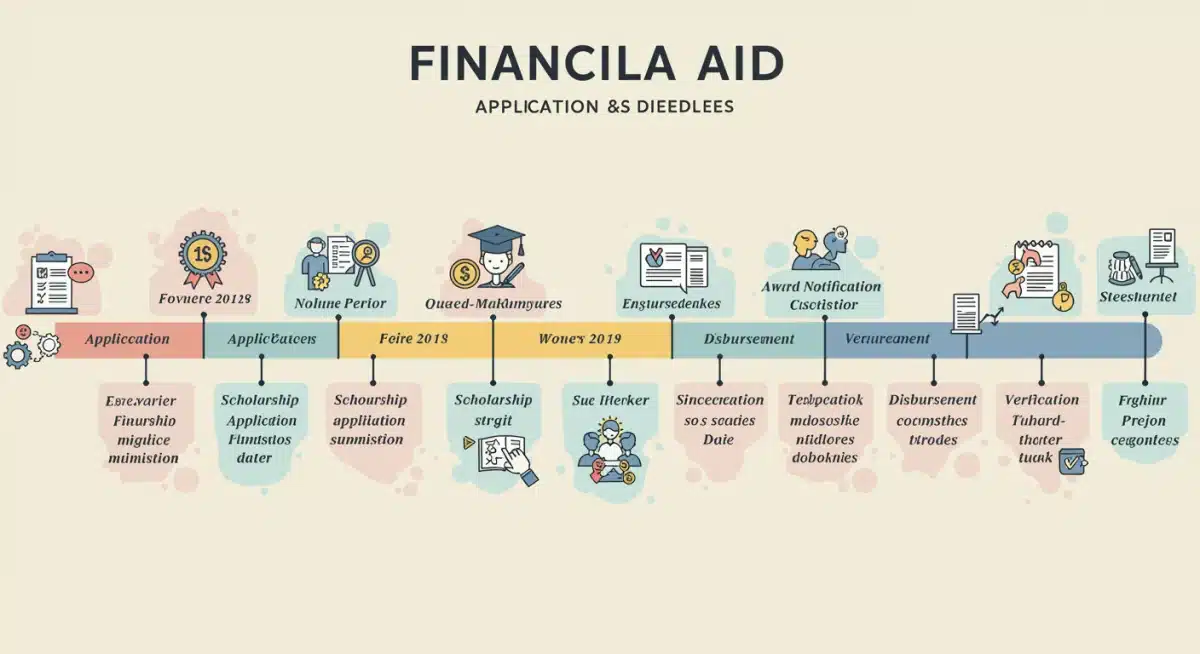
While specific dates can fluctuate slightly year to year, the general timeline for financial aid applications remains consistent. Here’s what you should anticipate for the 2026-2027 academic year:
October 2025: The Starting Line
- FAFSA Opens: October 1, 2025, is the anticipated opening date for the 2026-2027 Free Application for Federal Student Aid (FAFSA). This is your absolute earliest opportunity to submit your application. Mark this date on your calendar and aim to complete it as soon as possible.
- CSS Profile Opens: Similarly, the CSS Profile for the 2026-2027 academic year is expected to become available on October 1, 2025. If any of the colleges you are applying to require the CSS Profile, begin this application concurrently with your FAFSA.
- Early Bird Scholarship Applications: Many private scholarship organizations begin accepting applications in the fall for the following academic year. Start your scholarship search early and note down any October deadlines.
November – December 2025: Building Momentum
- Early Action/Early Decision College Deadlines: If you are applying to colleges under Early Action or Early Decision programs, your financial aid application deadlines (both FAFSA and CSS Profile, if required) will often align with these admissions deadlines, typically in November or early December. Failing to meet these can jeopardize your early admission financial aid package.
- State Priority Deadlines: Some states have very early financial aid deadlines, sometimes as early as November or December. Check your state’s higher education agency website for specific dates. These are often ‘priority’ deadlines, meaning that while you might still be able to apply later, your chances of receiving certain state-specific grants might decrease.
- Institutional Priority Deadlines: Many colleges and universities also have their own priority deadlines for institutional aid. These can fall anywhere from November to February. Ensure you check the financial aid section of each college’s website.
January – February 2026: Peak Application Season
This period is often the busiest for financial aid applications, especially for students applying through regular decision cycles.
- Regular Decision College Deadlines: For most colleges with regular decision admissions, financial aid deadlines will typically be in January or February 2026. This includes both FAFSA and CSS Profile submissions.
- More State Deadlines: A large number of states will have their financial aid deadlines in January or February. Again, verify these dates directly with your state’s higher education authority.
- Scholarship Deadlines: A significant portion of private scholarship applications will also have deadlines during these months. Continue your diligent search and application process.
March – April 2026: Winding Down (But Not Over!)
- Late State Deadlines: A few states might have later financial aid deadlines extending into March or April. While it’s always best to apply early, these later deadlines offer a final opportunity for state-specific aid.
- Federal FAFSA Deadline: The official federal FAFSA deadline for the 2026-2027 academic year is usually June 30, 2027. However, this is a very misleading date. By this time, most federal aid (especially grants) will have been disbursed, and many state and institutional deadlines will have long passed. Consider this an absolute last resort, not a target.
- Verification Process: If your FAFSA is selected for verification, you may be asked to submit additional documentation to your college’s financial aid office. This process can take time, so respond promptly to avoid delays in your aid disbursement.
Summer 2026: Final Checks and Appeals
- Award Letters Arrive: Colleges typically send out financial aid award letters in the spring, usually starting in March and continuing through April. Review these carefully, compare offers, and understand the terms of any aid.
- Appeals Process: If your financial circumstances have changed since you submitted your FAFSA or CSS Profile, or if you believe your initial aid offer is insufficient, you may be able to appeal for more aid. This usually involves contacting the financial aid office directly and providing documentation to support your request.
- Loan Entrance Counseling & Master Promissory Note: If you accept federal student loans, you will likely need to complete entrance counseling and sign a Master Promissory Note (MPN) before funds are disbursed.
Why Early Submission is Non-Negotiable
You’ll notice a recurring theme: applying early. This isn’t just a suggestion; it’s a critical strategy for maximizing your financial aid. Here’s why:
- First-Come, First-Served Aid: Many grants, scholarships, and even some state-specific aid programs are awarded on a first-come, first-served basis until funds are depleted. The earlier you apply, the better your chances of securing these limited resources.
- State and Institutional Deadlines: As highlighted, state and institutional financial aid deadlines are almost always earlier than the federal FAFSA deadline. Missing these means missing out on potentially significant funding opportunities.
- Time for Corrections and Verification: Submitting early provides a buffer. If there are errors on your application, or if your FAFSA is selected for verification, you’ll have ample time to make corrections or submit additional documentation without jeopardizing your aid package.
- Reduces Stress: The college application process is stressful enough. Getting your financial aid applications out of the way early frees you up to focus on other aspects, like essay writing, scholarship searches, and college visits.
- Better Planning: Receiving your financial aid award letters earlier allows you more time to compare offers from different institutions and make an informed decision about where to attend.

Navigating the FAFSA and CSS Profile: Tips for Success
These two applications are the cornerstones of your financial aid journey. Here’s how to approach them effectively:
For the FAFSA:
- Gather Documents Early: Before October 1st, collect all necessary documents. This includes your Social Security number, alien registration number (if not a U.S. citizen), federal income tax returns (from two years prior, e.g., 2024 tax returns for 2026-2027 FAFSA), W-2 forms, records of untaxed income, and information on cash, savings, checking accounts, investments, and real estate.
- Create an FSA ID: Both the student and one parent (if dependent) will need an FSA ID to access and sign the FAFSA electronically. Create these well in advance, as it can take a few days for them to become active.
- Use the IRS Data Retrieval Tool (DRT): This tool allows you to securely transfer your tax information directly from the IRS into your FAFSA. It saves time and reduces errors. Use it if eligible.
- List All Schools: You can list up to 10 schools on your FAFSA. List all colleges you are considering, even if you haven’t been accepted yet. You can always remove schools later.
- Review Carefully: Before submitting, review all information for accuracy. Even small errors can cause delays.
For the CSS Profile:
- Check College Requirements: Not all colleges require the CSS Profile. Verify which of your prospective schools do and their specific deadlines.
- Prepare for More Detail: The CSS Profile asks for more detailed financial information than the FAFSA. Be prepared to provide information on home equity, small business values, and other assets.
- Pay the Fee (or Get a Waiver): There is a fee to submit the CSS Profile, and an additional fee for each school. Fee waivers are available for eligible students.
- Use the College Board Account: You will use your College Board account (the same one used for SAT/AP) to access and submit the CSS Profile.
Beyond Federal and Institutional Aid: Maximizing Scholarship Opportunities
While federal and institutional aid form the bedrock of many financial aid packages, scholarships are often the ‘free money’ that doesn’t need to be repaid. Dedicate significant time to scholarship searching and application throughout your senior year of high school and even during college.
Where to Find Scholarships:
- High School Guidance Counselors: Your counselor often has a list of local scholarships.
- College Financial Aid Websites: Many colleges list scholarships they offer or recommend.
- Online Scholarship Search Engines: Websites like Fastweb, College Board Scholarship Search, Niche, Scholarships.com, and Going Merry are excellent resources.
- Community Organizations: Local Rotary Clubs, Lions Clubs, churches, and other community groups often offer scholarships to local students.
- Employers: Check if your parents’ employers offer scholarships for dependents.
- Your Own Interests: Look for scholarships related to your intended major, extracurricular activities, ethnicity, or unique talents.
Tips for Scholarship Applications:
- Start Early: Many scholarships have deadlines in the fall or winter.
- Organize: Keep a spreadsheet of scholarships, their requirements, and deadlines.
- Tailor Your Applications: Don’t use generic essays. Customize each application to fit the scholarship’s specific criteria.
- Proofread: Errors can reflect poorly on your attention to detail. Have someone else review your application.
- Don’t Discount Small Scholarships: A few hundred dollars here and there can quickly add up.
State-Specific Deadlines: A Critical Component
Ignoring state-specific financial aid deadlines is a common mistake that can cost students valuable funding. Each state has its own programs and deadlines, which are often tied to FAFSA submission.
How to Find Your State’s Deadlines:
- Visit Your State’s Higher Education Agency Website: A quick search for “[Your State] higher education financial aid” will usually lead you to the official source.
- Check Your College’s Financial Aid Page: Colleges often provide links or information about state aid for residents.
- Consult Your High School Counselor: They are typically well-versed in state-specific aid.
Some states operate on a ‘state grant first-come, first-served’ basis, meaning funds are disbursed until they run out, regardless of the official deadline. This further reinforces the importance of submitting your FAFSA as close to October 1st as possible.
What Happens After You Apply? Understanding Award Letters
Once you’ve submitted all your applications, the waiting game begins. Colleges typically start sending out financial aid award letters in the spring, often coinciding with admissions decisions. These letters are crucial as they detail the financial aid package the institution is offering you.
Key Elements of an Award Letter:
- Cost of Attendance (COA): This is the total estimated cost of attending the school for one academic year, including tuition, fees, room, board, books, supplies, transportation, and personal expenses.
- Expected Family Contribution (EFC) or Student Aid Index (SAI): This is the amount your family is expected to contribute towards your education, as determined by the FAFSA (and CSS Profile, if applicable).
- Types of Aid Offered: This will break down the grants, scholarships, work-study, and loans included in your package.
- Net Price: This is the COA minus any grants and scholarships (money you don’t have to pay back). This is the true cost you will be responsible for.
Reviewing and Comparing Offers:
It’s vital to carefully review each award letter. Don’t just look at the total aid amount; differentiate between ‘gift aid’ (grants and scholarships) and ‘self-help aid’ (loans and work-study). Compare the net price of each institution. If you have questions or believe there’s been an error, contact the financial aid office. If your financial situation has changed significantly since applying, you can also appeal for more aid.
Common Pitfalls and How to Avoid Them
The financial aid process can be complex, and it’s easy to make mistakes. Be aware of these common pitfalls:
- Missing Deadlines: This is the biggest and most costly mistake. Use calendars, reminders, and checklists.
- Incomplete Applications: Submitting an application with missing information can delay processing or lead to rejection.
- Errors on Applications: Double-check all financial figures and personal information. The IRS Data Retrieval Tool can minimize tax-related errors on the FAFSA.
- Not Applying for Everything: Don’t assume you won’t qualify for aid. Apply for federal, state, institutional, and private scholarships.
- Ignoring Communication: Respond promptly to requests for additional information from financial aid offices.
- Not Understanding Loan Terms: If you accept loans, understand the interest rates, repayment terms, and your responsibilities.
- Procrastination: Waiting until the last minute increases stress and the likelihood of errors or missed opportunities.
A Proactive Approach to Financial Aid Success
Successfully navigating the 2026-2027 financial aid application windows requires a proactive, organized, and diligent approach. By understanding the different types of aid, knowing the general timelines, and meticulously tracking specific deadlines for federal, state, and institutional applications, you can significantly increase your chances of securing the funding needed for your higher education goals.
Remember that the financial aid process is not a one-and-done task. It’s an ongoing commitment that begins well before your senior year of high school and continues through your college years. Stay informed, ask questions, and don’t hesitate to reach out to financial aid offices for clarification. Your future academic success depends not only on your academic achievements but also on your ability to strategically manage the financial aid application process.
Start gathering your documents now, mark those October 1, 2025 dates on your calendar, and create a personalized checklist for each college and scholarship you’re targeting. With careful planning and timely action, you can demystify the financial aid process and confidently step into your 2026-2027 academic year with the support you need.
Don’t let the fear of costs deter your educational aspirations. The financial aid system is designed to help, but it requires your active participation. By staying on top of these crucial financial aid deadlines, you’re not just filling out forms; you’re investing in your future.