Federal Student Loan Interest Rates 2026: Trends & Projections

Understanding the dynamics of federal student loan interest rates in 2026 is crucial for borrowers, as economic shifts and legislative actions will significantly influence repayment burdens and future borrowing costs.
For millions of Americans, the cost of higher education is intricately linked to federal student loan interest rates. As we look towards 2026, understanding the current trends and projected changes in federal student loan interest rates 2026 is paramount for both prospective and current borrowers. This comprehensive guide aims to demystify the complexities surrounding these rates, offering insights into what to expect and how to prepare for the financial landscape ahead.
Understanding the Basics of Federal Student Loan Interest Rates
Before delving into future projections, it’s essential to grasp how federal student loan interest rates are determined. Unlike private loans, federal rates are set annually by Congress, not by market fluctuations or individual credit scores. These rates are fixed for the life of the loan, providing a predictable repayment schedule, which is a significant advantage for borrowers.
The interest rates for federal student loans are typically tied to the 10-year Treasury note yield, plus a statutory add-on. This calculation happens each spring, with the new rates applying to loans disbursed between July 1st of the current year and June 30th of the following year. Therefore, the rates for the 2025-2026 academic year would be established in the spring of 2025, impacting loans disbursed starting July 1, 2025.
Types of Federal Student Loans and Their Rate Structures
Different types of federal student loans carry different interest rates, reflecting their intended purpose and borrower eligibility. Understanding these distinctions is crucial for anyone planning their educational financing.
- Direct Subsidized Loans: These are for undergraduate students with demonstrated financial need. The government pays the interest while the student is in school at least half-time, during the grace period, and during deferment.
- Direct Unsubsidized Loans: Available to undergraduate and graduate students regardless of financial need. Interest accrues from the moment the loan is disbursed, even while the student is in school.
- Direct PLUS Loans: These are for graduate or professional students and parents of dependent undergraduate students. They typically have higher interest rates and require a credit check.
Each of these loan types will have its own specific rate set by Congress, based on the aforementioned formula. While the formula provides a framework, Congress can, and sometimes does, intervene to modify the add-on or cap rates, especially in response to economic conditions or policy priorities. This legislative aspect introduces a layer of unpredictability that borrowers need to monitor closely.
In summary, the foundational understanding of how federal student loan interest rates are determined, based on congressional action and the 10-year Treasury note, is the first step toward navigating the financial landscape for 2026. Knowing the different loan types and their respective rate structures allows borrowers to anticipate their potential financial obligations more accurately.
Current Trends Shaping Federal Student Loan Rates in 2025
As we approach 2026, the current economic climate and recent legislative actions are critical in forecasting federal student loan interest rates. The period leading up to 2025 has been marked by significant shifts in monetary policy and ongoing discussions about student loan debt relief, all of which indirectly or directly influence future rates.
Interest rates across the board have seen volatility in recent years, largely driven by the Federal Reserve’s efforts to combat inflation. While federal student loan rates are not directly controlled by the Fed’s benchmark rates, the broader interest rate environment, particularly the yield on the 10-year Treasury note, is a key determinant. A rising Treasury yield often signals higher borrowing costs for the government, which can translate to higher rates for federal student loans.
Economic Indicators and Their Impact
Several economic indicators bear watching as they can influence the 10-year Treasury note yield and, consequently, federal student loan rates. These include inflation rates, unemployment figures, and overall economic growth projections.
- Inflation: Persistent high inflation typically prompts the Federal Reserve to maintain or increase interest rates, which can push Treasury yields higher.
- Unemployment: A strong job market might allow for higher rates, while a weakening one could lead to calls for lower rates to stimulate economic activity.
- GDP Growth: Robust economic growth can support higher rates, as the economy is seen as strong enough to handle increased borrowing costs.
Beyond these macroeconomic factors, specific legislative discussions in Congress often play a pivotal role. The ongoing debate about federal budget priorities, potential student loan reforms, and the overall political landscape can all contribute to how rates are ultimately set for the upcoming academic year. For example, a push for greater affordability in higher education might lead to legislative efforts to cap or reduce interest rates, irrespective of market conditions.
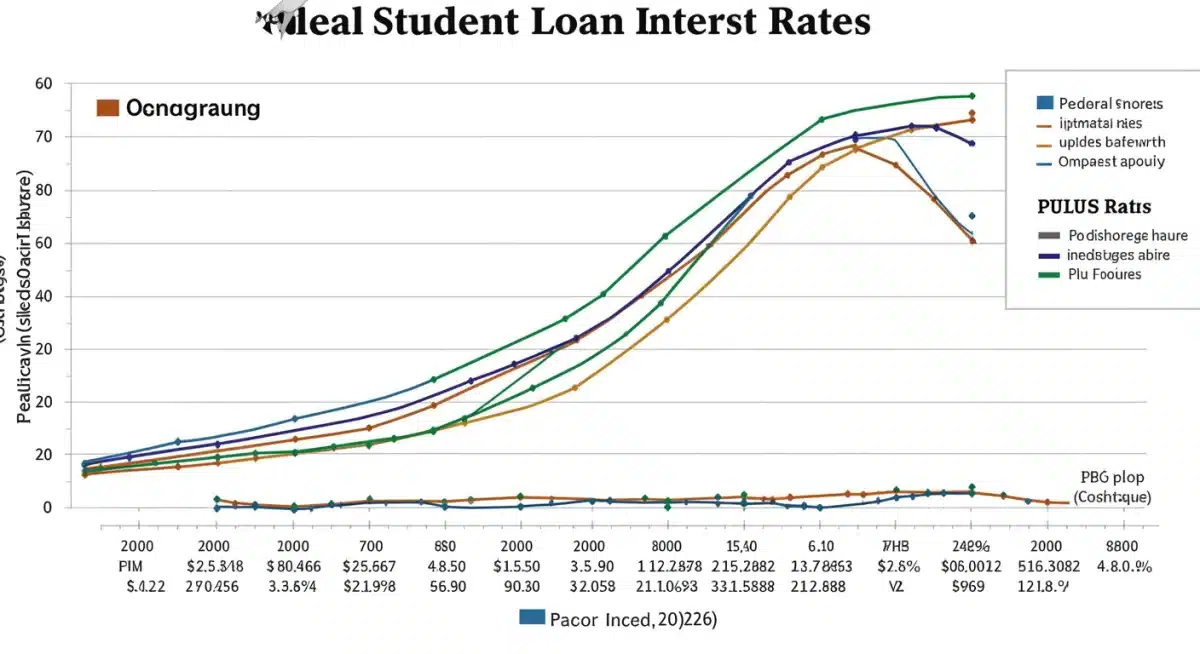
Recent patterns have shown a tendency for rates to adjust in response to the perceived health of the economy. If the economy continues its trajectory of moderate growth with controlled inflation, we might see a stabilization of rates, or even slight increases, reflecting a return to more normalized market conditions after periods of exceptional intervention. However, any significant economic downturn or unexpected policy shift could alter this outlook dramatically.
In essence, the current trends for federal student loan rates are a complex interplay of broader economic forces and specific legislative decisions. Borrowers must pay attention to both the Federal Reserve’s stance and congressional debates to anticipate potential changes for 2026.
Projected Changes for Federal Student Loan Rates in 2026
Forecasting federal student loan interest rates for 2026 involves analyzing the trajectory of the 10-year Treasury note yield and anticipating congressional action. While no one can predict the future with absolute certainty, current economic models and political discussions offer valuable insights into potential rate movements.
Many financial analysts project that the Federal Reserve’s aggressive stance on inflation may begin to ease, potentially leading to a more stable interest rate environment by late 2025 and into 2026. This stabilization, however, does not necessarily mean a return to historically low rates. Instead, we might see rates settle at a level that reflects a more balanced economic state, where inflation is managed but economic growth is sustained.
Factors Influencing 2026 Projections
Several key factors will likely influence the final rates for the 2025-2026 academic year. These elements are interconnected and can create a dynamic environment for rate setting.
- Federal Reserve Policy: The Fed’s ongoing decisions regarding the federal funds rate will continue to have an indirect but significant impact on the 10-year Treasury yield.
- Government Spending and Debt: Increased government borrowing to finance various initiatives could put upward pressure on Treasury yields.
- Global Economic Conditions: International economic events, such as geopolitical stability or major trade agreements, can affect global bond markets and, by extension, U.S. Treasury yields.
Based on current consensus, a modest increase or maintenance of current rate levels is a more likely scenario than a dramatic decrease. The era of near-zero interest rates, largely a response to economic crises, is unlikely to return in the immediate future. Instead, federal student loan rates are expected to reflect a more normalized cost of borrowing, perhaps slightly higher than pre-pandemic levels but still generally competitive compared to private loan options.
Furthermore, legislative efforts aimed at making college more affordable could introduce caps or subsidies that prevent rates from climbing too high, even if market conditions suggest otherwise. These policy interventions are a constant variable in the federal student loan landscape and can significantly alter the outlook for borrowers. Therefore, staying informed about proposed legislation and budget discussions is as important as tracking economic indicators.
In conclusion, while precise figures are impossible to provide, the projections for 2026 suggest a period of relatively stable or slightly elevated rates compared to recent years. Borrowers should plan for an environment where the cost of borrowing remains a significant consideration, making informed choices about loan types and repayment strategies all the more critical.
Strategies for Borrowers: Navigating Future Interest Rate Changes
Understanding the projected changes in federal student loan interest rates 2026 is only half the battle; the other half is knowing how to effectively navigate these changes. Borrowers, whether current or prospective, have several strategies at their disposal to mitigate the impact of rising rates and optimize their repayment plans.
For current borrowers, particularly those with older loans that might have higher fixed rates, exploring refinancing options could be beneficial. While federal loans generally offer more robust borrower protections, private refinancing might offer a lower interest rate if your credit score has significantly improved since you first took out your loans. However, it’s crucial to weigh the loss of federal benefits, such as income-driven repayment plans and potential forgiveness programs, against the interest savings.
Proactive Measures for Prospective Borrowers
Students planning to take out federal loans for the 2025-2026 academic year should focus on minimizing their borrowing and understanding the terms of their loans from the outset.
- Borrow Only What You Need: Avoid taking out the maximum amount offered if it exceeds your actual educational expenses. Every dollar borrowed accrues interest.
- Understand Loan Types: Prioritize subsidized loans if eligible, as they offer significant interest savings.
- Explore Scholarships and Grants: Non-repayable aid should always be the first option to reduce reliance on loans.
Another powerful strategy is to make interest payments while still in school, if financially feasible. Even small payments can significantly reduce the total amount of interest that accrues, especially on unsubsidized loans. This proactive approach can lead to substantial savings over the life of the loan and reduce the overall burden of student debt.
For those already in repayment, revisiting your repayment plan is a smart move. Federal student loans offer various income-driven repayment (IDR) plans that can adjust your monthly payments based on your income and family size. These plans can provide much-needed flexibility, especially if your financial situation changes. Even if interest rates rise, an IDR plan can help keep your monthly payments manageable, though it may extend the repayment period and increase the total interest paid over time.
Ultimately, a well-informed borrower is an empowered borrower. By staying updated on rate changes, exploring all available options, and making strategic financial decisions, individuals can effectively manage their federal student loan debt, regardless of how interest rates evolve in 2026 and beyond.
The Role of Legislation and Policy in Rate Determination
The determination of federal student loan interest rates is not solely a function of economic indicators; it is heavily influenced by legislative and policy decisions made by Congress. Unlike other forms of debt where market forces are the primary driver, federal student loan rates are set through a political process, making them subject to policy priorities and budgetary considerations.
Each year, Congress establishes the formula for federal student loan interest rates, typically linking them to the 10-year Treasury note yield but also adding a fixed percentage. This formula can be, and has been, modified by legislation. For instance, in times of economic hardship or heightened concern over student debt burdens, Congress might introduce measures to cap rates, extend grace periods, or even subsidize interest for certain types of loans beyond the traditional subsidized loan program.
Potential Legislative Impact on 2026 Rates
As we approach 2026, several policy discussions could shape the future of federal student loan interest rates. These discussions often revolve around balancing the need for sustainable government funding with the goal of making higher education affordable.
- Student Loan Reform: Ongoing debates about comprehensive student loan reform could lead to new rate-setting mechanisms or changes to existing loan programs.
- Budget Reconciliation: Annual budget processes provide opportunities for lawmakers to adjust the statutory add-on percentages or introduce new subsidies.
- Affordability Initiatives: Political pressure to address the rising cost of college could prompt legislation aimed at lowering or stabilizing interest rates for borrowers.
The political climate leading up to 2026 will undoubtedly play a significant role. A shift in congressional control or a new presidential administration could bring different priorities to the forefront, potentially leading to substantial changes in student loan policy. For example, if there is a strong push for universal access to higher education, policies designed to lower borrowing costs, including interest rates, might gain traction.
Conversely, if fiscal conservatism dominates the legislative agenda, there might be less appetite for measures that reduce government revenue from student loan interest. This push and pull between competing priorities makes predicting legislative outcomes challenging but crucial for understanding the full picture of federal student loan interest rates 2026.
In essence, borrowers need to be aware that the rates they encounter in 2026 will be a product not just of economic trends, but also of political will and legislative compromise. Staying informed about policy debates and potential legislative changes is therefore a vital component of financial planning for student loans.
Impact on Different Borrower Groups
Changes in federal student loan interest rates do not affect all borrowers equally. The impact can vary significantly depending on whether one is an undergraduate, graduate student, or parent borrower, as well as their repayment status. Understanding these differential impacts is crucial for tailoring effective financial strategies.
Undergraduate students, who often rely heavily on federal loans to finance their education, are particularly sensitive to rate changes. Even a small increase in rates can mean a noticeable difference in their total repayment amount over the life of the loan. For those taking out subsidized loans, the government’s payment of interest while in school helps, but unsubsidized loans will begin accruing interest immediately, making the rate particularly critical.
Graduate Students and PLUS Loan Borrowers
Graduate students and parents utilizing Direct PLUS Loans often face higher interest rates and typically borrow larger sums, making them more vulnerable to rate increases. The absence of interest subsidies for most graduate and all PLUS loans means that any rate hike directly translates to a greater accrual of interest from the moment of disbursement.
- Graduate Students: Often borrow more for advanced degrees, making them susceptible to higher cumulative interest if rates rise.
- Parent PLUS Loan Borrowers: These loans can have a significant impact on family finances, and higher rates can increase the burden on parents already managing other financial responsibilities.
- Existing Borrowers: Those with fixed-rate federal loans are insulated from new rate changes, but they might consider refinancing if new rates drop significantly (though this comes with trade-offs).
Furthermore, borrowers in income-driven repayment (IDR) plans might experience a different kind of impact. While their monthly payments are adjusted based on income, higher interest rates can lead to more interest accumulating, potentially increasing the amount that accumulates if their payments don’t cover the full interest. This can result in a larger loan balance despite making consistent payments, a phenomenon known as negative amortization.
For new borrowers entering repayment in 2026, the initial interest rate will set the baseline for their entire repayment journey. Therefore, understanding the rates for that specific academic year is paramount. They will need to carefully consider their borrowing needs and potential future income to choose a repayment plan that aligns with their financial capacity.
In conclusion, the impact of federal student loan interest rates in 2026 will be felt differently across various borrower groups. Tailoring financial planning and repayment strategies to one’s specific loan type and financial situation is essential to effectively manage student debt.
Preparing for the Future: Actionable Steps for Borrowers
Given the anticipated trends and potential legislative shifts surrounding federal student loan interest rates 2026, proactive preparation is key for all borrowers. Implementing actionable steps now can significantly mitigate future financial stress and optimize your student loan management.
One of the most crucial steps is to develop a comprehensive budget that accounts for your current and projected income and expenses. This budget should factor in your student loan payments, allowing you to assess your capacity for making additional payments or exploring alternative repayment strategies. A clear financial picture is the foundation for any effective debt management plan.
Key Actions to Consider
Beyond budgeting, several specific actions can help borrowers prepare for the evolving landscape of federal student loan rates.
- Stay Informed: Regularly check official sources like the Department of Education and reputable financial news outlets for updates on interest rate announcements and legislative changes.
- Understand Your Loan Terms: Familiarize yourself with the specifics of your existing or prospective loans, including interest rates, repayment start dates, and available repayment plans.
- Build an Emergency Fund: Having a financial cushion can provide flexibility if unexpected expenses arise or if you face temporary financial hardship, preventing you from missing loan payments.
- Consider Consolidation: If you have multiple federal loans, Direct Loan Consolidation can simplify repayment by combining them into a single loan with one servicer and a single interest rate (which is a weighted average of your existing rates). While it doesn’t always lower your rate, it can streamline management.
For those currently in school, working part-time or during breaks to reduce the amount you need to borrow can have a significant long-term impact. Even small amounts of earned income can help cover immediate educational costs or reduce the principal amount of loans taken out, thereby lessening the total interest accrued.
Finally, don’t hesitate to reach out to your loan servicer if you have questions or concerns about your repayment options. They can provide personalized guidance on available repayment plans, deferment, or forbearance options that might be suitable for your situation. Taking advantage of these resources can provide crucial support in navigating the complexities of student loan debt.
By taking these actionable steps, borrowers can position themselves to effectively manage their federal student loans in 2026 and beyond, ensuring they are prepared for whatever changes the future may bring in interest rates and repayment policies.
| Key Aspect | Brief Description |
|---|---|
| Rate Determination | Set annually by Congress, tied to 10-year Treasury yield plus statutory add-on. |
| Current Trends | Influenced by Fed’s inflation fight and broader economic shifts, potentially leading to stabilization or slight increases. |
| 2026 Projections | Likely stable to modestly higher rates, balancing economic growth with inflation control. |
| Borrower Strategies | Budgeting, understanding loan types, exploring IDR plans, and staying informed are crucial. |
Frequently Asked Questions About 2026 Federal Student Loan Rates
Federal student loan interest rates for 2026 are set annually by Congress. They are typically tied to the yield of the 10-year Treasury note, plus a statutory add-on percentage. These rates are fixed for the life of the loan, providing predictability for borrowers.
While precise figures are not yet announced, projections suggest federal student loan rates for 2026 could be stable or modestly higher than previous years. This is influenced by economic factors like inflation and the Federal Reserve’s monetary policy decisions.
All federal student loan types are affected, including Direct Subsidized Loans, Direct Unsubsidized Loans, and Direct PLUS Loans. Each loan type has its own specific rate, which is set annually and remains fixed for the loan’s duration.
Borrowers can manage rate changes by budgeting, understanding their loan terms, exploring income-driven repayment plans, and staying informed about legislative updates. Proactive engagement with loan servicers is also highly recommended.
Generally, your credit score does not affect federal student loan interest rates for most loan types. However, Direct PLUS Loans for graduate students and parents do require a credit check to ensure the borrower does not have an adverse credit history.
Conclusion
The landscape of federal student loan interest rates for 2026 is shaped by a confluence of economic indicators, Federal Reserve policies, and crucial legislative decisions. While precise figures remain to be set, borrowers can anticipate a period of relative stability or modest increases, moving away from the historically low rates of the past. Understanding the mechanisms behind rate determination, staying informed about current trends, and proactively implementing financial strategies are vital for both prospective and current student loan holders. By taking these steps, borrowers can navigate the complexities of student loan debt effectively, ensuring their educational investments remain manageable and sustainable in the long term.