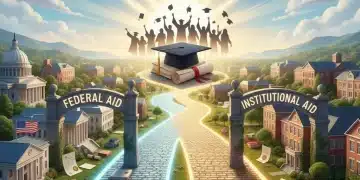
Federal Student Aid: 3 Critical 2026 Deadlines You Can’t Miss

Understanding and adhering to the 3 critical deadlines for federal student aid applications in early 2026 is essential for all students seeking financial assistance for their higher education.
For students and families planning for higher education, securing financial assistance is often a top priority. Missing crucial application windows can mean the difference between receiving vital aid and facing significant financial hurdles. This is particularly true when it comes to the 3 critical deadlines for federal student aid applications in early 2026 you cannot miss, which are pivotal for accessing grants, scholarships, work-study programs, and federal loans. Staying informed and prepared is not just advisable; it’s absolutely necessary.
Understanding the FAFSA: Your Gateway to Federal Aid
The Free Application for Federal Student Aid (FAFSA) stands as the cornerstone of federal financial assistance for higher education in the United States. This comprehensive form collects financial and demographic information to determine a student’s eligibility for various federal, state, and institutional aid programs. It’s not just about loans; the FAFSA is your entry point to grants, scholarships, and work-study opportunities that don’t need to be repaid. Many state and institutional aid programs also rely on FAFSA data, making its timely submission critically important for a wide range of financial support.
Completing the FAFSA requires careful attention to detail and a thorough understanding of the information requested. Students and parents will need to provide tax information, income details, and asset values, among other data points. The complexity of the form can sometimes lead to errors or delays, underscoring the importance of starting the process well in advance of any deadlines. Early submission not only mitigates the risk of missing a deadline but also often increases the chances of receiving more favorable aid packages, as some funds are distributed on a first-come, first-served basis.
The Evolving FAFSA Landscape
The FAFSA process has undergone significant reforms in recent years, aimed at simplifying the application and expanding eligibility for federal aid. These changes, often referred to as ‘FAFSA Simplification,’ have streamlined the form, updated the methodology for calculating aid, and introduced new terminology. While the intent is to make federal aid more accessible, these adjustments also mean that applicants must be aware of the new procedures and requirements.
- Simplified Application: Fewer questions and a more intuitive interface.
- Expanded Eligibility: Changes to the Student Aid Index (SAI) may qualify more students for Pell Grants.
- Direct Data Exchange: Enhanced integration with IRS data for easier income reporting.
These reforms emphasize the need for applicants to consult the most current guidance from the Department of Education and their prospective colleges. Ensuring you are using the correct version of the FAFSA and understanding the updated guidelines will be key to a successful application in 2026. Staying ahead of these changes is a proactive step towards securing your financial future.
In essence, the FAFSA is more than just a form; it’s a strategic tool for unlocking educational opportunities. Its importance cannot be overstated, and understanding its intricacies, especially in light of ongoing reforms, is fundamental for any student seeking federal financial assistance.
Deadline 1: The Federal FAFSA Submission Window (Early 2026)
The first and arguably most critical deadline for federal student aid applications in early 2026 is the opening of the federal FAFSA submission window. While the FAFSA typically becomes available on October 1st for the upcoming academic year, recent reforms and implementation challenges have sometimes shifted this date. For the 2026-2027 academic year, it is imperative for students to mark their calendars for the precise opening day, which is anticipated to be in October 2025, but could be subject to slight adjustments. This initial window is crucial because many federal aid programs, particularly those with limited funding like the Federal Supplemental Educational Opportunity Grant (FSEOG) and some Federal Work-Study funds, operate on a first-come, first-served basis.
Submitting your FAFSA as close to the opening date as possible maximizes your chances of receiving these need-based aid types. Procrastination can lead to missing out on funds that could significantly reduce your out-of-pocket educational expenses. Beyond federal programs, many states and individual colleges also use the FAFSA submission date as a factor in their own aid allocation. Therefore, an early submission can have a ripple effect, positively impacting your overall financial aid package across multiple sources.
Preparing for the FAFSA Launch
Preparation is key to a smooth and timely FAFSA submission. Before the application even opens, there are several steps you can take to ensure you’re ready to hit ‘submit’ as soon as possible. Gathering all necessary documents, understanding the new FAFSA terminology, and creating your FSA ID are all vital prerequisites.
- Gather Financial Documents: Collect tax returns (for both student and parents, if applicable), W-2 forms, and records of other income. For the 2026-2027 FAFSA, you will typically use tax information from two years prior (i.e., 2024 tax data).
- Create Your FSA ID: Both students and contributing parents need an FSA ID to access and sign the FAFSA. This unique username and password serves as your legal signature and takes a few days to process, so create it well in advance.
- Research College Deadlines: While federal deadlines are important, individual colleges often have their own priority deadlines for financial aid, which can be much earlier.
By taking these preparatory steps, you can avoid last-minute scrambling and ensure that your FAFSA is completed accurately and submitted promptly. An early FAFSA submission is not just about meeting a deadline; it’s about strategically positioning yourself to receive the maximum amount of federal student aid available.
The federal FAFSA submission window is your first opportunity to secure financial aid. Treating this deadline with the urgency it deserves will set a strong foundation for your entire financial aid journey for the 2026-2027 academic year.
Deadline 2: State-Specific Financial Aid Deadlines (Varying Early 2026)
Beyond the federal FAFSA, students must also contend with a crucial second set of deadlines: state-specific financial aid application windows. These deadlines vary significantly from state to state and are often much earlier than the federal deadline. Many states offer their own grant programs, scholarships, and other forms of financial assistance, and eligibility for these funds is typically contingent upon timely submission of the FAFSA, along with any additional state-specific applications. Missing a state deadline could mean forfeiting valuable aid that could make a substantial difference in affording college.
It’s important to remember that state aid is often limited and distributed on a first-come, first-served basis, similar to some federal programs. Therefore, knowing your state’s specific deadlines and adhering to them is paramount. For example, some states may have deadlines as early as January or February 2026 for the 2026-2027 academic year, while others might extend into spring. These dates are usually published on state higher education websites or through college financial aid offices. Proactive research is absolutely essential here.
Navigating State Aid Requirements
Each state’s financial aid landscape can be unique, with distinct eligibility criteria and application processes. While the FAFSA is almost universally required, some states may ask for supplementary forms or specific residency documentation. Understanding these nuances can prevent delays and ensure your application is complete.
- Identify Your State’s Agency: Locate the official higher education agency for your state (e.g., California Student Aid Commission, New York State Higher Education Services Corporation). Their websites are the primary source for state-specific deadlines and application forms.
- Check for Additional Forms: Determine if your state requires any forms beyond the FAFSA. Some states have their own grant applications or residency verification forms that must be submitted separately.
- Understand Residency Requirements: State aid is often tied to residency. Ensure you meet your state’s residency requirements and can provide the necessary documentation if requested.
Ignoring state deadlines is a common pitfall for many students. By diligently researching and meeting these specific requirements, you unlock an additional layer of financial support that can significantly reduce your educational costs. This proactive approach ensures you are considered for all available aid, maximizing your financial assistance potential.
State-specific financial aid deadlines represent a vital component of your overall aid strategy. By prioritizing these dates and understanding your state’s unique requirements, you can access a broader spectrum of financial support for your education.
Deadline 3: Institutional Financial Aid Priority Deadlines (Early to Mid-2026)
The third critical set of deadlines revolves around institutional financial aid priority dates set by individual colleges and universities. While federal and state aid form the foundation, many institutions offer their own substantial scholarship and grant programs. These funds are often highly competitive and are typically awarded to students who complete their financial aid applications by the college’s priority deadline. Missing these deadlines can severely limit your access to institutional aid, which can sometimes be the most generous component of a financial aid package.
Each college sets its own priority deadlines, which can vary widely. Some highly selective institutions may have deadlines as early as November or December of the previous year (2025 for the 2026-2027 academic year), especially for early decision or early action applicants. Others might extend into early spring 2026. These deadlines are not merely suggestions; they are crucial cut-off points for being considered for the maximum amount of institutional aid. Submitting your FAFSA and any college-specific forms after these dates often means you will only be considered for remaining funds, which could be significantly less.
Beyond the FAFSA: CSS Profile and Other Forms
Many private colleges and some public universities require more than just the FAFSA for institutional aid consideration. The CSS Profile, administered by the College Board, is a common supplementary application that delves deeper into a family’s financial situation. Additionally, some colleges may have their own proprietary forms or require specific documentation to assess eligibility for their unique scholarship programs.
- Check College Websites: The financial aid section of each college’s website is the authoritative source for their specific deadlines and required forms. Do not rely solely on general information.
- Understand the CSS Profile: If required, familiarize yourself with the CSS Profile. It is more detailed than the FAFSA and may require additional documentation like business tax returns or home equity information.
- Submit All Required Documents: Ensure all requested forms, transcripts, and supporting documents are submitted by the college’s priority deadline. Incomplete applications will not be reviewed.
The institutional priority deadlines are a direct reflection of a college’s commitment to providing aid to its students. By respecting these deadlines and providing all requested information promptly and accurately, you demonstrate your serious intent and increase your chances of receiving a comprehensive financial aid offer. This diligent approach is key to unlocking significant institutional support.
Meeting institutional priority deadlines is essential for maximizing your chances of receiving college-specific scholarships and grants. These funds can be a game-changer in making your chosen institution affordable.
Strategies for Timely Application Submission
Successfully navigating the complex landscape of federal student aid deadlines requires more than just knowing the dates; it demands a strategic approach to preparation and submission. With multiple deadlines from federal, state, and institutional sources, a well-organized plan is your best defense against missed opportunities. Proactive planning can alleviate stress, prevent errors, and ultimately ensure you secure the maximum possible financial aid.
One of the most effective strategies is to create a personalized financial aid calendar. This calendar should include the federal FAFSA opening date, your specific state’s deadlines, and the priority deadlines for every college you are applying to. Color-coding or setting digital reminders can help keep these dates top of mind. It’s also wise to set personal internal deadlines that are a week or two ahead of the official ones, providing a buffer for any unforeseen technical issues or last-minute questions.
Proactive Steps for Success
Beyond a calendar, several practical steps can streamline your application process and enhance your chances of success. These actions, taken well in advance, can make a significant difference in the quality and timeliness of your submissions.
- Start Early: Begin gathering documents and researching deadlines months before the FAFSA opens. The earlier you start, the less rushed you’ll feel.
- Utilize Available Resources: Don’t hesitate to contact your high school counselor, college financial aid offices, or the Federal Student Aid Information Center for assistance. They are valuable resources.
- Double-Check Everything: Before submitting any application, meticulously review all information for accuracy. Even small errors can cause significant processing delays.
Remember that the financial aid process is not a one-time event but a series of interconnected steps. Each deadline and each form plays a role in the overall picture of your financial aid package. By adopting a proactive and organized strategy, you can confidently navigate these critical deadlines and secure the funding you need for your education.
Implementing effective strategies for timely application submission is crucial. A well-planned approach ensures you meet all deadlines and maximize your eligibility for federal, state, and institutional aid.
Common Pitfalls and How to Avoid Them
Even with the best intentions, students and families can encounter various obstacles during the financial aid application process, leading to missed deadlines or errors that jeopardize aid eligibility. Being aware of these common pitfalls is the first step toward avoiding them. Understanding where others have stumbled can provide valuable lessons for your own application journey, ensuring a smoother and more successful outcome. The complexity of the forms, the sheer volume of information required, and the varying deadlines all contribute to potential missteps.
One prevalent pitfall is underestimating the time required to complete the FAFSA and other financial aid forms. Many assume it’s a quick process, only to find themselves scrambling as deadlines approach. Another common error is neglecting to create an FSA ID in advance, which can delay submission as the ID takes several days to become active. Furthermore, errors in reporting financial information, whether intentional or accidental, can lead to requests for verification, significantly delaying the processing of your aid. It’s far better to invest time upfront to ensure accuracy than to deal with the consequences of mistakes later.
Avoiding Costly Mistakes
Proactive measures and careful attention to detail can help you circumvent the most frequent application errors. By focusing on accuracy and utilizing available resources, you can minimize the risk of jeopardizing your financial aid.
- Don’t Procrastinate: Start the FAFSA and other applications well in advance of the earliest deadline. This allows ample time for gathering documents, asking questions, and correcting any issues.
- Read Instructions Carefully: Each form comes with detailed instructions. Take the time to read and understand them before you begin filling out the application.
- Seek Help When Needed: If you’re unsure about a question or a process, don’t guess. Contact your school’s financial aid office, a FAFSA helpline, or a trusted advisor for clarification.
By actively working to avoid these common pitfalls, you can ensure that your federal student aid applications are submitted correctly and on time. This diligent approach not only reduces stress but also significantly increases your chances of securing the financial assistance needed for your education.
Awareness of common pitfalls and implementing preventative measures are key to a successful financial aid application process. Avoid delays and ensure accuracy to secure your deserved aid.
The Long-Term Impact of Meeting Deadlines
The immediate benefit of meeting federal student aid deadlines is, of course, securing financial assistance for the upcoming academic year. However, the positive ramifications extend far beyond just one year. Consistently meeting these deadlines establishes a pattern of responsibility and diligence that can impact your entire academic career and even your post-graduate financial health. Federal student aid often forms the foundation of a student’s funding package, and eligibility for many other opportunities, including scholarships and certain loan programs, often hinges on having a current FAFSA on file.
Consider the cumulative effect: a student who consistently applies for federal aid on time throughout their college career is more likely to receive a more favorable mix of grants and subsidized loans, reducing their overall debt burden. This, in turn, can lead to greater financial flexibility after graduation, allowing for easier repayment of any necessary loans, or even enabling further educational pursuits. The initial effort to meet deadlines pays dividends over many years, creating a stronger financial foundation for your future.
Beyond Immediate Funding
The impact of timely financial aid applications goes beyond simply covering tuition and fees. It can influence your academic choices, career trajectory, and overall financial literacy.
- Reduced Stress: Knowing your financial aid is secured allows you to focus more on academics and personal growth, rather than worrying about funding.
- Access to Opportunities: Many study abroad programs, internships, and research opportunities require students to be in good financial standing, often tied to their aid eligibility.
- Financial Literacy Development: Engaging with the financial aid process teaches valuable lessons about budgeting, debt management, and understanding financial commitments.
Ultimately, meeting the federal student aid deadlines is an investment in your future. It’s about more than just money; it’s about opening doors to educational opportunities, fostering financial responsibility, and laying the groundwork for a successful and less debt-burdened life after college. The effort you put in during early 2026 will resonate throughout your entire educational and professional journey.
Meeting federal student aid deadlines has a profound long-term impact, influencing not only immediate funding but also academic choices, career opportunities, and overall financial well-being.
| Key Deadline | Brief Description |
|---|---|
| Federal FAFSA Window | Submit FAFSA as early as possible after its October 2025 opening for max federal aid. |
| State-Specific Aid | Adhere to varying state deadlines for grants and scholarships, often earlier than federal. |
| Institutional Priority | Meet college-specific deadlines for institutional scholarships and grants. |
| FSA ID Creation | Create your FSA ID well in advance; it’s required for FAFSA access and signature. |
Frequently Asked Questions About 2026 Federal Student Aid
While historically October 1st, recent FAFSA reforms might cause slight variations. It is crucial to monitor the official Federal Student Aid website for the precise opening date, which is expected in October 2025. Early submission is always recommended for maximum aid consideration.
State financial aid deadlines are critical because many states offer their own grant and scholarship programs. These funds are often limited and distributed on a first-come, first-served basis. Missing these deadlines means you could lose out on valuable state-specific financial assistance.
The CSS Profile is an additional financial aid application required by many private colleges and some public universities to award their own institutional aid. It collects more detailed financial information than the FAFSA. Check each college’s financial aid website to see if it’s required for your application.
You may still be eligible for some federal aid, particularly federal student loans, even if you miss a priority deadline. However, your chances of receiving need-based grants or institutional scholarships significantly decrease as these funds are often awarded early. Always submit as soon as possible.
For the 2026-2027 FAFSA, you will typically need to provide tax information from two years prior to the academic year. This means you will use your (and your parents’ if applicable) 2024 tax returns and income information. Gather these documents well in advance.
Conclusion
Navigating the federal student aid landscape for the 2026-2027 academic year can seem daunting, but by focusing on the 3 critical deadlines for federal student aid applications in early 2026 you cannot miss, you can significantly enhance your chances of securing essential financial support. From the federal FAFSA submission window to state-specific aid and institutional priority deadlines, each date plays a pivotal role in determining your eligibility for grants, scholarships, and loans. Proactive planning, diligent preparation, and careful attention to detail are not just recommendations; they are necessities for maximizing your financial aid opportunities. By understanding these key deadlines and implementing effective strategies, you are not just applying for aid; you are investing in your educational future and laying a solid foundation for financial stability.