2025 FAFSA Changes: Maximize Your Financial Aid Eligibility

Understanding the significant reforms to the Free Application for Federal Student Aid (FAFSA) for the 2025-2026 academic year is essential for students and families to effectively secure and maximize their financial aid eligibility for higher education.
Preparing for college often involves navigating complex financial aid applications. For the upcoming 2025-2026 academic year, significant reforms to the Free Application for Federal Student Aid (FAFSA) are set to reshape how students qualify for and receive federal assistance. Understanding these 2025 FAFSA changes is not just recommended; it’s essential for maximizing your aid eligibility and ensuring a smoother application process.
understanding the new student aid index (SAI)
The most fundamental change introduced with the 2025 FAFSA is the replacement of the Expected Family Contribution (EFC) with the Student Aid Index (SAI). This new methodology is designed to be a more accurate and equitable measure of a student’s financial need, potentially expanding eligibility for federal financial aid to more students.
The SAI calculation aims to simplify the process and remove certain complexities that previously hindered some families. Unlike the EFC, the SAI can be a negative number, ranging from -1500 to 999,999. A negative SAI indicates a higher level of financial need, allowing students to qualify for maximum Pell Grant awards and other need-based aid. This shift is particularly beneficial for low-income families, as it provides a clearer picture of their financial circumstances and their ability to contribute to college costs.
key differences from the EFC
- Negative SAI: The ability for the SAI to be negative is a game-changer, signifying greater financial need than the previous EFC system allowed. This directly correlates to increased aid eligibility for the most financially vulnerable students.
- Removal of number of children in college: Previously, the EFC calculation divided a family’s contribution by the number of children attending college simultaneously. The SAI removes this factor, which could impact families with multiple children in college, potentially reducing aid for some while increasing it for others.
- Streamlined income assessment: The new formula places a greater emphasis on adjusted gross income (AGI) and simplifies the treatment of certain assets, making the calculation more straightforward and less prone to misinterpretation.
In essence, the SAI is a pivotal change that seeks to make financial aid more accessible and reflective of a family’s true financial standing. Families should familiarize themselves with the new calculation methods to accurately estimate their potential SAI and understand its implications for their aid package.
direct data exchange with the IRS
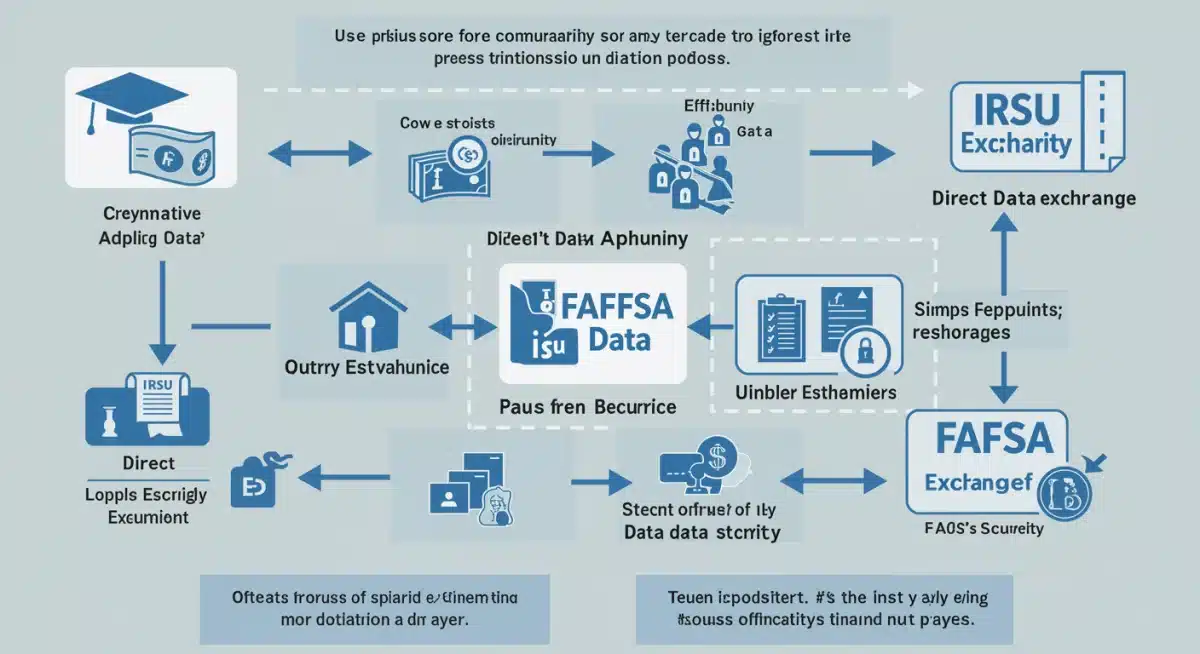
One of the most significant improvements for applicants is the mandatory direct data exchange with the IRS. This feature aims to streamline the application process, reduce errors, and enhance data security, ultimately making the FAFSA submission much simpler and quicker for most families.
Previously, applicants had the option to use the IRS Data Retrieval Tool (DRT), but it wasn’t mandatory, leading to potential inaccuracies and delays. Now, all applicants, including parents and students, must provide consent for the IRS to directly share their federal tax information with the Department of Education. This consent is required even if they did not file taxes, making the process universal and ensuring all necessary financial data is accurately captured.
benefits of mandatory IRS direct data exchange
- Reduced errors: Direct data transfer minimizes manual entry mistakes, leading to fewer processing delays and corrections.
- Increased security: Sharing data directly between secure government systems reduces the risk of identity theft and data breaches associated with manual input.
- Simplified application: For most applicants, this means fewer questions to answer manually, as much of the financial information will be pre-filled.
This mandatory data exchange marks a significant step towards a more efficient and secure FAFSA process. It greatly simplifies the burden on families, allowing them to focus more on college selection and less on the intricacies of financial documentation. While the consent is mandatory, it ultimately serves to benefit the applicant by ensuring an accurate and swift aid determination.
expanded federal pell grant eligibility
The 2025 FAFSA changes also bring about a substantial expansion in Federal Pell Grant eligibility, aiming to provide more financial support to students from low-income backgrounds. This is a critical update for many families, as Pell Grants do not need to be repaid and are a cornerstone of federal student aid.
Under the new system, Pell Grant eligibility will be linked to the federal poverty level, creating a more direct and transparent pathway to receiving this vital aid. Students whose family income falls below a certain percentage of the federal poverty line will automatically qualify for the maximum Pell Grant award. This change simplifies the eligibility criteria and removes some of the ambiguity that existed under the previous EFC model.
how pell grant eligibility is determined
- Income thresholds: Specific income thresholds tied to the federal poverty level will determine maximum Pell Grant eligibility. This provides a clear benchmark for families.
- Enrollment status: Pell Grant awards will also be adjusted based on a student’s enrollment status (full-time, half-time, etc.), ensuring aid aligns with their academic commitment.
- Cost of attendance: The student’s cost of attendance at their chosen institution will continue to play a role in determining the final Pell Grant amount, ensuring it covers a portion of their educational expenses.
This expanded eligibility for Pell Grants is designed to make higher education more affordable for a wider range of students, particularly those who have historically faced significant financial barriers. Families should review the updated Pell Grant eligibility requirements to understand how these changes might benefit them.
changes to asset reporting
The way assets are reported on the 2025 FAFSA has also undergone significant revisions, impacting how a family’s financial strength is assessed. These changes are designed to simplify the process and potentially exclude certain assets that were previously counted, benefiting many applicants.
One notable change is the exclusion of small business and farm assets from the asset calculation for families who own these entities. Previously, these assets could significantly increase a family’s EFC, often disproportionately impacting their aid eligibility. The new rules recognize that these assets are often tied to a family’s livelihood and should not be treated the same as other discretionary investments.
what to know about asset reporting
- Small business and farm exclusion: Families who own a small business or farm (with 100 or fewer full-time employees) will no longer have these assets counted in the SAI calculation, which can substantially lower their assessed ability to pay.
- Simplified asset questions: The FAFSA form itself will feature fewer and clearer questions related to assets, reducing confusion and potential errors during completion.
- No home equity consideration: As in previous years, the value of a family’s primary residence is not considered an asset for FAFSA purposes, which is a consistent benefit for homeowners.
These adjustments to asset reporting are crucial for many families, especially those whose wealth is primarily tied up in their family business or farm. Understanding these exclusions can help families accurately report their financial situation and potentially increase their eligibility for need-based financial aid.
updated family definition and household size
The definition of a family and how household size is determined on the 2025 FAFSA has been updated to align more closely with tax filing statuses and provide a clearer picture of a student’s support structure. This change can significantly impact the SAI calculation for some families.
The new FAFSA prioritizes the tax filer who provides the most financial support to the student. For dependent students, this typically means the parent(s) with whom the student lives most of the time, or the parent who provides the most financial support if parents are separated or divorced. This simplifies the previous complex rules regarding divorced or separated parents and ensures consistency with IRS reporting.
impact on household size
- Parental income determination: For divorced or separated parents, the parent who provides the greater portion of the student’s financial support will be the one whose financial information is used on the FAFSA. This is a shift from the previous rule that often focused on the custodial parent.
- Dependents in household: The number of dependents in the household will still be considered, but the methodology for counting them is more aligned with IRS definitions, aiming for greater accuracy and less ambiguity.
- Special circumstances: Provisions for acknowledging unusual family circumstances remain, allowing financial aid administrators to make professional judgments when a family’s situation doesn’t fit the standard criteria.
These updates to the family definition and household size aim to create a more consistent and equitable assessment of a family’s financial situation. Families with complex parental situations should pay close attention to these changes to ensure they report accurately.
fafsa form simplification and accessibility
Beyond the methodological changes, the 2025 FAFSA form itself has been significantly simplified and made more accessible to applicants. The goal is to reduce the time and effort required to complete the application, encouraging more students to apply for federal aid.
The number of questions on the FAFSA form has been substantially reduced, from over 100 questions to approximately 36 for most applicants. This reduction, combined with the direct data exchange with the IRS, means a much faster and less daunting application experience. The new form is also designed to be mobile-friendly and more intuitive, catering to the diverse ways students and families access information.
improvements in form design
- Fewer questions: A dramatically reduced number of questions makes the form quicker to complete and less overwhelming.
- Mobile-first design: The online FAFSA will be optimized for mobile devices, allowing applicants to complete it easily from smartphones or tablets.
- Clearer language: The language used throughout the form has been simplified, making instructions and questions easier to understand for all users, including those for whom English is a second language.
This focus on simplification and accessibility is a direct response to feedback from students and families who found the previous FAFSA process cumbersome. The streamlined form is expected to increase completion rates and ensure that financial aid is within reach for more eligible students.
what to do now: preparing for the 2025 FAFSA
Given the extensive 2025 FAFSA changes, proactive preparation is key to maximizing your financial aid eligibility. Waiting until the last minute can lead to missed opportunities or errors that delay your aid package. Understanding the new requirements and gathering necessary documents beforehand will set you up for success.
Start by familiarizing yourself with the new Student Aid Index (SAI) calculation and how it differs from the old EFC. Consider how changes to asset reporting, particularly for small businesses and farms, might affect your family’s eligibility. Pay close attention to the mandatory IRS direct data exchange requirement and be prepared to provide consent.
steps to take for preparation
- Gather tax information: Ensure you have your (and your parents’, if dependent) federal tax returns readily available. Even though data will be transferred directly, having copies can be helpful for verification.
- Understand consent requirements: Be aware that both students and parents (or contributors) will need to provide consent for the IRS direct data exchange.
- Review asset exclusions: If your family owns a small business or farm, understand how these assets are now excluded from the SAI calculation.
- Monitor official updates: Keep an eye on official announcements from the Department of Education and your prospective colleges for the latest guidance and specific application timelines.
By taking these preparatory steps, you can navigate the new FAFSA landscape with confidence, ensuring you are well-positioned to receive the maximum financial aid possible for your higher education journey. Proactive engagement with these changes is your best strategy for success.
| Key Update | Brief Description |
|---|---|
| Student Aid Index (SAI) | Replaces EFC, can be negative, aiming for more equitable financial need assessment. |
| IRS Direct Data Exchange | Mandatory consent for direct tax data transfer, simplifying application and reducing errors. |
| Expanded Pell Grant Eligibility | Linked to federal poverty level, increasing access to maximum awards for low-income students. |
| Simplified Application Form | Fewer questions and mobile-friendly design to streamline the application process. |
frequently asked questions about the 2025 fafsa
The most significant change is that the Student Aid Index (SAI) can be a negative number, indicating a higher level of financial need. This was not possible with the Expected Family Contribution (EFC), which always resulted in a positive or zero value. The negative SAI allows for more targeted aid for the neediest students.
Yes, you and any required contributors (like parents) must still provide consent for the IRS to share your federal tax information directly with the Department of Education. While you won’t manually enter most tax data, this mandatory consent is crucial for the FAFSA to be processed correctly and for aid to be determined.
Pell Grant eligibility will be significantly expanded, with awards now linked to the federal poverty level. Students whose family income falls below a certain percentage of this level will automatically qualify for the maximum Pell Grant, making it more accessible to low-income students than ever before.
No, one key change is the exclusion of small business and farm assets from the SAI calculation for families who own these entities with 100 or fewer full-time employees. This adjustment aims to prevent these assets from disproportionately impacting a family’s financial aid eligibility.
To prepare, understand the new SAI calculation, gather your tax information, be ready to provide consent for direct IRS data exchange, and monitor official updates from the Department of Education. Proactive preparation ensures a smoother application process and maximizes your aid potential.
conclusion
The 2025 FAFSA changes represent a monumental shift in how federal financial aid is administered, aiming to create a more equitable, simplified, and accessible system for students across the United States. From the introduction of the Student Aid Index (SAI) to the mandatory direct data exchange with the IRS and expanded Pell Grant eligibility, these reforms are designed to ease the burden on applicants and ensure that financial aid reaches those who need it most. By understanding these key updates and preparing proactively, students and families can confidently navigate the new FAFSA landscape, maximizing their chances of securing the financial support necessary to pursue their higher education goals. Staying informed and acting early will be crucial for a successful financial aid journey.