PSLF in 2025: Updated Requirements & Success Stories for US Professionals

Public Service Loan Forgiveness (PSLF) in 2025 continues to be a vital program for US professionals, with updated requirements and success stories highlighting its impact on alleviating student loan debt for those dedicated to public service.
Are you a dedicated public servant in the United States, burdened by student loan debt, and looking towards a brighter financial future? The Public Service Loan Forgiveness (PSLF) in 2025: Updated Requirements and Success Stories for US Professionals program offers a beacon of hope for many, providing a pathway to debt relief for those committed to serving their communities.
Understanding PSLF: The Foundation for Loan Forgiveness
The Public Service Loan Forgiveness (PSLF) program is designed to encourage individuals to enter and remain in full-time public service employment. It offers forgiveness of the remaining balance on Direct Loans after 120 qualifying monthly payments have been made under a qualifying repayment plan while working full-time for a qualifying employer. Understanding the nuances of this program is crucial for any US professional aiming for loan forgiveness.
Initially introduced in 2007, PSLF has undergone various adjustments and temporary waivers to expand its reach and address complexities that many borrowers faced. These changes have aimed to simplify the process and ensure more public servants can benefit from the relief they were promised. As we move into 2025, it’s important to stay informed about the latest iterations of these requirements and how they might affect your eligibility and application process.
What Defines a Qualifying Employer?
A cornerstone of PSLF eligibility is working for a qualifying employer. This typically includes governmental organizations at any level (federal, state, local, or tribal), non-profit organizations that are tax-exempt under Section 501(c)(3) of the Internal Revenue Code, and certain other non-profit organizations that provide specific public services. It is essential to verify your employer’s status, as not all non-profits qualify.
- Government organizations (federal, state, local, tribal)
- 501(c)(3) non-profit organizations
- Other non-profit organizations providing specific public services (e.g., public health, education)
Employment verification is not a one-time event; it should be done periodically throughout your repayment period using the PSLF Help Tool to ensure your employment continues to meet the criteria. This proactive approach can prevent potential issues when you apply for forgiveness.
In essence, PSLF serves as a powerful incentive for individuals to pursue careers that benefit society, recognizing the often lower salaries associated with public service roles compared to the private sector. The program’s continued existence and evolution underscore a commitment to supporting those who dedicate their lives to the common good.
Key Updates to PSLF Requirements for 2025
As we approach 2025, staying abreast of any modifications to the PSLF program is paramount for current and prospective applicants. While the core tenets of PSLF remain consistent—qualifying employment, loan types, and payments—there are often subtle but significant adjustments that can impact eligibility or the application process. These updates often aim to streamline the program or address previous implementation challenges identified by borrowers and advocates.
One of the most notable aspects of recent PSLF changes has been the effort to simplify the qualifying payment count. Historically, many borrowers faced rejection due to technicalities in their payment history or loan types. The Department of Education has been working to rectify these issues, and further clarifications or adjustments could be expected in 2025 to ensure fairer access to forgiveness.
Eligible Loan Types and Repayment Plans
Only Direct Loans are eligible for PSLF. If you have other types of federal student loans, such as FFEL Program loans or Perkins Loans, you must consolidate them into a Direct Consolidation Loan to be eligible. This consolidation must be completed before you apply for PSLF, and ideally, as soon as possible to maximize your qualifying payment count.
- Direct Subsidized Loans
- Direct Unsubsidized Loans
- Direct PLUS Loans
- Direct Consolidation Loans
Furthermore, qualifying payments must be made under an income-driven repayment (IDR) plan. These plans, such as Income-Based Repayment (IBR), Pay As You Earn (PAYE), Revised Pay As You Earn (REPAYE), and Income-Contingent Repayment (ICR), adjust your monthly payment based on your income and family size. Choosing the right IDR plan is critical, as it can significantly affect your path to forgiveness.
It is advisable to review your loan types and current repayment plan regularly. If you are not on an IDR plan, you should switch to one immediately to ensure your payments count towards PSLF. The federal student aid website provides tools and resources to help you select the most appropriate plan for your financial situation.
Navigating the PSLF Application Process in 2025
The application process for Public Service Loan Forgiveness can seem daunting, but with careful attention to detail and consistent record-keeping, it is entirely manageable. The key is to start early, understand each step, and maintain thorough documentation of your employment and payments. The PSLF Help Tool is an invaluable resource provided by the Department of Education to assist borrowers in this journey.
One of the most common pitfalls for applicants has traditionally been incorrect paperwork or missing certifications. To mitigate this, the process emphasizes regular employment certification. By submitting the PSLF Employment Certification Form annually, or whenever you change employers, you ensure that your qualifying employment is being tracked correctly and that you are making progress towards your 120 payments.
The PSLF Help Tool guides you through determining if your employer and loans qualify, and it helps you complete the necessary forms. It also tracks your progress and provides estimates for when you might achieve forgiveness. Regular engagement with this tool can significantly reduce stress and uncertainty.
Steps to Successful PSLF Application
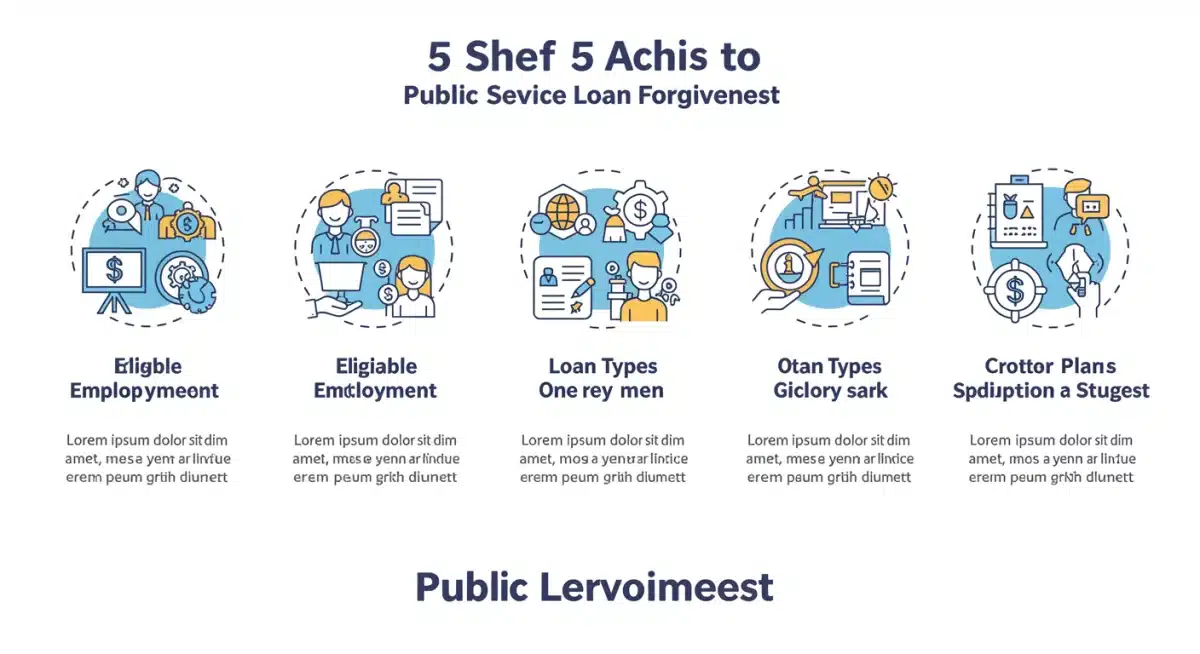
- Verify Employer Eligibility: Use the PSLF Help Tool to confirm your employer qualifies.
- Consolidate Loans: Ensure all federal loans are Direct Loans through consolidation if necessary.
- Choose an IDR Plan: Enroll in an income-driven repayment plan that suits your financial situation.
- Submit ECF Regularly: Certify your employment annually or when changing jobs using the Employment Certification Form.
- Track Payments: Keep records of all 120 qualifying monthly payments.
- Apply for Forgiveness: Once 120 qualifying payments are made, submit the PSLF Application.
Maintaining meticulous records is an absolute must. Keep copies of all submitted forms, employer certifications, and payment confirmations. This documentation will be crucial if any discrepancies arise during the review of your application for forgiveness. The process is a marathon, not a sprint, and preparation is your best ally.
Success Stories: Realizing PSLF Benefits
The true impact of the Public Service Loan Forgiveness program is best illustrated through the lives it has changed. Countless US professionals, from teachers and nurses to social workers and government employees, have achieved financial freedom through PSLF, allowing them to focus more on their impactful careers and less on overwhelming debt. These success stories serve as powerful motivators and testaments to the program’s potential.
For instance, Sarah, a public school teacher in California, had over $80,000 in student loan debt. After 10 years of dedicated service and consistent payments under an IDR plan, she received her PSLF forgiveness in late 2024. This relief allowed her to invest in her professional development and significantly improve her financial stability, directly impacting her ability to continue educating future generations without the shadow of debt.
Testimonials from Forgiven Borrowers
- Dr. James T., Physician: “PSLF allowed me to pursue a career in community health, serving underserved populations, without the crushing weight of medical school debt. It’s truly transformative.”
- Maria G., Social Worker: “I was able to buy my first home after my loans were forgiven. PSLF made a real difference in my life and my ability to continue my work with vulnerable families.”
- David R., Public Defender: “The program gave me the freedom to fight for justice for those who couldn’t afford it. My passion for public service is now unburdened by financial stress.”
These narratives underscore that PSLF is not just about loan forgiveness; it’s about enabling dedicated individuals to thrive in essential public service roles. The financial relief often translates into enhanced job satisfaction, reduced stress, and the ability to make long-term financial plans that would otherwise be impossible. Each success story reinforces the value of the program and its positive ripple effect on communities nationwide.
Common Pitfalls and How to Avoid Them in 2025
Despite the program’s benefits, many borrowers encounter obstacles on their path to Public Service Loan Forgiveness. Understanding these common pitfalls and actively working to avoid them can save significant time and frustration. The most frequent issues often revolve around misunderstandings of eligibility criteria, inconsistent documentation, and changes in employment or loan status.
One significant error borrowers make is not certifying their employment regularly. Waiting until all 120 payments are made to submit an Employment Certification Form (ECF) can lead to unexpected denials if an employer is deemed ineligible or if records are incomplete. Regular certification ensures that any issues are identified and addressed early, preventing last-minute surprises.
Strategies for a Smooth PSLF Journey
- Proactive Employer Verification: Confirm and re-confirm your employer’s eligibility.
- Annual Employment Certification: Submit your ECF every year, even if your employment hasn’t changed.
- Stay on an IDR Plan: Ensure you are always on a qualifying income-driven repayment plan.
- Keep Detailed Records: Maintain a personal file of all PSLF-related documents and communications.
- Monitor Loan Servicer: Regularly check your loan servicer’s website for payment counts and status updates.
- Understand Loan Consolidation: If you have non-Direct Loans, consolidate them strategically and early.
Another crucial aspect is understanding the impact of loan consolidation. While consolidation can make previously ineligible loans qualify, it also resets your payment count. Therefore, strategic consolidation, ideally early in your repayment journey, is vital. For those who consolidated previously under specific waivers, understanding how those waivers impacted their payment counts is also essential for 2025 and beyond.
By being vigilant and informed, US professionals can navigate the PSLF program effectively, avoiding the common pitfalls that have historically derailed many deserving applicants. Diligence in documentation and regular communication with your loan servicer are your most potent tools.
The Future of PSLF: What to Expect Beyond 2025
The Public Service Loan Forgiveness program, while a cornerstone of federal student aid, is not static. It continues to evolve, influenced by legislative changes, economic conditions, and administrative adjustments. For US professionals planning their financial futures, it’s important to consider what the landscape of PSLF might look like beyond 2025 and how potential reforms could impact their journey to forgiveness.
While direct predictions are challenging, the general trend indicates a continued commitment to supporting public servants, albeit with potential refinements to the program’s structure. Discussions often revolve around simplifying eligibility, improving transparency, and ensuring equitable access. Borrowers should remain engaged with official Department of Education communications and reputable financial aid news sources for the latest information.
Potential Areas for Future Program Evolution
One area that frequently comes up in discussions is the potential for further simplification of qualifying payment rules. The aim is to reduce the administrative burden on both borrowers and servicers, making the path to forgiveness clearer and more consistent. This could involve more automated tracking or clearer definitions of eligible payments.
- Streamlined payment tracking and eligibility verification.
- Expanded definitions of qualifying public service employment.
- Adjustments to income-driven repayment plan structures.
- Increased outreach and education for potential applicants.
Another aspect under continuous review is the scope of qualifying employers. While 501(c)(3) non-profits and government entities are well-established, there are ongoing conversations about including other types of organizations that provide critical public services but may not currently meet the strict tax-exempt criteria. Any such expansion would open the program to a wider array of dedicated professionals.
Ultimately, the future of PSLF will likely be shaped by a balance between fiscal responsibility and the desire to support those who choose careers in public service. Staying informed and adaptable will be key for borrowers hoping to leverage this invaluable program in the years to come.
| Key Aspect | Brief Description |
|---|---|
| Qualifying Employment | Full-time work for government or 501(c)(3) non-profits. |
| Eligible Loans | Only Direct Loans qualify; consolidate others if needed. |
| Qualifying Payments | 120 payments under an Income-Driven Repayment (IDR) plan. |
| Regular Certification | Submit Employment Certification Form (ECF) annually. |
Frequently Asked Questions About PSLF in 2025
While core eligibility remains consistent, 2025 may bring further clarifications on qualifying payments and employer criteria. Borrowers should expect ongoing efforts to simplify the process and address historical complexities, ensuring more public servants can access forgiveness.
Only Direct Loans are eligible for PSLF. If you have FFEL Program loans or Perkins Loans, you must consolidate them into a Direct Consolidation Loan. This consolidation should ideally happen early in your repayment to maximize qualifying payments.
It is strongly recommended to submit the PSLF Employment Certification Form (ECF) annually, or whenever you change employers. This ensures your qualifying employment is consistently tracked and allows for early identification and resolution of any potential issues.
Your previous qualifying payments will still count towards PSLF. However, you must submit a new Employment Certification Form (ECF) for your new qualifying employer to ensure your payment count continues accurately. Consistency in certification is vital.
Generally, PSLF requires full-time employment with a qualifying employer. Full-time is typically defined as working at least 30 hours per week. However, specific rules can vary, so always check the latest Department of Education guidance or use the PSLF Help Tool.
Conclusion
The Public Service Loan Forgiveness program in 2025 continues to be an indispensable resource for US professionals dedicated to public service. By understanding the updated requirements, diligently navigating the application process, and learning from the successes of others, borrowers can significantly improve their chances of achieving student loan forgiveness. Staying informed, maintaining meticulous records, and utilizing available tools are crucial steps on this transformative journey towards financial freedom and continued service to their communities.