Cut Your 2025 Taxable Income by 15% with Smart Investments

By strategically utilizing tax-advantaged investment vehicles and optimizing portfolio decisions, individuals can effectively reduce their 2025 taxable income by up to 15%.
Navigating the complexities of tax season can often feel like a daunting task, but with proactive planning, you can significantly impact your financial future. This article will explore how to reduce your 2025 taxable income by up to 15% through strategic investment planning, offering actionable insights for a healthier financial outlook.
Understanding Your Taxable Income and Investment Impact
Before diving into specific strategies, it’s crucial to grasp what taxable income entails and how your investments play a direct role in its calculation. Your taxable income is the portion of your gross income that is subject to taxation, and it’s from this figure that your ultimate tax liability is determined. Every investment decision, from the type of account you choose to the assets you hold, can have a ripple effect on this critical number.
Many individuals overlook the direct correlation between their investment choices and their tax burden. Instead of viewing taxes as an unavoidable annual event, consider them a variable that can be influenced by informed financial decisions made throughout the year. Strategic planning allows you to leverage tax codes to your advantage, rather than simply reacting to them.
What Constitutes Taxable Income?
Taxable income generally includes wages, salaries, bonuses, and self-employment income. However, it also encompasses various forms of investment income, such as interest, dividends, and capital gains from the sale of assets. Understanding these components is the first step in identifying areas where tax reduction strategies can be most effective.
- Wages and Salaries: Your primary source of income, typically reported on a W-2.
- Interest Income: Earned from savings accounts, bonds, and other debt instruments.
- Dividend Income: Distributions from stocks and mutual funds.
- Capital Gains: Profits from selling investments like stocks, real estate, or other assets for more than their purchase price.
By focusing on these areas, you can begin to identify opportunities to shelter income, defer taxes, or even eliminate them altogether on certain types of earnings. This foundational understanding sets the stage for more advanced planning.
In essence, maximizing your understanding of what contributes to your taxable income empowers you to make more intelligent investment choices. It’s not just about earning more; it’s about keeping more of what you earn by minimizing your tax exposure.
Leveraging Tax-Advantaged Retirement Accounts
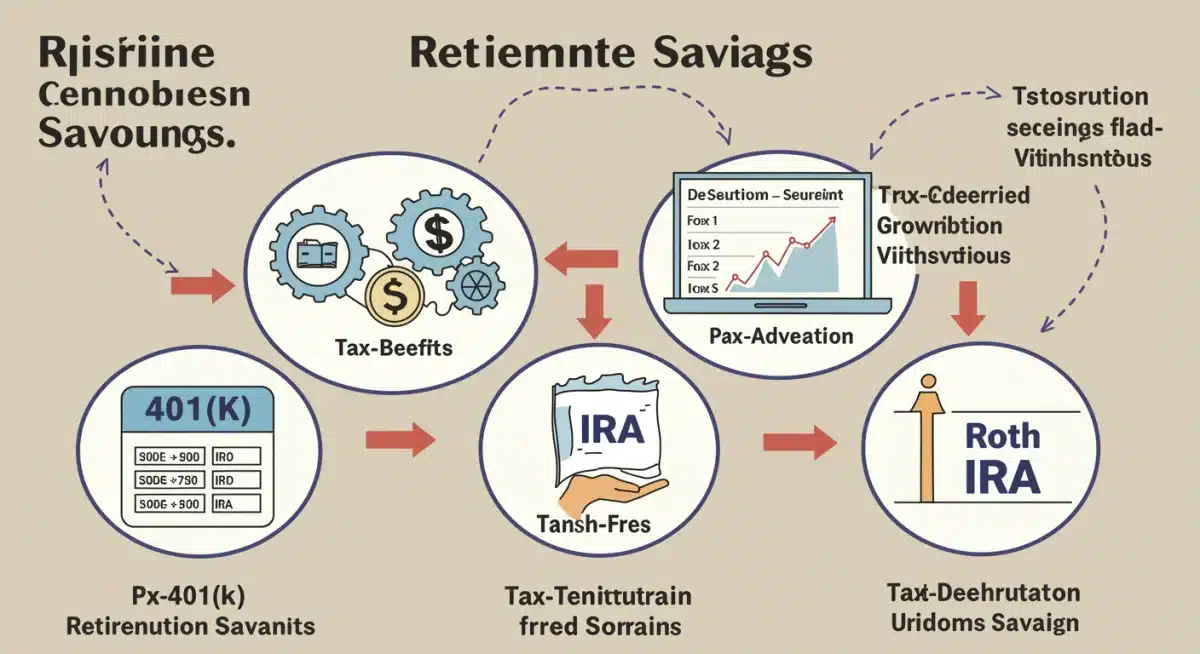
One of the most powerful tools at your disposal for reducing taxable income is the strategic use of tax-advantaged retirement accounts. These accounts, specifically designed by the government to encourage long-term savings, offer significant tax benefits that can dramatically lower your current and future tax liabilities. For 2025, maximizing contributions to these vehicles should be a cornerstone of your tax reduction strategy.
The beauty of these accounts lies in their ability to shelter your investments from immediate taxation, allowing your money to grow more rapidly. Depending on the account type, you might benefit from tax-deductible contributions, tax-deferred growth, or tax-free withdrawals in retirement.
Traditional 401(k) and IRA Contributions
Contributions to a Traditional 401(k) or Traditional IRA are typically tax-deductible in the year they are made. This means that every dollar you contribute reduces your taxable income directly, potentially pushing you into a lower tax bracket. For example, if you contribute the maximum allowable amount to your 401(k), you could see a substantial reduction in your reported income for 2025.
- Pre-tax Contributions: Your contributions are deducted from your gross income before taxes are calculated.
- Tax-Deferred Growth: Investments grow without being taxed annually on dividends or capital gains.
- Future Taxation: You pay taxes on withdrawals in retirement, typically when you might be in a lower tax bracket.
These accounts are particularly beneficial for individuals who anticipate being in a lower tax bracket during retirement than they are in their working years. The immediate tax deduction provides an upfront benefit that can be reinvested or used to meet other financial goals.
Exploring Health Savings Accounts (HSAs) for Dual Benefits
For those eligible, a Health Savings Account (HSA) stands out as a uniquely powerful tool for both healthcare savings and tax reduction. Often referred to as a “triple-tax-advantaged” account, HSAs offer benefits that can significantly impact your 2025 taxable income and provide a robust savings vehicle for future medical expenses.
An HSA is available to individuals covered by a high-deductible health plan (HDHP). Beyond covering immediate medical costs, these accounts function as investment vehicles, allowing your contributions to grow tax-free, much like a retirement account.
The Triple Tax Advantage of HSAs
The tax benefits of an HSA are unparalleled, offering three distinct advantages that collectively contribute to lowering your taxable income and enhancing your financial health.
- Tax-Deductible Contributions: Contributions to an HSA are made pre-tax (if through payroll deduction) or are tax-deductible if made directly, reducing your taxable income for the year.
- Tax-Free Growth: Any investment earnings within the HSA, such as interest, dividends, or capital gains, grow tax-free.
- Tax-Free Withdrawals: Qualified withdrawals for eligible medical expenses are entirely tax-free, at any age.
This triple benefit makes HSAs an extremely attractive option for tax-conscious investors. The ability to reduce current taxable income, grow investments tax-free, and withdraw funds tax-free for healthcare expenses creates a powerful financial synergy.
Furthermore, after age 65, HSA funds can be withdrawn for any purpose without penalty, though non-medical withdrawals will be subject to income tax. This flexibility essentially transforms the HSA into an additional retirement account, making it a versatile component of a comprehensive financial plan. Maximizing your HSA contributions for 2025 can be a highly effective way to reduce your taxable income while simultaneously building a robust medical and retirement savings fund.
Strategic Tax-Loss Harvesting and Capital Gains Management
Beyond contributing to tax-advantaged accounts, actively managing your investment portfolio through strategies like tax-loss harvesting and careful capital gains management can significantly reduce your 2025 taxable income. These techniques involve making deliberate choices about when to sell investments to optimize your tax position.
Tax-loss harvesting, in particular, is a proactive strategy that allows investors to offset capital gains and, in some cases, a portion of their ordinary income, thereby lowering their overall tax bill. It requires keen attention to market movements and a clear understanding of tax regulations.
Implementing Tax-Loss Harvesting
Tax-loss harvesting involves selling investments at a loss to offset capital gains realized during the year. If your capital losses exceed your capital gains, you can use up to $3,000 of those excess losses to reduce your ordinary income. Any remaining losses can be carried forward to future tax years.
- Offsetting Gains: Use losses to cancel out any taxable capital gains from other investments.
- Reducing Ordinary Income: If losses exceed gains, up to $3,000 can reduce your regular income.
- Wash Sale Rule: Be mindful of the wash sale rule, which prevents you from buying substantially identical securities within 30 days before or after selling them at a loss.
This strategy is most effective when conducted thoughtfully throughout the year, rather than as a last-minute scramble. Regularly reviewing your portfolio for underperforming assets can provide opportunities for tax-loss harvesting.
Careful management of capital gains also involves considering how long you hold an investment. Long-term capital gains (assets held for more than one year) are generally taxed at more favorable rates than short-term capital gains. By strategically holding assets for longer periods, you can minimize the tax impact on your investment returns. These active management strategies are vital for optimizing your tax position in 2025 and beyond.
Utilizing Tax Credits and Deductions Beyond Investments
While strategic investment planning is a cornerstone of reducing your 2025 taxable income, it’s equally important to remember the broader landscape of tax credits and deductions available. These provisions, often overlooked, can provide substantial reductions to your overall tax liability, complementing your investment-based strategies.
Tax credits directly reduce the amount of tax you owe, dollar for dollar, making them particularly valuable. Deductions, on the other hand, reduce your taxable income, which in turn lowers your tax bill. Understanding and claiming all eligible credits and deductions is essential for a comprehensive tax reduction plan.
Key Tax Credits to Consider
Various tax credits are designed to support different life stages and financial situations. Identifying which ones apply to you can lead to significant tax savings.
- Child Tax Credit: A significant credit for families with qualifying children.
- Earned Income Tax Credit (EITC): Benefits low-to moderate-income working individuals and families.
- Education Credits: Credits like the American Opportunity Tax Credit and Lifetime Learning Credit can help offset educational expenses.
- Clean Energy Credits: For homeowners who make energy-efficient improvements to their homes.
It’s crucial to keep abreast of any changes to these credits for the 2025 tax year, as tax laws are subject to modification. Consulting with a tax professional can help ensure you claim every credit you’re entitled to.
Similarly, itemized deductions can offer significant savings for those whose total deductions exceed the standard deduction. These can include deductions for mortgage interest, state and local taxes (SALT, subject to limitations), charitable contributions, and medical expenses exceeding a certain percentage of your adjusted gross income. A holistic approach that combines investment strategies with a thorough review of available credits and deductions will put you in the best position to achieve your goal of reducing your 2025 taxable income by up to 15%.
Future-Proofing Your Tax Strategy with Ongoing Review
Reducing your 2025 taxable income by up to 15% isn’t a one-time event; it’s an ongoing process that requires continuous review and adaptation. Tax laws change, your financial situation evolves, and market conditions fluctuate. A successful tax strategy is dynamic, designed to respond to these shifts and ensure you remain on the most tax-efficient path.
Regularly assessing your investment portfolio and financial plan in the context of current tax regulations is paramount. This proactive approach allows you to identify new opportunities for tax savings and adjust existing strategies as needed.
The Importance of Annual Financial Check-ups
Just as you schedule regular health check-ups, your financial health benefits from annual reviews. These check-ups should involve looking at your income, expenses, investments, and any major life changes that might impact your tax situation.
- Reviewing Investment Performance: Assess how your investments are performing and if they align with your tax efficiency goals.
- Updating Beneficiaries: Ensure your retirement and investment accounts have up-to-date beneficiaries.
- Assessing Life Changes: Major life events like marriage, divorce, birth of a child, or a new job can significantly alter your tax picture.
- Staying Informed on Tax Law Changes: Tax codes are not static; new laws and regulations can create both challenges and opportunities.
Working with a qualified financial advisor and tax professional can provide invaluable support in this ongoing process. They can help you navigate complex tax codes, optimize your investment portfolio for tax efficiency, and ensure you’re leveraging every available strategy to minimize your tax burden. By committing to an annual review of your financial and tax strategy, you not only aim to reduce your 2025 taxable income but also build a resilient financial future.
| Key Strategy | Brief Description |
|---|---|
| Max Out Retirement Accounts | Contribute to Traditional 401(k)s and IRAs for pre-tax deductions and tax-deferred growth. |
| Utilize HSAs | Leverage Health Savings Accounts for triple tax advantages: deductible contributions, tax-free growth, and tax-free withdrawals for medical expenses. |
| Practice Tax-Loss Harvesting | Sell investments at a loss to offset capital gains and potentially reduce ordinary income by up to $3,000. |
| Claim All Eligible Deductions & Credits | Beyond investments, actively seek out and claim all applicable tax credits and itemized deductions to lower your tax liability. |
Frequently Asked Questions About Tax Reduction
The primary benefit is that contributions are pre-tax, meaning they reduce your taxable income in the year they are made. This can lower your current tax bill and potentially place you in a lower tax bracket.
An HSA offers triple tax advantages because contributions are tax-deductible, investments grow tax-free, and qualified withdrawals for medical expenses are also tax-free.
Yes, if your capital losses exceed your capital gains, you can use up to $3,000 of those excess losses to reduce your ordinary income, with any remaining losses carried forward to future years.
A tax credit directly reduces the amount of tax you owe, dollar for dollar, while a tax deduction reduces your taxable income, which then lowers your overall tax liability.
An annual review is crucial because tax laws, your financial situation, and market conditions constantly change. Regular assessments ensure your strategies remain optimized for maximum tax efficiency.
Conclusion
Achieving a significant reduction in your 2025 taxable income, potentially by up to 15%, is an ambitious yet entirely attainable goal through diligent and strategic investment planning. By maximizing contributions to tax-advantaged accounts like Traditional 401(k)s, IRAs, and HSAs, alongside implementing smart portfolio management techniques such as tax-loss harvesting, you can proactively shape your tax liability. Remember, a comprehensive approach also involves leveraging all eligible tax credits and deductions and committing to regular financial reviews. These steps not only reduce your immediate tax burden but also lay a robust foundation for long-term financial security and growth.